Integrating high-efficiency self-drilling technology accelerates construction speed while ensuring mechanical integrity. These top 4 product solutions are custom-configured for the demanding infrastructural requirements in Podgorica, Budva, and the Port of Bar.
Montenegro, situated strategically along the Adriatic Sea, is experiencing a major transition in civil infrastructure, commercial hospitality, and marine industrialization. The massive tourist-centric real estate expansions across the Budva Riviera, coupled with the critical expansion of the Bar-Boljare Highway, have established rigorous benchmarks for mechanical fasteners. In these environments, structures are exposed to high wind speeds, heavy seismic profiles (typical of the Balkan tectonic faults), and a highly corrosive marine microclimate.
For engineering firms, contractors, and local distributors in Nikšić, Podgorica, and Bar, the selection of fasteners is no longer just a purchasing decision but a vital safety and durability equation. Traditionally, pre-drilling holes in heavy steel structural sections consumed up to 50% of steel erection time. The transition to high-precision drill tail screws (self-drilling screws with custom-designed points) has revolutionized localized site logistics by executing drilling, thread-forming, and sealing in one unified motion.
Furthermore, Montenegro's ongoing alignment with European Union standards demands that industrial fasteners comply with rigorous European Technical Assessments (ETA) and harmonized CE regulations (EN 14592). This regulatory shift has put immense pressure on local purchasing managers to pivot away from low-cost, uncertified components and move toward verified industrial suppliers capable of providing high information gain, detailed raw material traceability, and corrosion-tested assembly configurations.
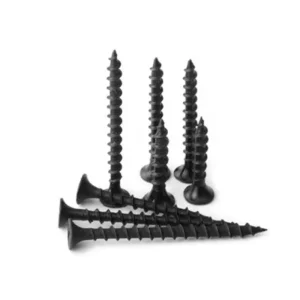
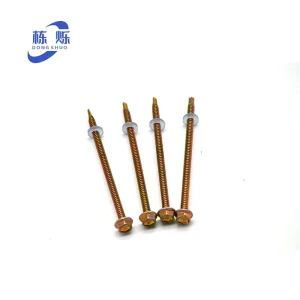
A drill tail screw (commonly categorized under ISO 15480 or DIN 7504) is engineered to drill its own pilot hole, tap its own thread, and secure the joint in a single run. The efficiency of this process is governed by the structural geometry of the screw point (the "drill tail") and the metallurgic composition of the fastener.
Divided into numbers #1 through #5, the point length determines the maximum drilling capacity of steel. A point #3 can drill up to 4.5mm of cold-rolled structural steel, while an extended point #5 can penetrate up to 12.5mm of high-tensile structural beams without pre-drilling.
For coastal Adriatic environments, carbon steel must be electro-galvanized (zinc plating up to 8-12μm) or treated with high-grade multi-layer organic coatings like Ruspert (exceeding 1000 to 1500 hours of neutral salt spray testing) to prevent red rust.
For ultimate marine longevity combined with drilling performance, Bi-Metal self-drilling screws utilize a hardened carbon steel drill point welded to an Austenitic Stainless Steel (A2/A4 or AISI 304/316) body, offering high tensile holding power with zero risk of stress-corrosion cracking.
For the Montenegro market, Dongshuo Fastener Manufacturing provides comprehensive documentation detailing pull-out strength, shear capacity, and torsional resistance for every diameter, ensuring structural calculations by local engineers match real-world physical outputs.
Dongshuo Fastener Manufacturing combines a state-of-the-art 20,000 square meter factory in Handan, China, with localized regional delivery structures to ensure a reliable supply chain. By using predictive inventory algorithms, we minimize lead times for standard DIN and custom fasteners, bridging the gap between global production efficiency and Adriatic regional requirements.
Montenegro's topography is highly dynamic, demanding distinct fastening solutions for different geographic zones. To ensure structural integrity, engineers must specify the correct drill tail screw configurations for each localized application scenario:
Montenegro's shift to clean energy, notably large-scale solar projects in the southern regions like Ulcinj, demands fasteners that can withstand intense UV exposure and structural thermal expansion. Bi-Metal self-drilling screws with EPDM washers ensure leak-proof, long-term fastening on aluminum mounting rails and galvanized purlins.
Along the Budva, Tivat, and Kotor coastlines, the saline air accelerates galvanic corrosion. In these environments, we recommend Stainless Steel 316 / A4 grade bi-metal fasteners. This solution prevents premature structural degradation of facade subframes and high-end exterior wooden and composite decking.
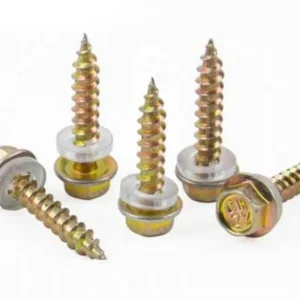
In the industrial zones of Nikšić and Podgorica, large steel frame warehouses require rapid assembly. High-tensile carbon steel self-drilling screws with integrated hexagonal flange heads allow rapid sheet-to-sheet stitching and sheet-to-purlin fixing without the need for pre-punching.
As construction schedules compress and structural safety margins become more stringent under modern Eurocodes, fastener technology is undergoing a rapid evolution. The future of self-drilling screws is defined by advancements in metallurgy, intelligent coating layers, and digitalized quality control.
Traditional zinc plating is transitioning to organic nano-ceramic coatings. These next-generation finishes provide superior friction coefficients during drilling, reduce installation torque, and offer over 2000 hours of salt spray resistance without using toxic Hexavalent Chromium.
Our research and development focus is on high-speed steel (HSS) tip integration for bi-metal fasteners. This will enable drilling through structural steel exceeding 15mm in thickness, opening up new opportunities for heavy engineering and bridge construction across the Balkans.
In compliance with the EU Green Deal, we are optimizing our cold-heading processes to use low-carbon recycled steel wire rod. This reduces the carbon footprint of structural fasteners by up to 35% without compromising mechanical performance.
To assist procurement managers, quality assurance specialists, and structural designers in Montenegro, we have compiled detailed answers to critical technical questions regarding fastener selection and application:
For applications within 5 km of the Adriatic coastline (e.g., Budva, Bar, Tivat), bi-metal screws are essential. A bi-metal screw features an austenitic stainless steel body (AISI 304 or 316) that provides high resistance to atmospheric salt and moisture, combined with a hardened carbon steel tip that drills through steel. Standard carbon steel screws, even with heavy zinc plating, will eventually rust in coastal environments due to galvanic and atmospheric action.
Coarse-thread screws are optimized for fastening to timber or thin-gauge metal studs, whereas fine-thread screws are engineered for thicker structural steel sections. When fastening into structural steel framing, a fine thread (like 24 threads per inch on a #12 screw) ensures maximum engagement with the steel plate, preventing stripping and maximizing pull-out resistance.
An Ethylene Propylene Diene Monomer (EPDM) washer bonded to a metallic backing washer acts as a dynamic seal. Under proper compression, the EPDM flows to fill the void around the screw head and the sheet penetration. EPDM stands up to high ozone levels, thermal cycling, and temperature extremes, preventing water ingress while isolating the screw head from the cladding to mitigate galvanic corrosion.
Screw head shear off typically occurs due to excessive installation torque, using an incorrect driver speed, or a mismatch in the steel's thickness relative to the screw's drilling capacity. If the screw tip cannot drill fast enough, heat builds up, weakening the metal, while the driving torque twists the screw head off. Using electric drivers with adjustable clutch controls, maintaining recommended RPMs (typically 1500–2500 RPM), and verifying the screw's drilling range prevent this problem.
Yes. Every batch of fasteners we produce is shipped with a comprehensive Mill Test Report (EN 10204 3.1) detailing chemical composition, heat treatment records, mechanical test parameters (tensile, shear, hardness, torque), and coating thickness validation. All our structural fasteners comply with EN standards and carry CE declarations of performance, ensuring smooth customs clearance and engineering approval within Montenegro and the wider EU.
Explore our wider range of standard and custom-manufactured fasteners designed to meet demanding engineering specifications across Montenegro's construction and industrial sectors.
 Dongshuo