❓ Frequently Asked Questions
What is DIN 934 and what standard does it follow?
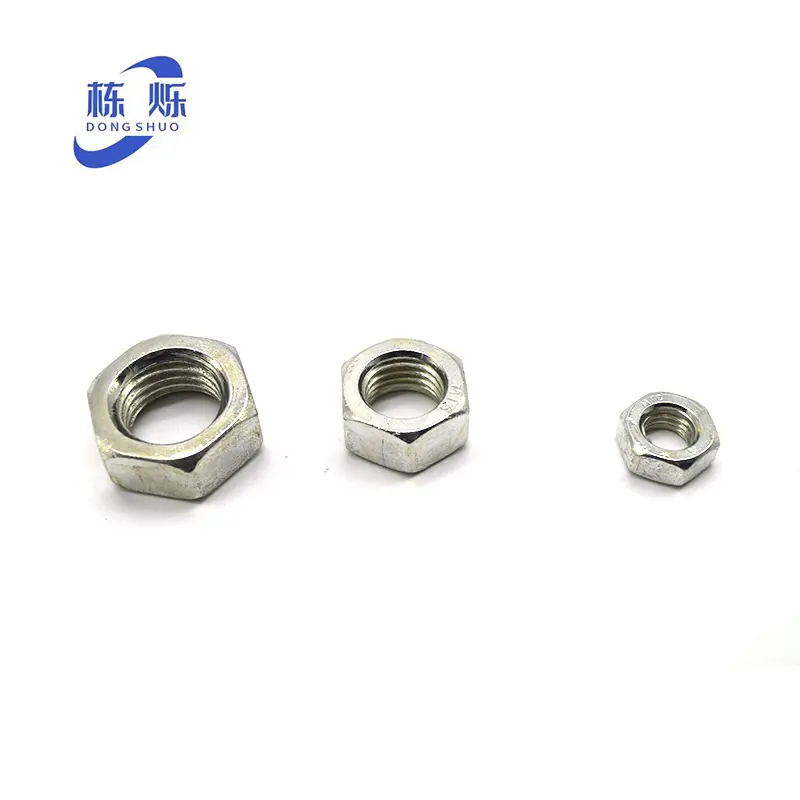
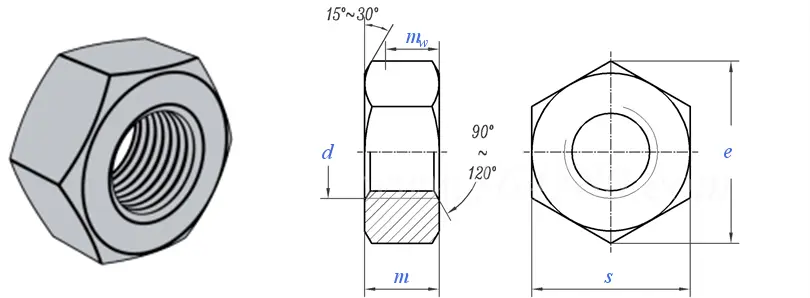
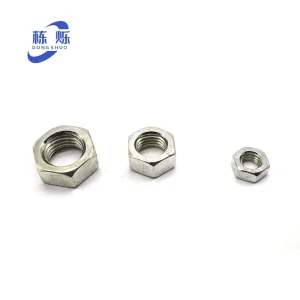
DIN 934 is a German industrial standard that defines the dimensions and mechanical requirements for hexagonal nuts. It specifies parameters such as thread size, pitch, width across flats (s), width across corners (e), and nut height (m) for a wide range of metric thread sizes from M5 to M64.
What does the galvanized coating on DIN 934 nuts provide?
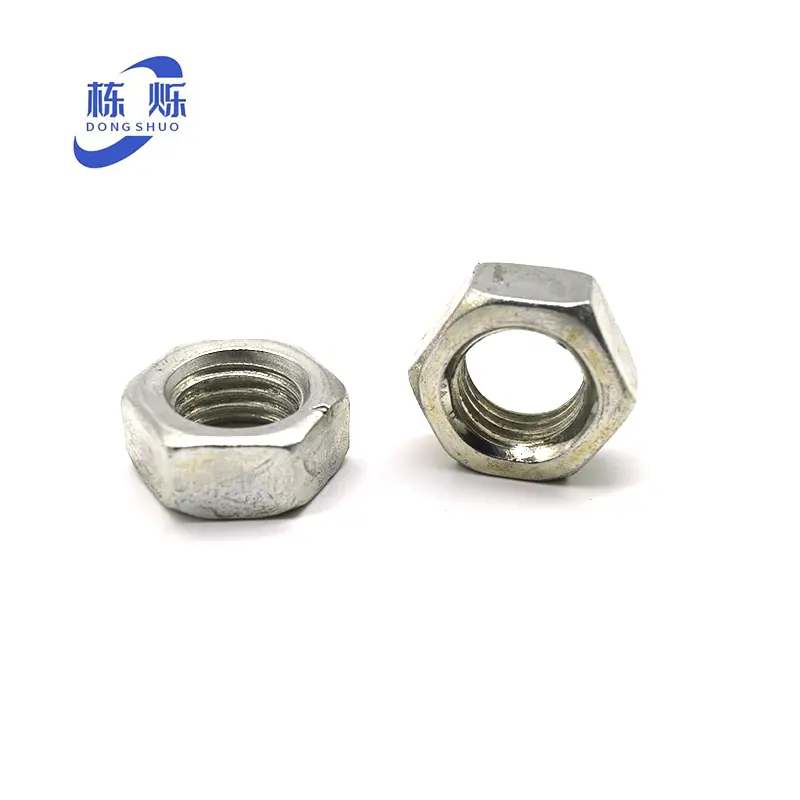
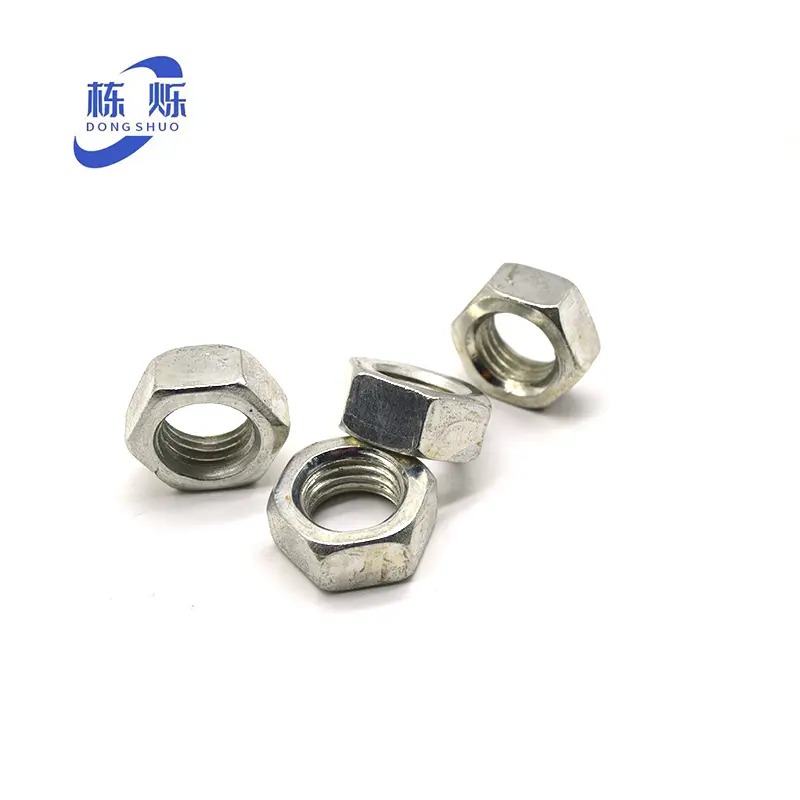
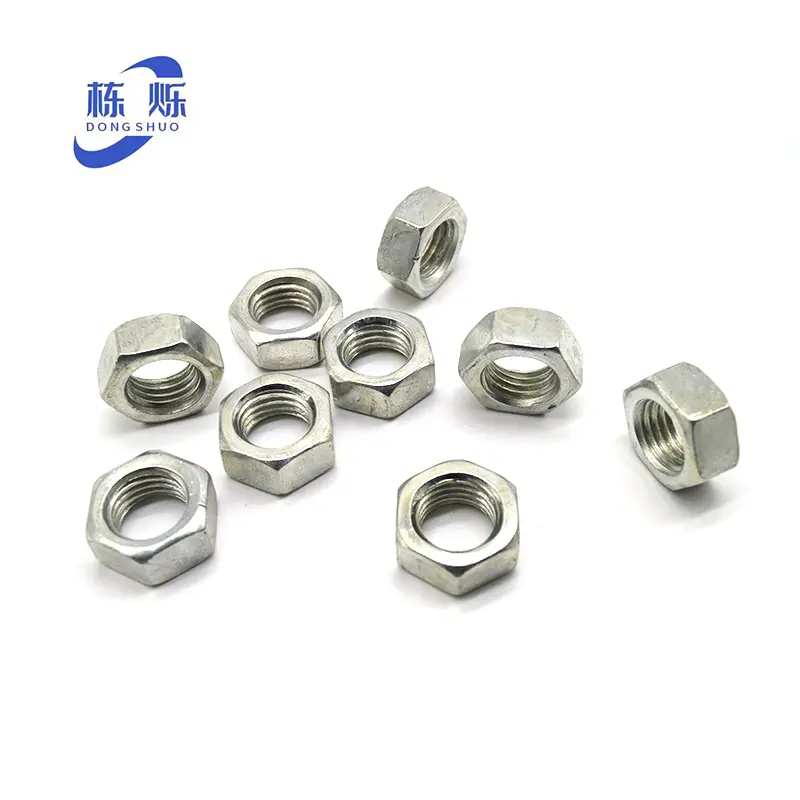
The galvanized coating (hot-dip or electro-galvanized) on DIN 934 hexagonal nuts provides excellent corrosion resistance, protecting the steel fastener from rust and oxidation. This makes them suitable for outdoor, construction, and industrial applications where exposure to moisture or harsh environments is expected.
What thread sizes are available for DIN 934 hexagonal nuts?
DIN 934 hexagonal nuts are available in a comprehensive range of metric thread sizes, from M5 up to M64. Sizes in parentheses — such as (M14), (M18), (M22) — are non-preferred sizes that are available but less commonly used in standard applications.
Can DIN 934 nuts be customized in terms of material or quantity?
Yes. As shown in our production process, customers can specify their desired product, choose the material (e.g., carbon steel, stainless steel, alloy steel), define sizing requirements, and place orders with flexible quantities. Custom processing and tailored solutions are available upon request.
How is the weight of DIN 934 nuts calculated and why does it matter?
The weight per 1,000 pieces (in kg, for steel) is provided in the specification table for each thread size. This data is essential for logistics planning, cost estimation, and structural load calculations. For example, 1,000 pieces of M5 nuts weigh approximately 1.13 kg, while 1,000 pieces of M64 nuts weigh approximately 1,669 kg.
What is the difference between the "m" and "mw" dimensions?
The dimension "m" refers to the overall nominal nut height, with both maximum and minimum tolerance values listed. The dimension "mw" represents the bearing face width (wrench face height), which is the minimum effective height of the nut used for load-bearing contact. Both dimensions are critical for ensuring proper fit and mechanical performance.
 Dongshuo