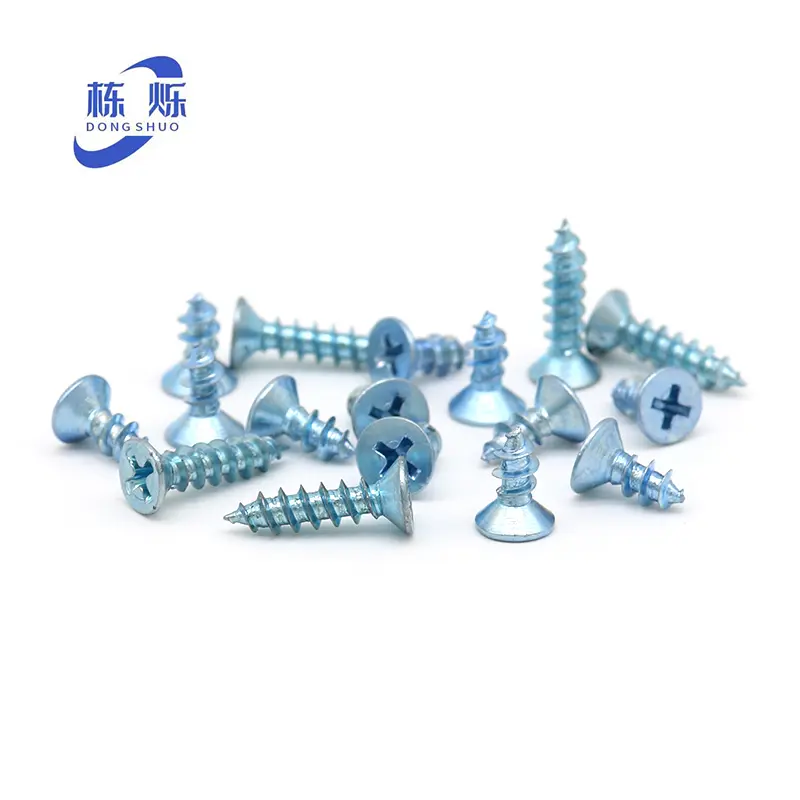
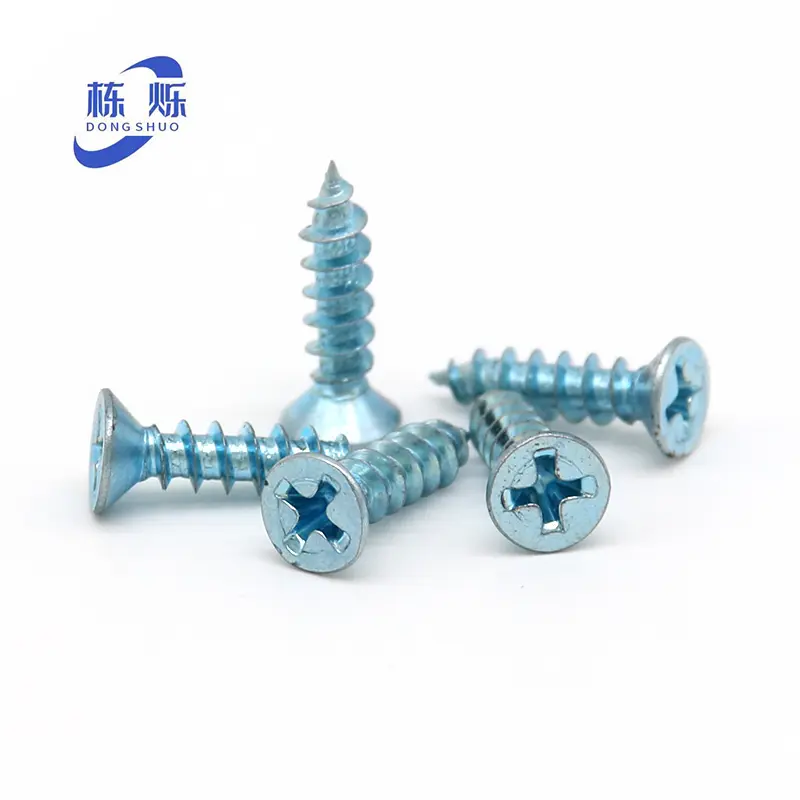
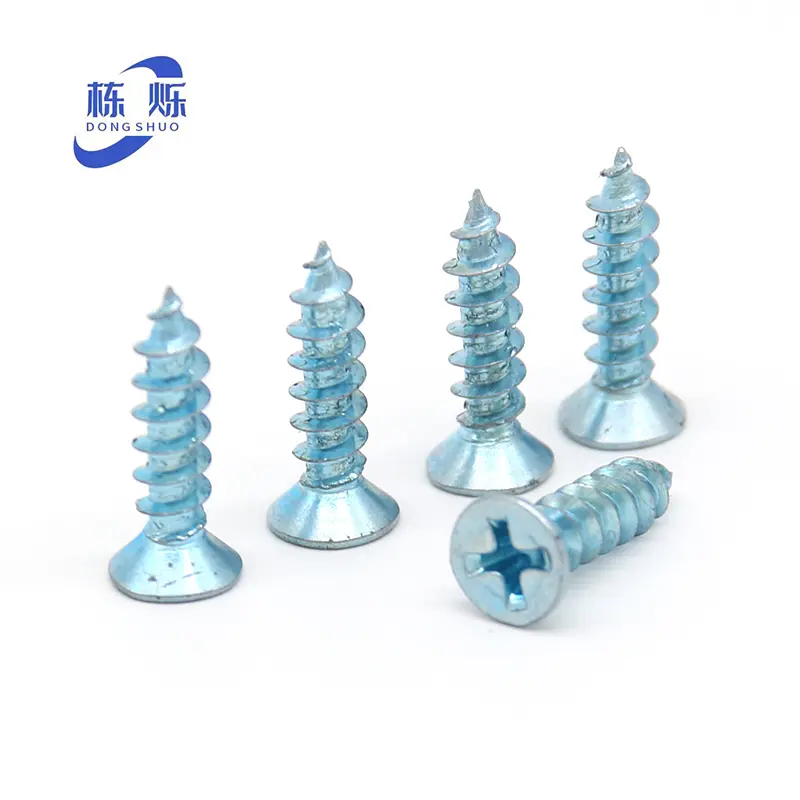
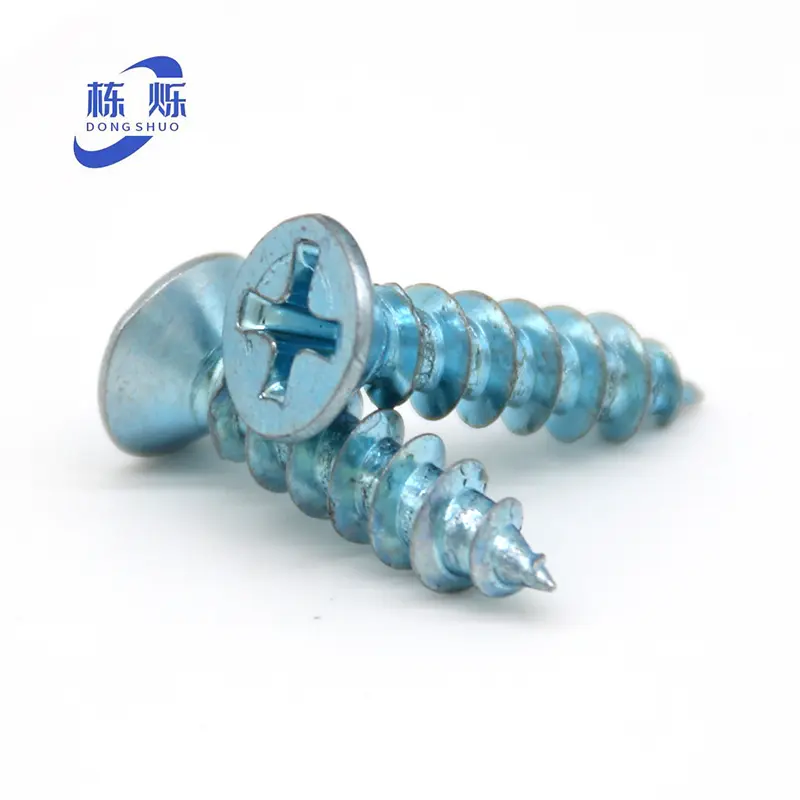
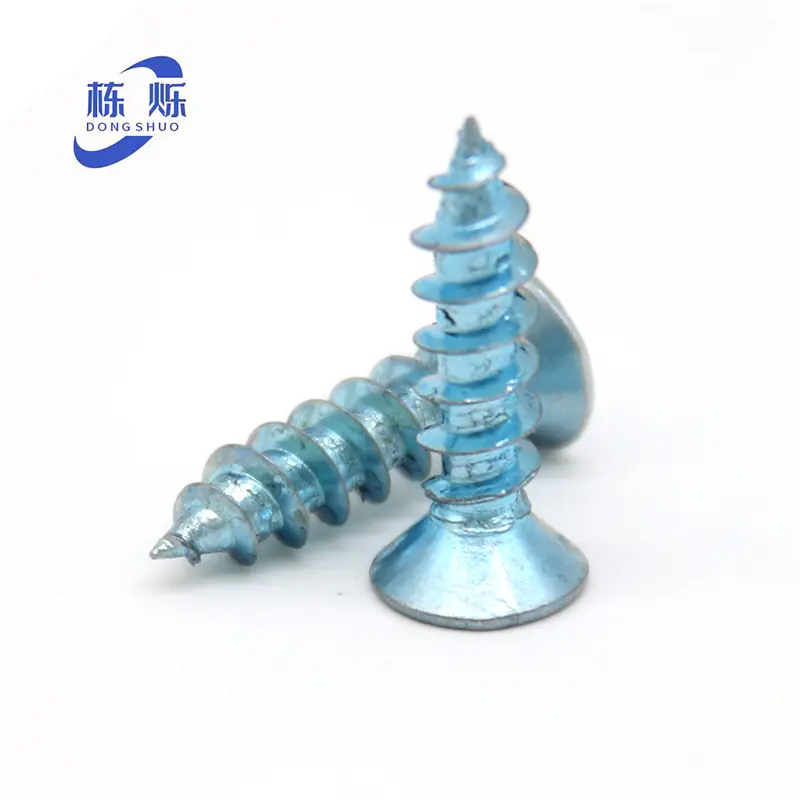
High-Quality Galvanized Countersunk Cross Tapping Screws - Quality China Suppliers & Factory for Reliable Installation Manufacturer, Factory

When selecting self-tapping screws, it's essential to evaluate your usage environment to ensure compatibility with your project. As one of the leading **suppliers** in **China**, we provide high-quality self-tapping screws designed for various applications. Whether you are using an electric or manual screwdriver, always follow the operating manual carefully for optimal performance. Pay close attention to drilling depth, as improper lengths can impact the fixing effect. Additionally, ensure that the materials, sizes, and threads of the screws are accurately chosen to guarantee a secure installation. Our **factory** prioritizes quality and precision, making us your go-to source for reliable self-tapping screws in the industry

Product Description

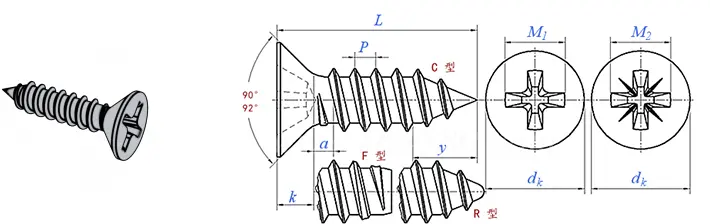
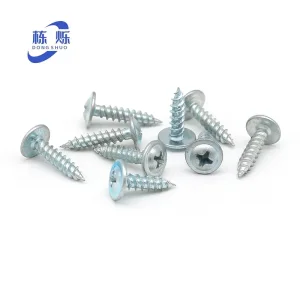
Galvanized countersunk cross tapping screws
Thread specifications ST2.2 ST2.9 ST3.5 ST4.2 ST4.8 ST5.5 ST6.3 ST8 ST9.5
P Pitch 0.8 1.1 1.3 1.4 1.6 1.8 1.8 2.1 2.1
a Max 1.6 2.2 2.6 2.8 3.2 3.6 3.6 4.2 4.2
dk Max 3.8 5.5 7.3 8.4 9.3 10.3 11.3 15.8 18.3
Min 3.5 5.2 6.9 8 8.9 9.9 10.9 15.4 17.8
k Max 1.1 1.7 2.35 2.6 2.8 3 3.15 4.65 5.25
Slot Number 0 1 2 2 2 3 3 4 4
M1 Cruciform 1.9 3.2 4.4 4.6 5.2 6.6 6.8 8.9 10
M2 Zigzag slot 2 3 4.1 4.4 4.9 6.3 6.6 8.8 9.8
y Reference value Type C 2 2.6 3.2 3.7 4.3 5 6 7.5 8
Type F 1.6 2.1 2.5 2.8 3.2 3.6 3.6 4.2 4.2
Type R / / 2.7 3.2 3.6 4.3 5
How to Choose a Suitable Self Tapping Screw
1
Select by Material Select different self tapping screws based on the material characteristics that need to be nailed in. For example, for hard materials, choose self tapping screws with high strength, appropriate length and diameter.
2
Select by Thread Type Self tapping screws usually have two types: coarse thread and fine thread, and different threads are usually suitable for different materials.
3
Select by Head Shape The pentagonal head self tapping screw is more sturdy than the ordinary round head self tapping screw, but the price is also relatively high.
Frequently Asked Questions (FAQ)
Q1What is the difference between coarse thread and fine thread self tapping screws?
Coarse thread self tapping screws have wider thread spacing and are ideal for softer materials such as wood and plastic, providing strong grip. Fine thread screws have narrower spacing, offering better precision and are more suitable for harder materials like thin sheet metal.
Q2What does the "ST" designation mean in self tapping screw sizing?
"ST" stands for "Self Tapping." The number following ST indicates the nominal outer diameter of the screw thread in millimeters, such as ST4.2 meaning a 4.2mm diameter self tapping screw.
Q3What are the differences between Type C, Type F, and Type R self tapping screws?
Type C has a blunt tip designed for use with pre-drilled holes in harder materials. Type F features a sharp, tapered point for cutting into softer materials without pre-drilling. Type R has a rounded point, commonly used in sheet metal applications.
Q4Why are galvanized self tapping screws recommended for outdoor use?
Galvanized self tapping screws are coated with a layer of zinc, which provides excellent corrosion and rust resistance. This makes them highly suitable for outdoor environments and humid conditions.
Q5How do I determine the correct length of a self tapping screw?
The screw should penetrate at least 2–3 times its diameter into the base material. For example, an ST4.2 screw should have at least 8–12mm of thread engagement.
Q6What is the advantage of a countersunk head over a round head?
Countersunk heads sit flush with or below the surface of the material, providing a clean, smooth finish, which is useful for flat surface requirements or aesthetic concerns.

Related Products