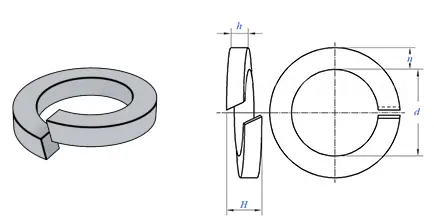
📏 Dimensions Table (Nominal Diameter M2 to M14)
| Nominal diameter |
2 | 2.5 | 3 | 4 | 5 | 6 | 8 | 10 | 12 | 14 |
| d (mm) | Min |
2.1 | 2.6 | 3.1 | 4.1 | 5.1 | 6.2 | 8.2 | 10.2 | 12.3 | 14.3 |
| Max |
2.3 | 2.8 | 3.3 | 4.4 | 5.4 | 6.7 | 8.7 | 10.7 | 12.8 | 14.9 |
| h (mm) | Nominal |
0.6 | 0.8 | 1 | 1.2 | 1.6 | 2 | 2.5 | 3 | 3.5 | 4 |
| Min |
0.52 | 0.7 | 0.9 | 1.1 | 1.5 | 1.9 | 2.35 | 2.85 | 3.3 | 3.8 |
| Max |
0.68 | 0.9 | 1.1 | 1.3 | 1.7 | 2.1 | 2.65 | 3.15 | 3.7 | 4.2 |
| H (mm) | Min |
1.2 | 1.6 | 2 | 2.4 | 3.2 | 4 | 5 | 6 | 7 | 8 |
| Max |
1.5 | 2.1 | 2.6 | 3 | 4 | 5 | 6.5 | 8 | 9 | 10.5 |
| Weight (kg/1000pcs) |
0.023 | 0.053 | 0.097 | 0.182 | 0.406 | 0.745 | 1.53 | 2.82 | 4.63 | 6.85 |
📏 Dimensions Table (Nominal Diameter M16 to M48)
| Nominal diameter |
16 | 18 | 20 | 22 | 24 | 27 | 30 | 36 | 42 | 48 |
| d (mm) | Min |
16.3 | 18.3 | 20.5 | 22.5 | 24.5 | 27.5 | 30.5 | 36.6 | 42.6 | 49 |
| Max |
16.9 | 19.1 | 21.3 | 23.3 | 25.5 | 28.5 | 31.5 | 37.8 | 43.8 | 50.2 |
| h (mm) | Nominal |
4 | 4.5 | 5 | 5 | 6 | 6 | 6.5 | 7 | 8 | 9 |
| Min |
3.8 | 4.3 | 4.8 | 4.8 | 5.8 | 5.8 | 6.2 | 6.7 | 7.7 | 8.7 |
| Max |
4.2 | 4.7 | 5.2 | 5.2 | 6.2 | 6.2 | 6.8 | 7.3 | 8.3 | 9.3 |
| H (mm) | Min |
8 | 9 | 10 | 10 | 12 | 12 | 13 | 14 | 16 | 18 |
| Max |
10.5 | 11.5 | 13 | 13 | 15 | 15 | 17 | 18 | 21 | 23 |
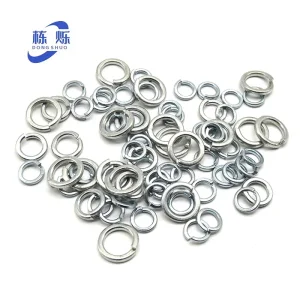
⚙️ Key Functions of Spring Washers
🔒
Prevent Looseness
Spring washers provide an additional tightening force to help prevent the loosening of bolts or nuts due to vibration or other factors.
📳
Reduce Vibration
Spring washers reduce vibration in mechanical devices and decrease impact on connecting parts to protect them from damage.
🔄
Disperse Pressure
With a high degree of elasticity, these washers disperse the tightening pressure, helping to protect the integrity of connecting parts.
🎯
Adjust Tightening Force
They can be used to adjust the tightening force, ensuring that the connecting parts receive appropriate pressure for stability.
💡 In general, spring washers play an important role in a variety of mechanical devices to help ensure the safety and reliability of connecting parts.
✅ Genuine Product Guarantee
💰 Competitive Price Discounts
🏭 Manufacturer Direct Sales
🏆 Quality Assurance
❓ Frequently Asked Questions
Q1 What is a DIN 127 spring washer?
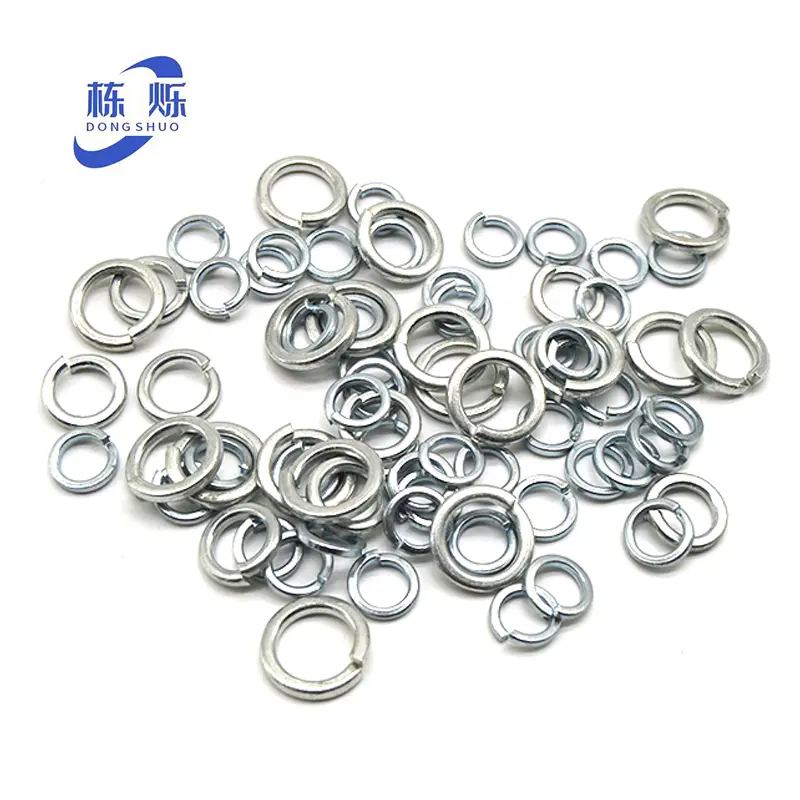
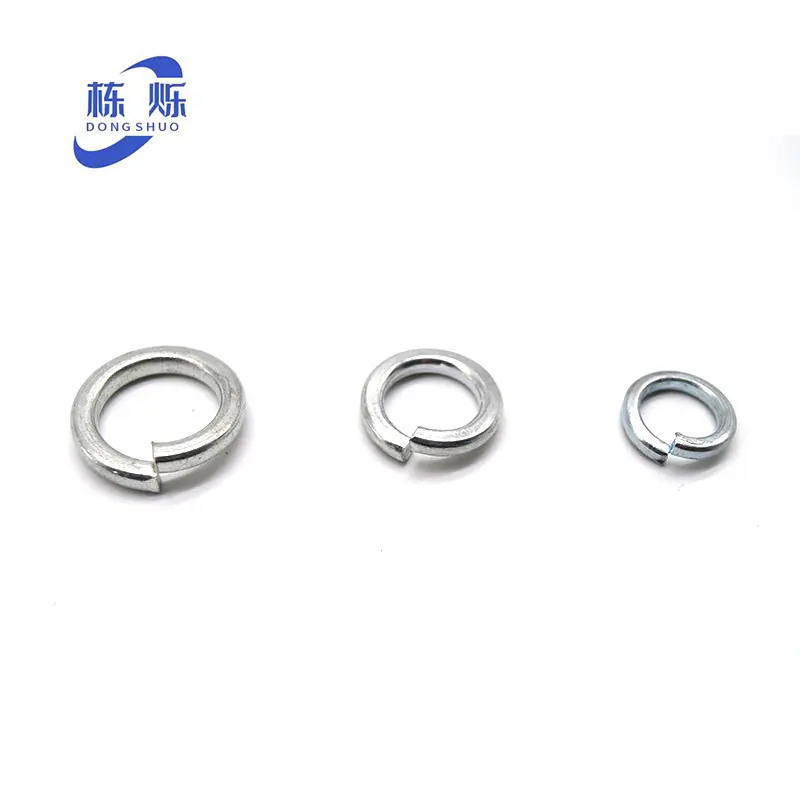
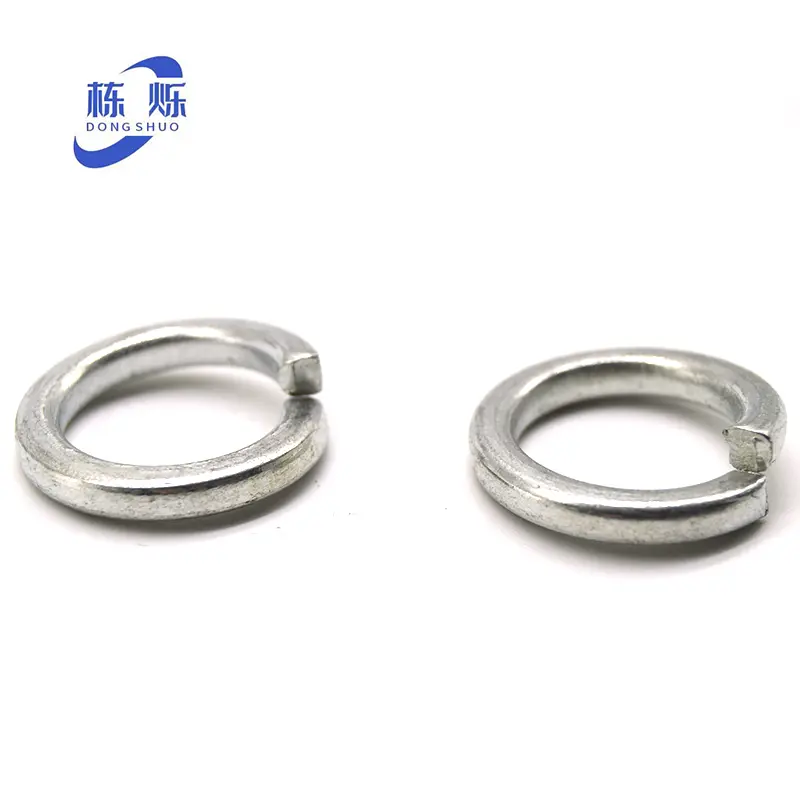
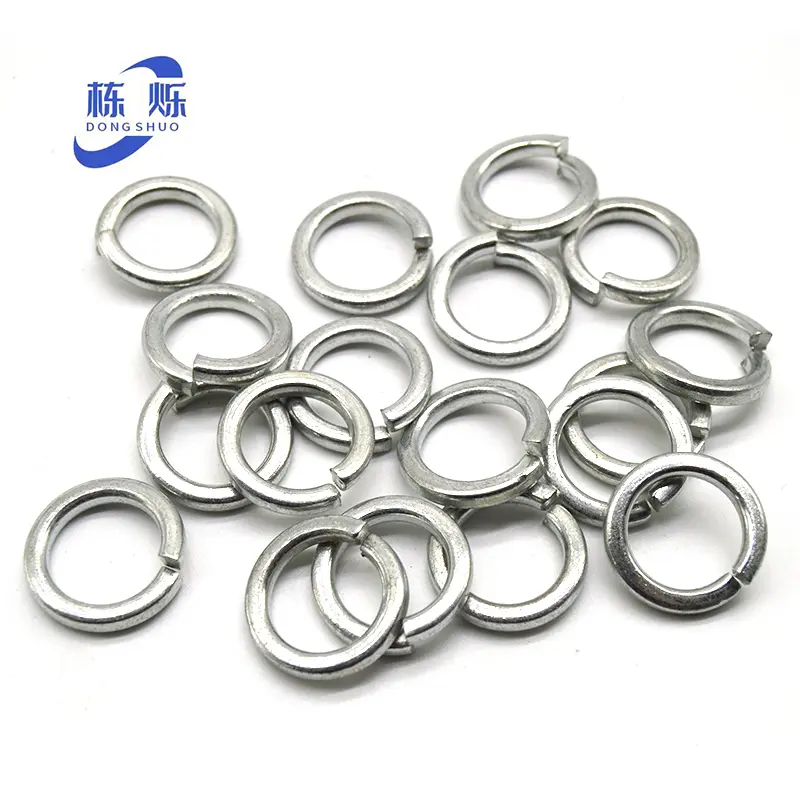
A DIN 127 spring washer is a split, helical washer manufactured to the German DIN 127 standard. It is designed to provide a spring force under a bolt or nut head to prevent loosening caused by vibration, shock, or thermal expansion.
Q2 What materials are these washers available in?
They are commonly available in carbon steel (with various surface treatments like zinc plating), stainless steel (A2 and A4 grades), and other alloy materials depending on the corrosion resistance required.
Q3 What size range does DIN 127 cover?
The DIN 127 standard covers a wide range of nominal diameters, starting from small M2 sizes up to heavy-duty M48 applications.
Q4 How does the spring mechanism work?
The split, helical design creates spring tension between the fastener head and the mating surface. This tension maintains constant clamping force even during movement, resisting rotational loosening.
Q5 Which industries use DIN 127 washers?
They are widely used in automotive, machinery manufacturing, construction, electronics, rail transportation, and general industrial assembly where vibration-resistant fastening is critical.
Q6 How do I select the correct size?
Select the washer based on the nominal diameter of your bolt. For an M8 bolt, use an M8 washer. Always refer to the inner diameter (d) and total height (H) in the dimension tables to ensure a perfect fit.
 Dongshuo