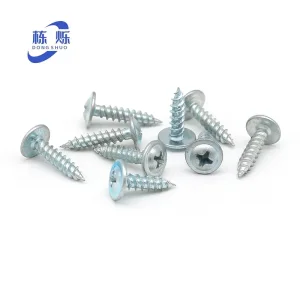
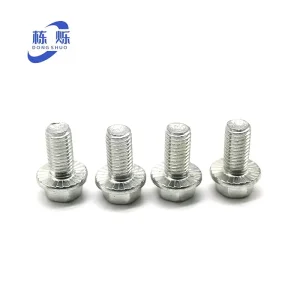
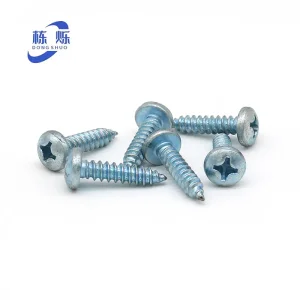
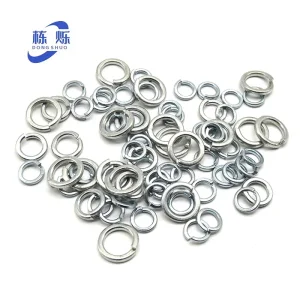
China Suppliers Factory Yellow Zinc Plated Hex Flange Bolt DIN 6921 - Carbon Steel, Alloy, Stainless, Brass Options

Discover high-quality fasteners directly from China, a leading hub for industrial supplies. Our products are available at a competitive FOB price ranging from US $0.6 to $9.99 per piece, with a minimum order quantity of 100 pieces. We specialize in delivering up to 10,000 pieces per month to meet your supply needs. Our fasteners undergo various surface treatments, including Plain, Zinc Plated (ZP), Galvanized, Hot Dip Galvanized, and Dacromet, ensuring durability and corrosion resistance. We offer a wide selection of materials such as Carbon Steel, Alloy Steel, Stainless Steel, Brass, and Copper. Adhering to international standards like DIN, GB, UNC, BSW, and JIS, our products come with certifications from ISO9001, ISO14001, ISO45001, and SGS. Choose from various grades including 4.8, 8.8, 10.9, 12.9, A2-70, A4-70, and A4-80. Partner with our factory to source the best fasteners from trusted China suppliers.

Product Description

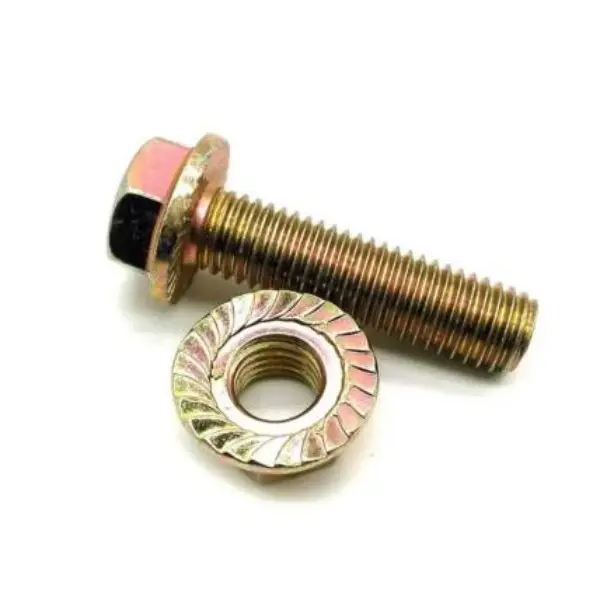
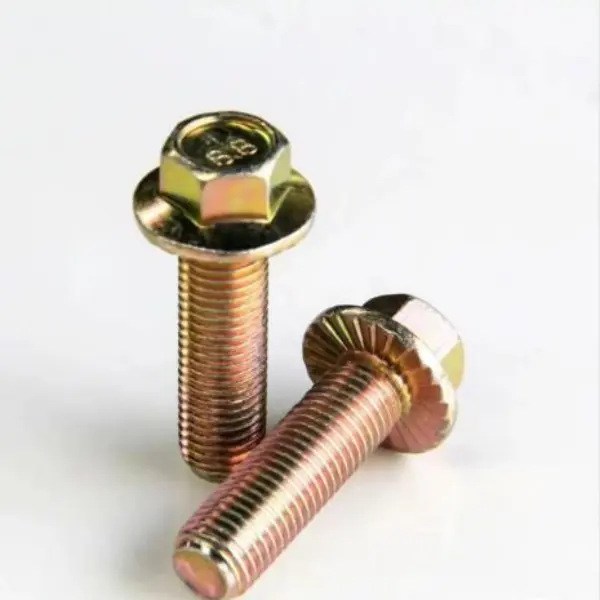
Flange bolt, also known as flange bolt, is a special type of bolt with a flange surface (flange), widely used in situations that require high preload, anti loosening, and sealing.
⚙️ Structural Characteristics
Flange Surface Design
There is an integral flange (circular gasket) below the bolt head, which increases the contact area, disperses pressure, and reduces damage to the connection surface.
Hexagonal or Twelve-Pointed Head
Commonly designed as a hexagonal head, easy to tighten with standard tools; some high-strength models use twelve corner heads.
Anti-Slip Tooth Pattern
The flange surface of some flange bolts has radial tooth patterns to enhance friction and prevent loosening.
Main Advantages
No Additional Gaskets Needed
The integrated flange replaces traditional gaskets, simplifies installation steps, and reduces costs.
Anti-Vibration & Anti-Loosening
The flange surface increases friction, and the tooth pattern design further prevents bolts from loosening in vibration environments.
Uniform Force Distribution
The flange disperses the load, protects the surface of the connected parts, and avoids crushing or deformation.
Sealing Enhancement
When combined with flange surfaces and soft materials such as rubber gaskets, the sealing performance can be improved.
🏗️ Common Application Areas
🚗
Automotive Industry
Key parts such as the engine, gearbox, and wheel hub are adapted to high vibration environments.
⚙️
Machinery Manufacturing
Heavy equipment, machine tools, pumps, valves, and other connections requiring high preload force.
🌉
Architecture
Wind and earthquake resistant structures such as bridges, steel frames, and curtain walls.
🚉
Rail Transit
Scenarios with high requirements for safety and reliability, such as rail vehicles and signal equipment.
🛠️ Material and Surface Treatment
📋 Common Materials
  • Carbon steel (4.8 grade, 8.8 grade, 10.9 grade)
  • Stainless steel (A2-304, A4-316, corrosion-resistant)
  • Alloy steel (high-strength or high-temperature resistant)
🛡️ Surface Treatment
  • Galvanized (conventional anti-corrosion)
  • Dacromet (high corrosion resistance)
  • Hot dip galvanizing (heavy-duty anti-corrosion)
  • Phosphating (enhancing wear resistance)
Frequently Asked Questions
Q: What is the main difference between a flange bolt and a regular bolt?
A flange bolt features an integrated flange beneath the bolt head that distributes clamping force over a larger surface area. Regular bolts require a separate washer to achieve the same effect.
Q: Do flange bolts require additional washers during installation?
In most applications, no. The built-in flange acts as an integrated washer, eliminating the need for a separate flat washer and simplifying the assembly process.
Q: Are flange bolts suitable for high-vibration environments?
Yes. The larger flange surface increases friction, and serrated variants further resist loosening under dynamic loads, making them ideal for automotive and rail transit.
Q: What materials are flange bolts commonly made from?
They are commonly made from carbon steel (grades 4.8, 8.8, 10.9), stainless steel (A2-304 or A4-316), and alloy steel for high-strength requirements.
Q: What surface treatments are available for flange bolts?
Common treatments include zinc plating for standard protection, Dacromet for high corrosion resistance, hot-dip galvanizing for outdoor use, and phosphating for wear resistance.
Q: In which industries are flange bolts most widely used?
They are critical in automotive, machinery manufacturing, structural engineering (bridges/steel frames), and rail transit where safety and vibration resistance are paramount.

Related Products