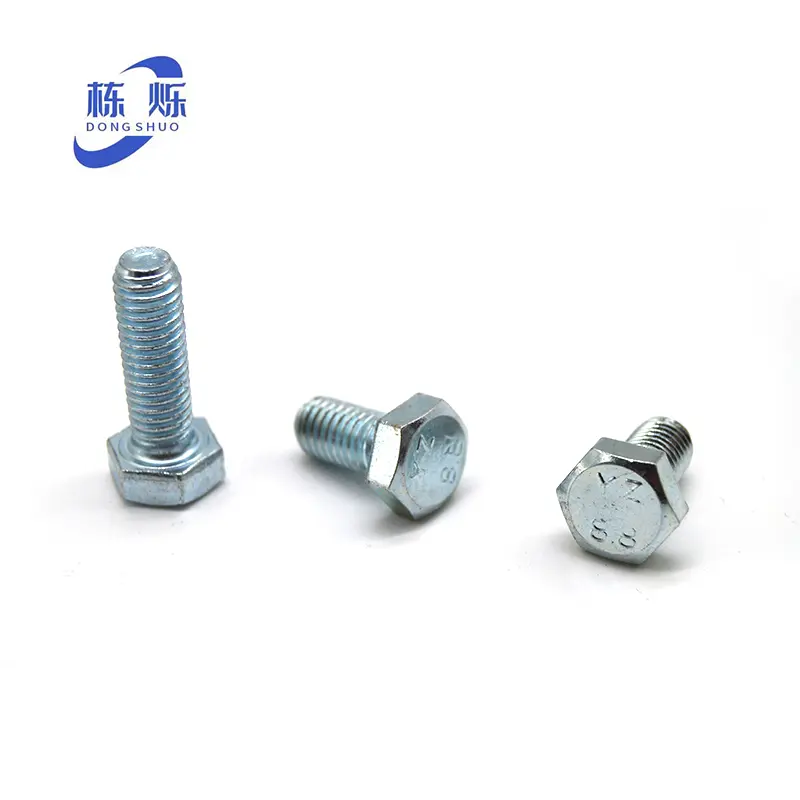
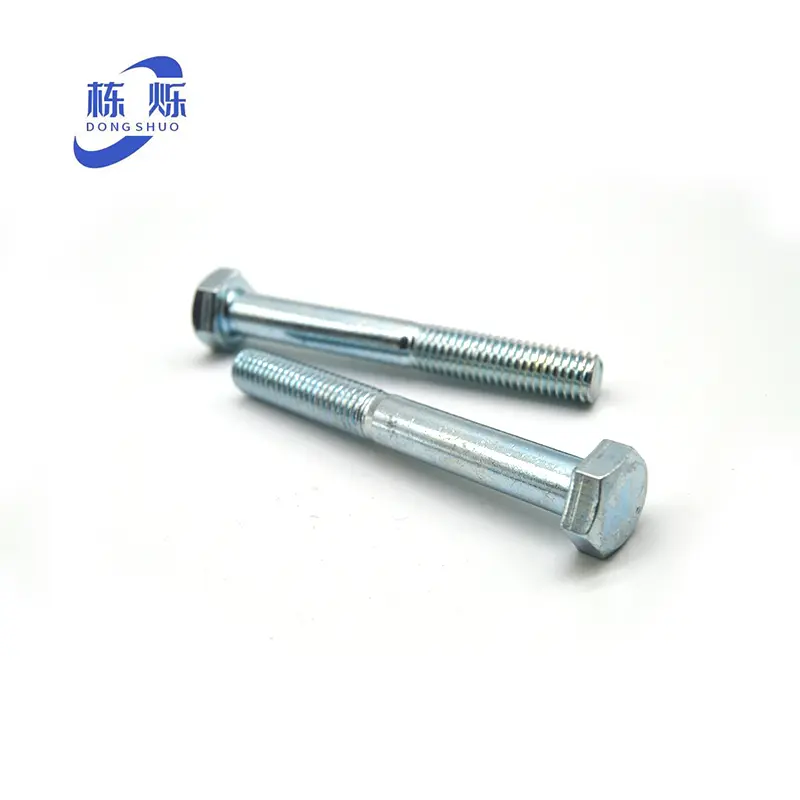
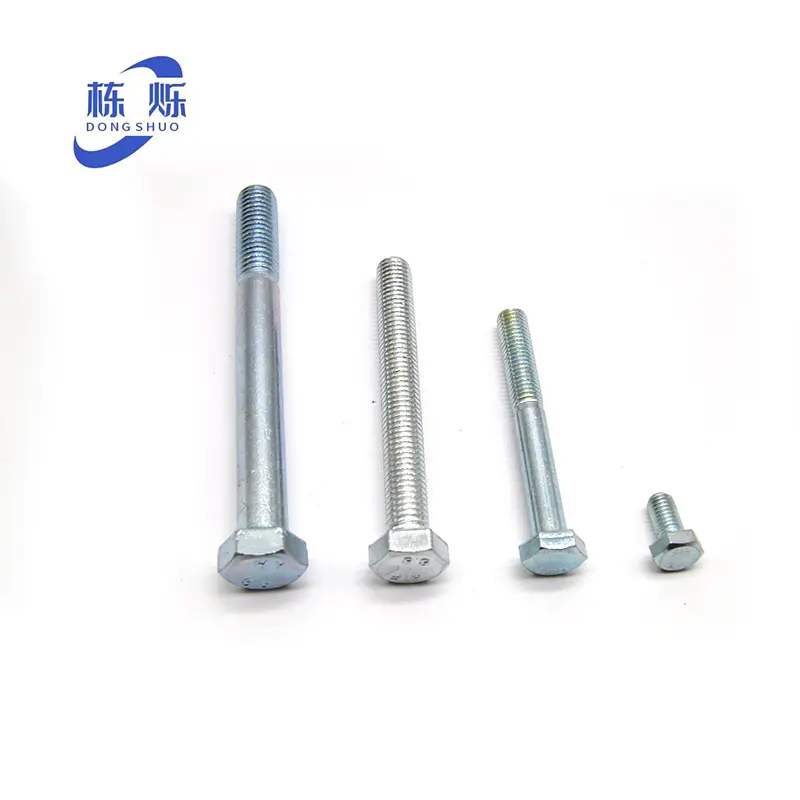
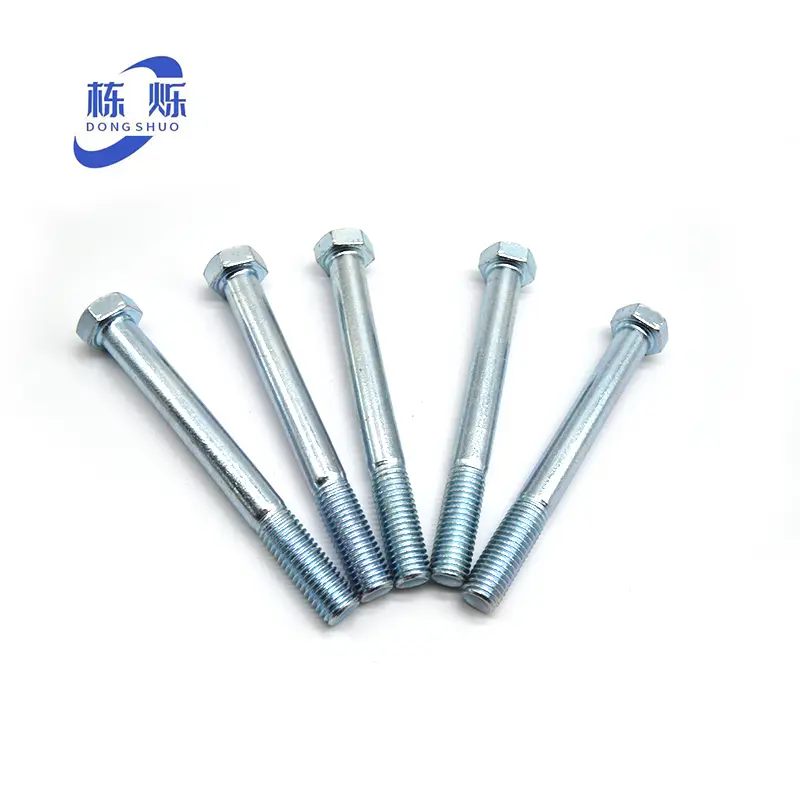
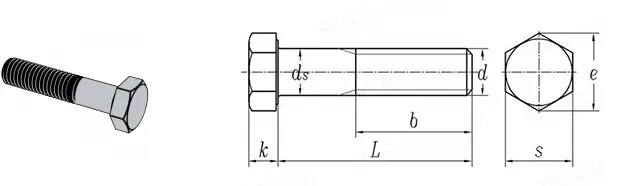
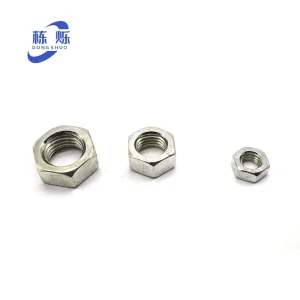
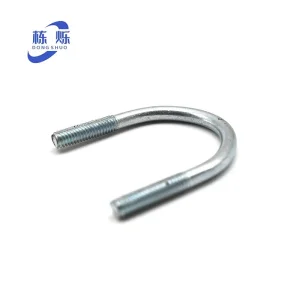
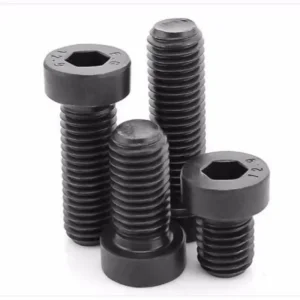
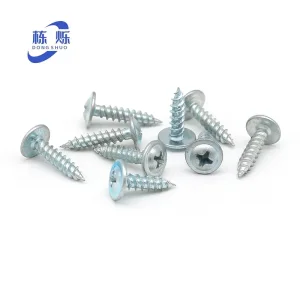
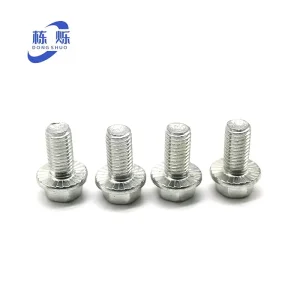
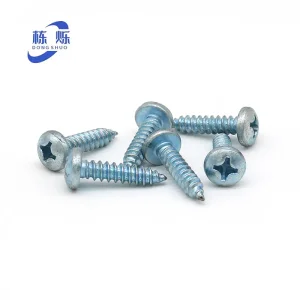
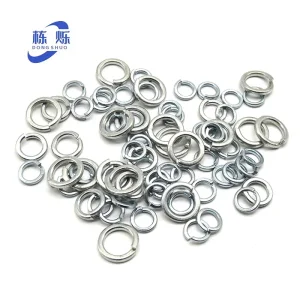
External hexagonal bolts are a common type of mechanical fastener, mainly used for connecting and fixing mechanical equipment in professional industrial applications.
📋 Thread Specifications — M10 to M24
| Thread Specifications (d) |
M10 |
M12 |
M14 |
M16 |
M18 |
M20 |
M22 |
M24 |
| P |
Pitch |
1.50 |
1.75 |
2.0 |
2.0 |
2.5 |
2.5 |
2.5 |
3 |
| b |
L ≤ 125 |
26 |
30 |
34 |
38 |
42 |
46 |
50 |
54 |
| 125 < L ≤ 200 |
32 |
36 |
40 |
44 |
48 |
52 |
56 |
60 |
| L > 200 |
/ |
/ |
/ |
57 |
61 |
65 |
69 |
73 |
| ds |
Max |
10 |
12 |
14 |
16 |
18 |
20 |
22 |
24 |
| Min |
9.64 |
11.57 |
13.57 |
15.57 |
17.57 |
19.48 |
21.48 |
23.48 |
| e |
Min |
19.68 |
22.58 |
25.94 |
29.3 |
32.66 |
36.96 |
39.2 |
44.8 |
| k |
Max |
6.69 |
7.79 |
9.09 |
10.29 |
11.85 |
12.85 |
14.35 |
15.35 |
| Min |
6.11 |
7.21 |
8.51 |
9.71 |
11.15 |
12.15 |
13.65 |
14.65 |
| s |
Max |
18 |
21 |
24 |
27 |
30 |
34 |
36 |
41 |
| Min |
17.57 |
20.16 |
23.16 |
26.16 |
29.16 |
33 |
35 |
40 |
📋 Thread Specifications — M27 to M48
| Thread Specifications (d) |
M27 |
M30 |
M33 |
M36 |
M39 |
M42 |
M45 |
M48 |
| P |
Pitch |
3 |
3 |
3 |
3 |
3 |
3 |
3 |
3 |
| b |
L ≤ 125 |
60 |
66 |
72 |
78 |
84 |
90 |
96 |
102 |
| 125 < L ≤ 200 |
66 |
72 |
78 |
84 |
90 |
96 |
102 |
108 |
| L > 200 |
79 |
85 |
91 |
97 |
103 |
109 |
115 |
121 |
| ds |
Max |
27 |
30 |
33 |
36 |
39 |
42 |
45 |
48 |
| Min |
26.48 |
29.48 |
32.38 |
35.38 |
38.38 |
41.38 |
44.38 |
47.38 |
| e |
Min |
50.4 |
54.9 |
60.3 |
65.9 |
71.5 |
71.5 |
76.3 |
81.9 |
| k |
Max |
17.35 |
19.12 |
21.42 |
22.92 |
25.42 |
26.42 |
28.42 |
30.42 |
| Min |
16.65 |
18.28 |
20.58 |
22.08 |
24.58 |
25.58 |
27.58 |
29.58 |
| s |
Max |
46 |
50 |
55 |
60 |
65 |
65 |
70 |
75 |
| Min |
45 |
49 |
53.8 |
58.8 |
63.8 |
63.8 |
68.1 |
73.1 |
-
🔗
Connecting Components: The outer hexagonal bolt fixes multiple components together through the action of torque, forming a structural whole.
-
💪
Load Bearing: Due to its high-strength design, the outer hexagonal bolt can withstand large loads and shear forces, ensuring the firmness of the connection.
-
🔧
Easy Installation: Can be completed quickly with a standard wrench or spanner, improving production efficiency without special fixtures.
-
🌍
Wide Application Range: Suitable for heavy machinery, construction, bridge engineering, and various high-demand connection situations.
❓ Frequently Asked Questions (FAQ)
🔹 What is an external hexagonal bolt?
An external hexagonal bolt (hex bolt) features a six-sided head that allows tightening with a standard wrench or socket tool, ideal for high-torque industrial and construction applications.
🔹 What thread sizes are available?
They are available in a wide range of metric sizes, typically from M10 up to M48. Common sizes include M12, M16, M20, M24, and M30, each with specific pitch and wrench size requirements.
🔹 What materials are used for manufacturing?
Common materials include carbon steel, alloy steel, and stainless steel. Carbon steel is often zinc-plated for corrosion resistance, while stainless steel is used for moisture-heavy environments.
🔹 Which industries use these bolts?
They are widely used in construction, bridge engineering, heavy machinery manufacturing, automotive assembly, and shipbuilding due to their high load-bearing capacity.
🔹 How do I select the correct bolt length?
Length depends on the material thickness plus the required thread engagement. Generally, thread engagement should be at least 1.5 times the bolt diameter for a secure connection.
🔹 What standards do these bolts follow?
They follow international standards such as ISO 4014, ISO 4017, DIN 931, DIN 933, and ASME B18.2.3 to ensure global interchangeability and safety.
 Dongshuo