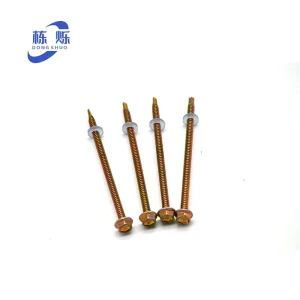
| FOB Price |
US $0.5 - 9,999 / Piece |
| Min.Order Quantity |
100 Piece/Pieces |
| Supply Ability |
10000 Piece/Pieces per Month |
⚙️ Materials and Surface Treatment
Common materials
Carbon steel: Low cost, high strength, surface requires rust prevention treatment, such as galvanizing and Dacromet.
Stainless steel (304/316): Strong corrosion resistance, suitable for humid or chemical environments.
Aluminum alloy/copper: Lightweight or conductive demand scenarios, but with lower strength.
Surface Treatment
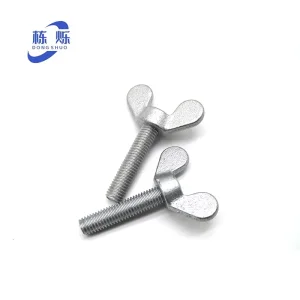
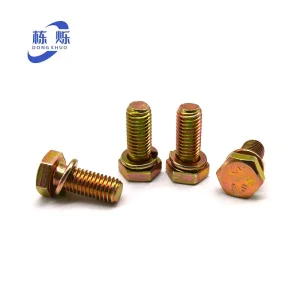
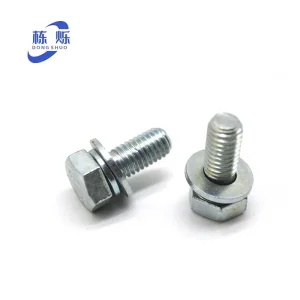
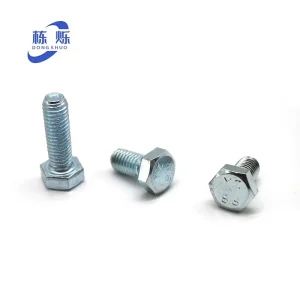
Galvanization: Divided into electroplating (blue and white zinc, color zinc) and hot-dip galvanizing, generally rust resistant, suitable for indoor environments.
Dacromet (zinc chromium coating): No risk of hydrogen embrittlement, high temperature resistance, corrosion resistance, used in automobiles and outdoors.
Phosphating: Increases lubricity and reduces installation friction.
Nylon coating: Insulation, anti loosening, commonly used in electronic devices.
🚀 Application Fields
Automotive manufacturing: Sheet metal parts, interior panels, and wiring harness fixation must be shock resistant and anti loose.
Electronic appliances: Circuit board and shell assembly, mainly small size (M2-M4) to avoid conductive interference.
Architectural decoration: Installation of color steel plates, aluminum alloy doors and windows, and protection of flange surfaces from scratches.
Mechanical equipment: Panels and enclosures fixed to withstand vibration environments.
📏 Specifications and Standards
Common specifications
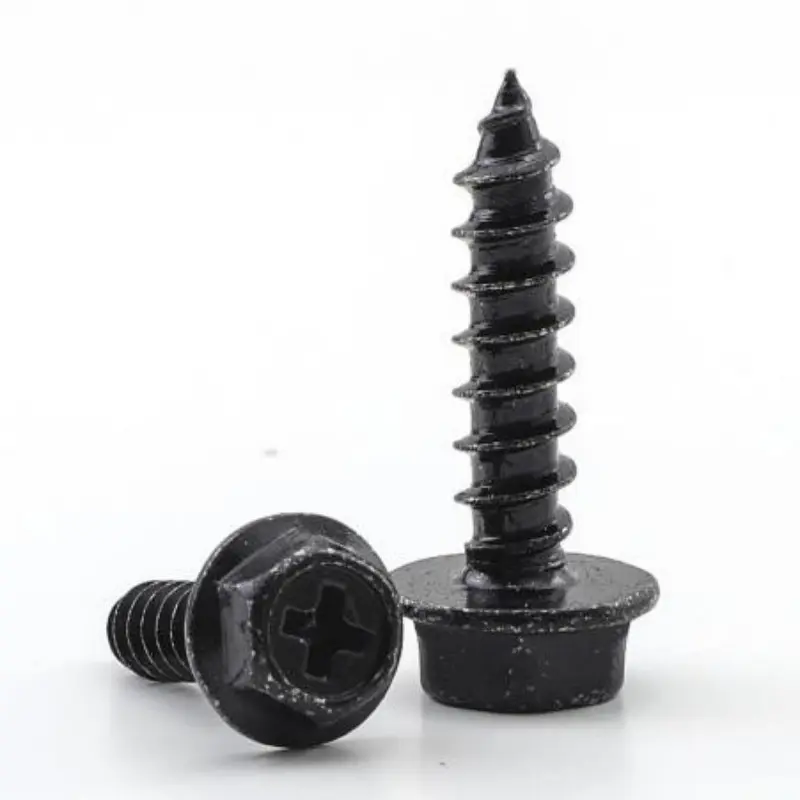
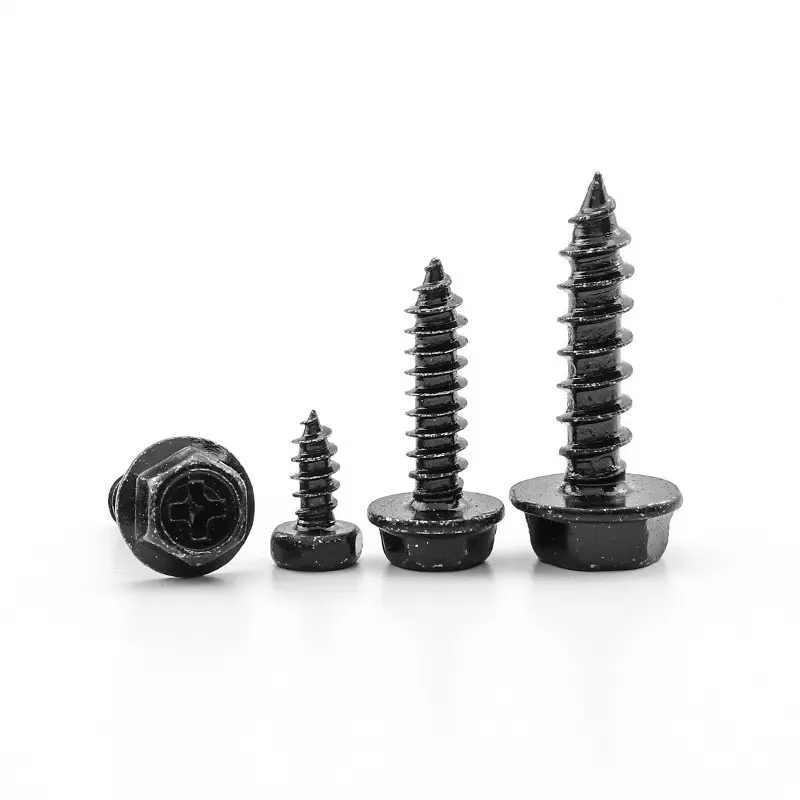
Nominal diameter: M2 to M12 (commonly M4-M6).
Length range: 6mm to 100mm, depending on application requirements.
Flange diameter: Usually 2-3 times the diameter of the screw (such as M5 flange surface diameter of about 10-15mm).
International Standard
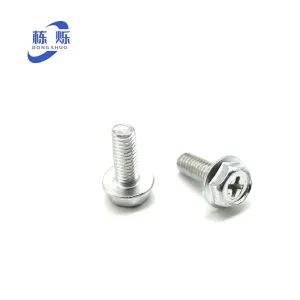
National standard: GB/T 15856.4 (Pan head cross flange self tapping screws).
German standard: DIN 7500 (Technical standard for self tapping screws).
American standards: ANSI/ASME B18.6.4, SAE J78 (automotive applications).
❓ Frequently Asked Questions
What are the main advantages of using stainless steel 316 for these screws?
Stainless steel 316 offers superior corrosion resistance compared to 304, making it ideal for marine or highly humid chemical environments where long-term durability is essential.
Why is Dacromet coating preferred for automotive applications?
Dacromet coating is highly resistant to high temperatures and corrosion without the risk of hydrogen embrittlement, which is critical for the safety and longevity of automotive components.
Can these screws be used in electronic devices?
Yes, smaller sizes (M2-M4) are frequently used in electronic assembly. Nylon coatings can also be applied to provide insulation and anti-loosening properties.
What is the significance of the flange diameter?
The flange diameter is typically 2-3 times the screw diameter, which helps distribute pressure over a larger surface area and protects the flange surface from scratches during installation.
Do you comply with international manufacturing standards?
Yes, our products follow major international standards including GB/T 15856.4, German DIN 7500, and American ANSI/ASME B18.6.4 or SAE J78 standards.
What is the typical supply capacity for these screws?
We maintain a supply ability of approximately 10,000 pieces per month to meet both small and large-scale industrial demands.
 Dongshuo