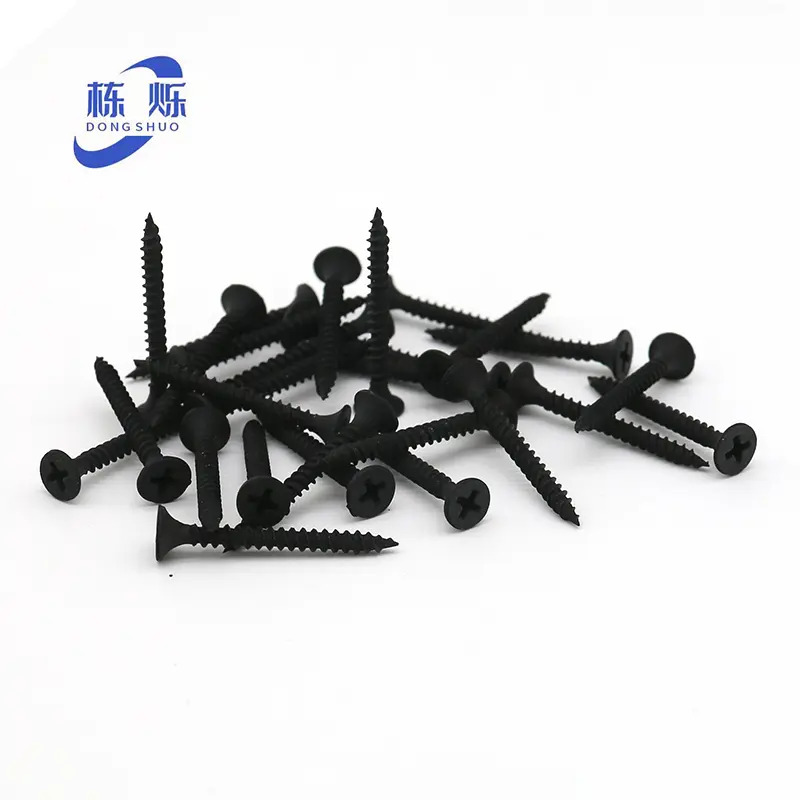
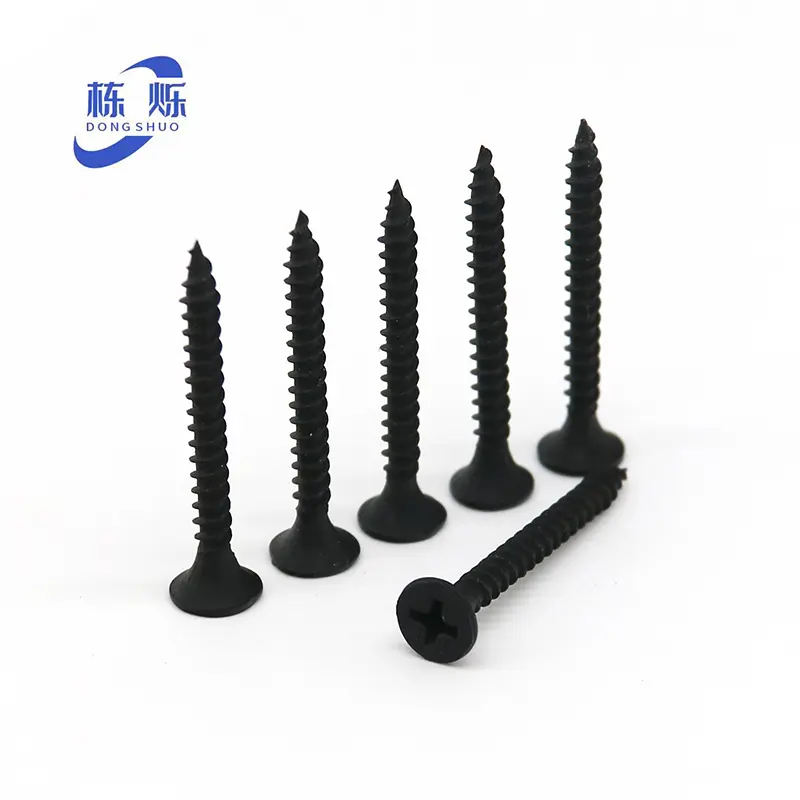
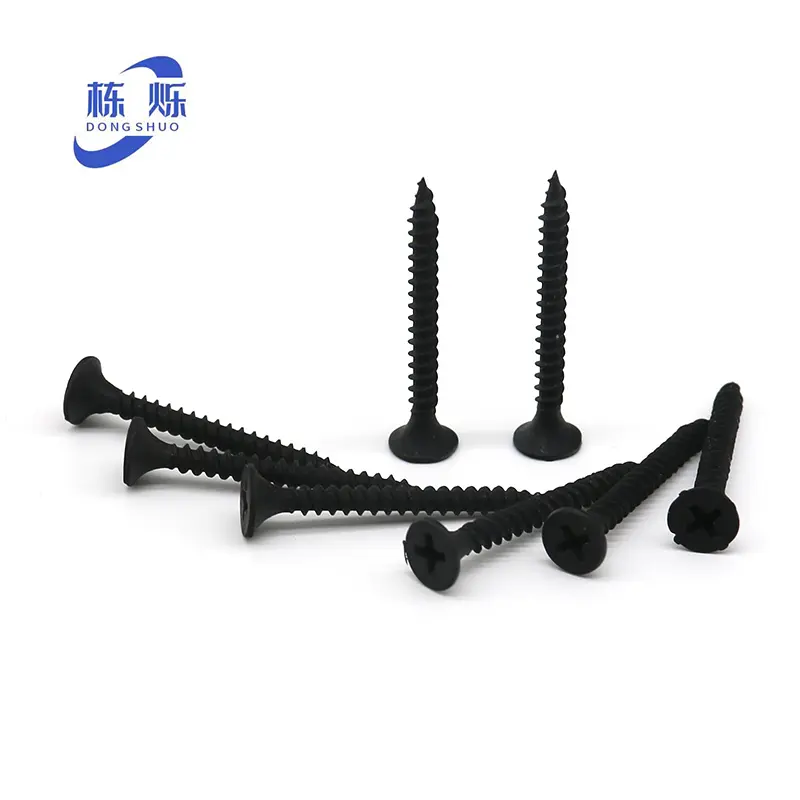
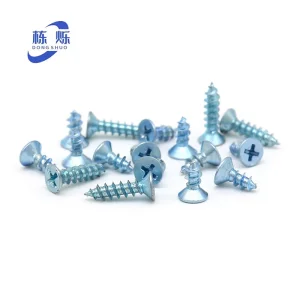
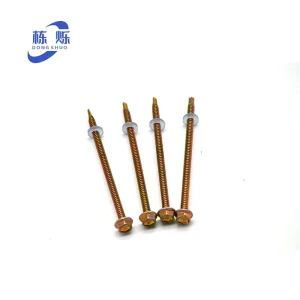
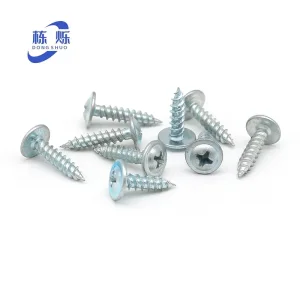
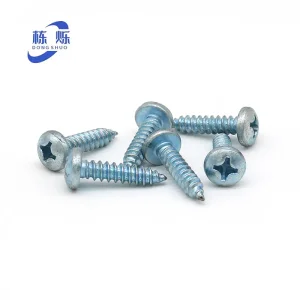
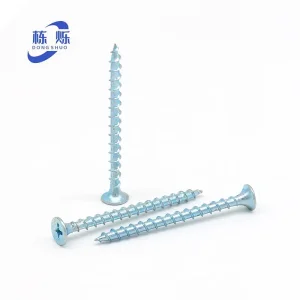
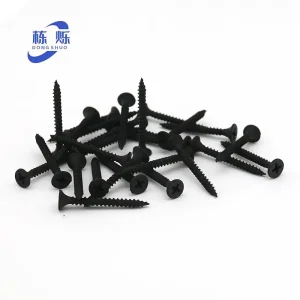
Black phosphating drywall nails are commonly used in architectural decoration and carpentry projects such as fixing various components and materials such as boards, wooden frames, wooden furniture, etc. Its phosphating surface can improve the corrosion resistance and wear resistance, making it more suitable for indoor and outdoor environment, extend service life.
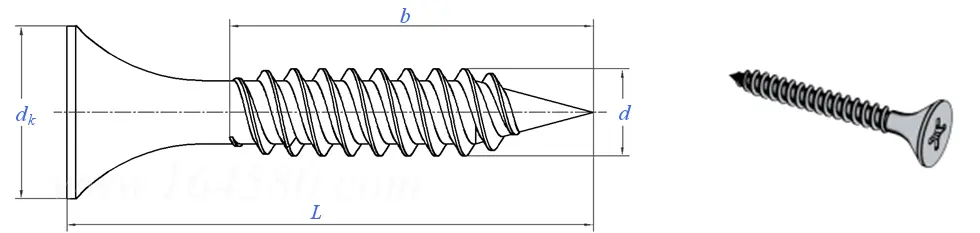
| Thread specifications (d) |
3.5 |
4 |
4.3 |
| d |
Max |
3.7 |
4 |
4.3 |
| Min |
3.4 |
3.7 |
4 |
| dk |
Max |
8.5 |
8.5 |
8.5 |
| Min |
8.14 |
8.14 |
8.14 |
| Thread Length B |
Min |
- |
- |
- |
✓
Installation Precautions
●
Before installation, it is necessary to determine whether the model, size, quantity and other parameters of the dry wall nails meet the requirements.
●
Before installation, it is necessary to determine the material and fixing position of the wall to ensure that it will not damage the wall.
●
During installation, it is necessary to use a drilling locator to drill holes of appropriate size on the wall.
●
During installation, gently tap the dry wall nails to a depth that reaches the interior of the wall, but do not over tap.
●
When connecting the hook to the dry wall nail, attention should be paid to the strength to prevent the dry wall nail from deforming or breaking.
New virgin material used for each product. All our goods are made of high-quality environmentally friendly materials. Using high quality material and establishing a strict quality control system, assigning specific persons in charge of each process of production, from raw material purchase to pack.
»
Accepted Delivery Terms: FOB, CIF, EXW
»
Accepted Payment Currency: USD, CNY
»
Accepted Payment Type: T/T, Credit Card, L/C, Cash
»
Language Spoken: English, Chinese
FAQ
Q1: What are the main applications for black phosphating drywall nails?
A1: They are primarily used in architectural decoration and carpentry for fixing components like boards, wooden frames, and furniture.
Q2: What is the benefit of the phosphating surface treatment?
A2: The phosphating surface improves corrosion and wear resistance, making the nails suitable for both indoor and outdoor environments.
Q3: How do I choose the right size for my project?
A3: You should check the thread specifications (d) and head diameter (dk) in our spec table. Common sizes include 3.5, 4, and 4.3.
Q4: Can these nails be used on any wall material?
A4: It is important to determine the material of the wall before installation. Using a drilling locator is recommended to ensure the wall is not damaged.
Q5: How deep should the nails be driven into the wall?
A5: Nails should be tapped to a depth that reaches the interior of the wall. Care should be taken not to over-tap to prevent deformation.
Q6: What quality standards are followed during production?
A6: We use new virgin and environmentally friendly materials with a strict quality control system monitoring every process from raw material purchase to packaging.
 Dongshuo