Anchor Fasteners are small components with major consequences. They secure machinery, façades, handrails, shelving, and structural equipment to concrete, masonry, or steel. Yet global buyers often compare price before checking load direction, substrate condition, corrosion exposure, and installation control. That approach can fail quietly.
Recent construction fasteners market reports from Grand View Research and Fortune Business Insights identify infrastructure renewal, industrial expansion, and commercial construction as key demand drivers. Their findings also point toward stronger demand for corrosion-resistant systems and engineered fastening solutions. Exact forecasts differ between reports. That is worth remembering. Market data is directional, not a substitute for project engineering.
Dr. Julio A. Ramirez, a widely recognized structural-engineering researcher, has repeatedly stressed the importance of anchorage performance and installation quality: “An anchor is only as reliable as the concrete and the installation around it.” The principle is practical. A stainless-steel wedge anchor may resist a damp exterior environment, but it cannot compensate for cracked concrete or an uncleaned drilled hole. A sleeve anchor may suit light masonry work, while a chemical anchor can provide deeper embedment and higher design flexibility when correctly specified.
This guide reviews the top 10 types of Anchor Fasteners for global buyers. It considers strength, substrate compatibility, corrosion resistance, installation speed, certification, and total cost. No single anchor fits every market. Even experienced teams sometimes overlook temperature, edge distance, or installer training. That gap deserves attention. Reliable selection begins with the real jobsite, not a catalog photograph.
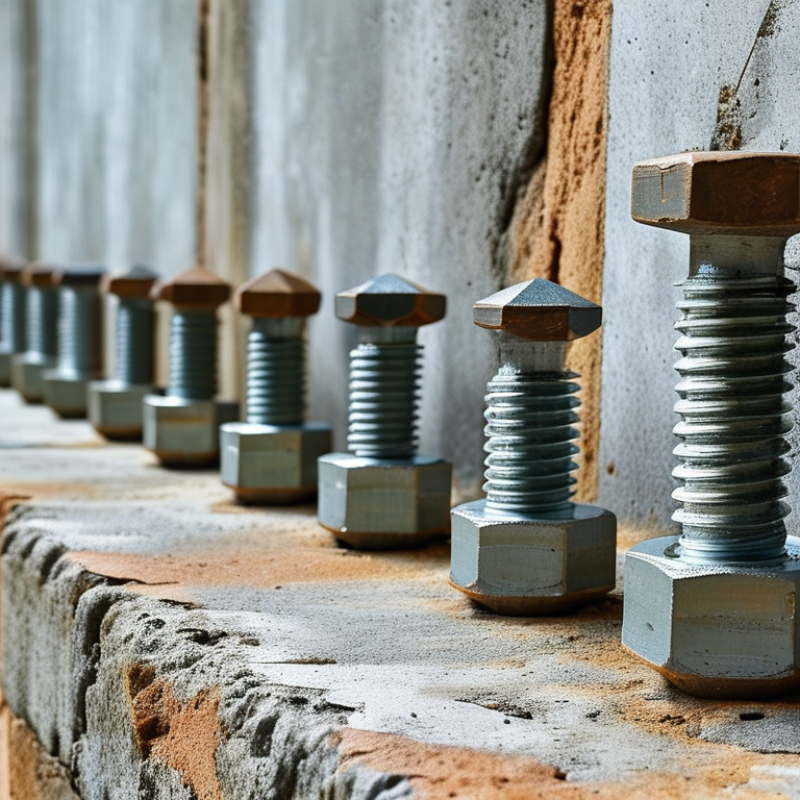
Anchor fasteners are mechanical components that secure fixtures to concrete, brick, block, or other solid substrates. They create holding force through expansion, threading, bonding, or combined actions. Unlike ordinary screws, they transfer loads into the base material.
Their purpose extends beyond simple attachment. A properly selected anchor can support handrails, cable trays, shelving, equipment brackets, and façade components. The wrong type may loosen under vibration, moisture, or repeated loading. On site, I check the substrate first, because a strong anchor cannot compensate for weak concrete or hollow block. Dust inside a drilled hole is another small detail that often reduces grip.
Selection requires more than matching diameter. Review load direction, working load, edge distance, embedment depth, temperature, corrosion exposure, and installation access. Expansion anchors suit many concrete applications, while sleeve and wedge designs handle different load conditions. Adhesive anchors can support deep embedment, but curing time and hole cleaning require careful control. Choose corrosion-resistant materials in damp locations. Verify published performance data and local structural requirements. I have seen projects focus on tensile strength while overlooking shear loads. That mistake deserves a second look. Install each anchor with the specified drill size, torque, and inspection method.
Wedge anchors are widely selected for steel columns, machinery bases, guardrails, and structural brackets. Their expansion clip grips the concrete as the nut reaches the specified torque. This creates a strong mechanical connection. Performance depends on more than anchor diameter. Concrete strength, embedment depth, edge distance, and load direction all matter. A 12 mm anchor near a slab edge may perform poorly if installation ignores spacing requirements.
Experienced installers drill perpendicular holes with the correct bit size. They remove dust with brushing and compressed air before inserting the anchor. Even small debris can reduce effective embedment. The anchor should sit at the designed depth, not simply “feel tight.” Torque must follow the approved installation data. Overtightening can damage threads or crush weak concrete. Under-tightening may leave the connection loose. It happens.
Tips: Check for cracked or damaged concrete before drilling. Keep anchors away from edges and corners unless engineering data permits it. Mark embedment depth on the drill bit. Use a calibrated torque wrench, and record torque values for quality control. For vibration, seismic, or sustained tension loads, request project-specific design verification. Wedge anchors are not automatically suitable for every concrete condition. A load test may be worthwhile when the slab’s age, strength, or reinforcement is uncertain. This extra step can reveal installation problems before equipment begins operating.
Sleeve anchors remain practical for masonry and concrete installation because they expand inside the base material. They suit handrails, brackets, cable trays, and light structural fixtures. A 2023 report from the U.S. Census Bureau recorded nearly $2 trillion in U.S. construction spending. That scale keeps dependable mechanical fastening relevant for global buyers.
Selection starts with the base material, fixture thickness, load direction, and corrosion exposure. Concrete strength matters. So does edge distance. A sleeve anchor placed too close to an edge can split weaker masonry. On site, installers should drill a clean hole with the specified diameter and depth. Dust must be removed before tightening. Small details decide performance.
Torque is not decoration. Follow the technical data sheet and applicable requirements, including ACI 318 and recognized evaluation criteria. Tightening too little may leave movement; tightening too much can damage the substrate. I have found that rushed drilling causes more trouble than the anchor itself. That is an uncomfortable lesson.
UNEP’s 2023 Global Status Report states that buildings and construction consumed about 34% of global energy and produced roughly 37% of energy- and process-related carbon dioxide emissions. Buyers can reduce waste by choosing the correct anchor length, avoiding unnecessary replacements, and specifying corrosion-resistant finishes for humid or coastal locations. No single sleeve anchor fits every project. Trial installation and pull testing may still be necessary.
| Anchor Fastener Type | Primary Substrate | Typical Size Range | Installation Method | Relative Load Capability | Corrosion-Resistance Options | Common Applications |
|---|---|---|---|---|---|---|
| 1. Sleeve Anchor | Concrete, solid brick, solid block, some hollow masonry with suitable embedment | Typically 6–16 mm diameter; approximately 40–150 mm length | Drill a clearance hole, insert the anchor, and tighten the nut or screw to expand the sleeve | Medium to high, depending on concrete strength, embedment, spacing, and edge distance | Zinc-plated carbon steel, hot-dip galvanized steel, or stainless steel | Handrails, brackets, shelving, cable trays, signs, fixtures, and general masonry installations |
| 2. Wedge Anchor | Cracked or uncracked concrete; not intended for ordinary brick or hollow block | Typically 6–25 mm diameter; approximately 50–300 mm length | Drill a specified hole, insert the anchor, and tighten the nut to draw the wedge into the expansion clip | High, especially for structural concrete applications when properly specified | Zinc-plated, hot-dip galvanized, mechanically galvanized, or stainless steel | Structural steelwork, equipment bases, guardrails, machinery, and heavy-duty supports |
| 3. Concrete Screw Anchor | Concrete, lightweight concrete, brick, and solid masonry | Typically 5–12 mm diameter; approximately 25–200 mm length | Drill the manufacturer-specified pilot hole and drive the hardened thread directly into the substrate | Medium; generally suitable for removable and service installations | Electroplated zinc, mechanically galvanized, or stainless steel | Electrical fixtures, light-duty framing, signs, conduit, brackets, and temporary installations |
| 4. Drop-In Anchor | Solid concrete and some dense stone substrates | Typically 6–20 mm internal diameter; length commonly 25–80 mm | Drill a blind hole, insert the anchor, and set the internal expansion plug with a setting tool | Medium to high, with reliable embedment in sound concrete | Zinc-plated carbon steel or stainless steel | Threaded rod, suspended ceilings, pipe supports, sprinkler systems, and overhead services |
| 5. Chemical or Resin Anchor | Cracked or uncracked concrete, masonry, and some natural stone systems | Threaded rods commonly 8–30 mm; embedment is project-specific | Clean the drilled hole, inject resin, and install a threaded rod or reinforcing bar before curing | High; capacity depends strongly on resin system, hole cleaning, embedment, and curing conditions | Zinc-plated, hot-dip galvanized, or stainless-steel threaded rods | Heavy structural connections, rebar doweling, close-to-edge fixing, and applications with limited expansion stress |
| 6. Expansion Shield Anchor | Concrete, brick, stone, and solid masonry | Commonly used with 6–16 mm bolts or threaded rods | Insert the shield into a drilled hole, then tighten the bolt to expand the shield against the substrate | Low to medium, depending on shield length and substrate quality | Zinc-plated steel, galvanized steel, or stainless steel | Light fixtures, brackets, small signs, pipe clips, and general maintenance work |
| 7. Lag Shield Anchor | Concrete, brick, block, and other solid masonry | Typically used with lag screws from approximately 6–12 mm diameter | Drill a hole, insert the shield, and drive a compatible lag screw to expand the anchor | Low to medium; long versions provide greater holding power than short versions | Zinc-plated steel or stainless steel | Wood-to-masonry fastening, brackets, utility fixtures, shelving, and repair work |
| 8. Machine Screw Anchor | Concrete, brick, and solid masonry | Commonly used with machine screws from approximately M4 to M10 | Drill a hole and drive the anchor into the substrate; tightening the screw expands the anchor body | Low to medium, suitable for light and medium service loads | Zinc-plated steel or stainless steel | Electrical boxes, light brackets, signs, fixtures, and equipment mounting |
| 9. Hollow-Wall Masonry Anchor | Hollow concrete block, hollow brick, and lightweight masonry units | Typically 6–12 mm diameter; length selected to suit wall thickness | Insert through a drilled hole and expand behind the face shell or within the cavity | Low to medium; highly dependent on face-shell thickness and anchor geometry | Zinc-plated steel, galvanized steel, or stainless steel | Light shelving, conduit, signs, wall-mounted accessories, and non-structural fixtures |
| 10. Tapered Sleeve or Self-Drilling Masonry Anchor | Concrete, brick, block, and other masonry substrates | Typically 6–12 mm diameter; approximately 25–100 mm length | Either drill a pilot hole or drive the self-drilling body into the substrate, then tighten the screw or bolt | Low to medium, depending on the design and substrate condition | Zinc-plated carbon steel or stainless steel | Fast installation of light brackets, electrical supports, signs, and maintenance fixtures |
Top 10 Types of Anchor Fasteners for Global Buyers
Drop-In and Expansion Anchors for Flush-Mounted Applications
Flush-mounted anchors keep ceilings, walls, and concrete floors visually clean. Drop-in anchors use an internal thread and sit inside a drilled hole. They suit threaded rods, suspended services, and removable fixtures. Expansion anchors rely on a sleeve, wedge, or cone that presses against the concrete. They work well for brackets, rails, and equipment bases. The choice depends on load direction, concrete strength, edge distance, and installation depth.
The 2024 U.S. Census Bureau construction spending report recorded more than 2 trillion dollars in annual construction activity. That scale increases demand for repeatable fastening systems. Yet published capacity is not universal. ACI 318-19 requires designers to consider cracked concrete, embedment, spacing, and failure modes. ICC-ES AC193 also evaluates mechanical anchors under defined concrete and loading conditions. Buyers should request test evidence, installation torque, and approved base-material limits.
On site, drilling dust often reduces actual performance. Clean the hole properly. Check the thread before loading. Drop-in anchors need a setting tool and correct embedment; incomplete setting can leave the anchor deceptively secure. Expansion anchors need controlled torque, not guesswork. A calibrated wrench matters. For overhead work, I would verify every anchor against the project specification, even when the catalogue capacity looks generous. Small errors become expensive above people. Local concrete variability remains an uncomfortable detail.
Flush-mounted suitability for common concrete, masonry, and hollow-wall applications
The index reflects how easily each anchor type can be installed below or level with the surface for a clean finish. Drop-in, screw, chemical, and internal-thread anchors generally provide strong flush-mounting options, while toggle and hollow-wall anchors are mainly selected for lightweight or cavity-based installations. Actual load capacity depends on anchor size, base material, embedment depth, edge distance, and installation quality.
Anchor selection becomes critical when concrete, masonry, drywall, and hollow block appear on the same project. Grand View Research valued the global construction fasteners market at about USD 104.6 billion in 2023, showing strong demand for reliable fixing systems. Yet market growth does not remove installation risks.
Chemical anchors suit cracked concrete, dense masonry, and irregular holes. Resin fills surface gaps and transfers load through bonded contact. The installer must brush and blow the hole correctly. Cure time also changes with temperature. A 2024 market report from Research and Markets identifies infrastructure repair as a major demand area for chemical anchoring systems. That trend is practical, not automatic. Poor cleaning can still reduce performance sharply.
Screw anchors work efficiently in sound concrete and solid block. They need accurate embedment, spacing, and torque. Over-tightening may damage the thread or substrate. Toggle anchors are useful for hollow drywall and cavity panels, where a rear wing spreads the load. They are not a safe substitute for structural support. MarketsandMarkets reports that lightweight construction continues expanding globally, supporting demand for cavity-fixing solutions. However, the boundary between “light duty” and “too heavy” is often misunderstood. Buyers should review pull-out data, corrosion resistance, fire performance, and regional approvals before shipment. A lower unit price may become expensive after failed installation.
Anchor fasteners secure fixtures to concrete, brick, block, and other solid surfaces. They support handrails, shelving, cable trays, brackets, and façade components.
They grip through expansion, threading, bonding, or combined actions. The anchor transfers loads into the base material.
Check whether the surface is concrete, solid masonry, hollow block, drywall, or a cavity panel. A strong anchor cannot fix weak concrete.
Expansion anchors suit many concrete applications. Confirm load direction, embedment depth, edge distance, and spacing before installation.
Chemical anchors suit cracked concrete, dense masonry, and irregular holes. They need careful brushing, blowing, and controlled curing time.
Screw anchors work well in sound concrete and solid block. Use the specified drill size, embedment depth, spacing, and torque.
Toggle anchors suit hollow drywall and cavity panels. Their rear wings spread loads behind the surface.
Dust left inside a drilled hole can reduce grip. Over-tightening may damage the thread or substrate.
Review load direction, working load, edge distance, embedment, temperature, corrosion exposure, and installation access. Also check published performance data and local requirements.
Choose corrosion-resistant materials for wet or humid areas. Review corrosion resistance, fire performance, pull-out data, and regional approvals.
Anchor Fasteners are mechanical or chemical devices used to secure fixtures, structures, and equipment to concrete, masonry, drywall, and other base materials. Choosing the right type requires evaluating load requirements, substrate condition, installation depth, corrosion resistance, spacing, and whether the connection must be removable or permanently fixed. Proper sizing and installation are essential for achieving reliable performance and long-term stability.
Wedge anchors are designed for heavy-duty concrete connections, while sleeve anchors offer flexible installation in both masonry and concrete. Drop-in anchors and other expansion anchors are suitable for flush-mounted applications where a clean surface is important. For specialized surfaces and project conditions, chemical anchors can provide strong bonding, screw anchors support efficient direct installation, and toggle anchors are useful for hollow walls or lightweight substrates. Understanding the strengths and limitations of each option helps global buyers select safe, efficient, and cost-effective fastening solutions for different construction and maintenance needs.

Dongshuo