What Is a Screw Thread and What Are Its Types?

Time:2026-09-28 Author:Charlotte
0%

A screw thread is a helical ridge formed around a cylindrical or tapered surface. It lets parts fasten together, adjust position, or transfer motion. In the phrase Screw And Thread, “screw” usually describes the component, while “thread” describes its shaped surface. The distinction sounds simple. In practice, naming and sizing can vary across applications, so checking a drawing or specification matters.

Threads are described by features such as profile, pitch, diameter, and direction. Pitch is the distance between neighboring thread crests; small differences can affect fit. Common examples include metric and Unified threads, coarse and fine pitches, wood screws, pipe threads, and lead screws. Each serves a different purpose. A wood screw bites into timber, while a lead screw converts rotation into controlled linear movement. Not every thread is interchangeable. Even similar-looking parts may bind or loosen when their profiles or dimensions differ.

This guide introduces how screw threads work and how their main types are identified. It also explains where common designs are used and what details to check when selecting one. A quick visual match can be misleading. Thread standards, materials, and operating conditions all influence performance. Some applications also call for expert review, especially when a connection must carry a defined load or resist leakage. The categories are useful, but real parts do not always fit a tidy list. That is worth remembering.
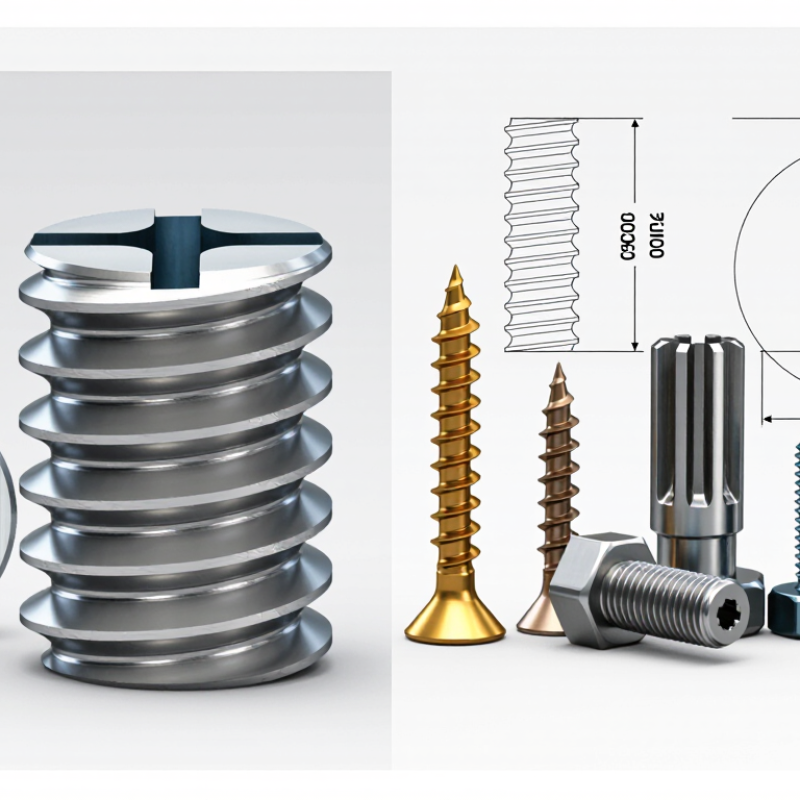
What Is a Screw Thread and What Are Its Types?

Definition and Core Features of a Screw Thread

A screw thread is a helical ridge formed on the inside or outside of a part. It follows a spiral path around a cylinder or cone. When matching threads turn against each other, they convert rotation into forward movement and help hold parts together. A steel bolt passing through two plates, for example, advances into a threaded nut and draws the plates close. Small details matter.

Core thread features describe its shape and fit. Pitch is the distance between neighboring thread peaks, measured parallel to the thread’s axis. Lead is how far a thread advances in one full turn; for a single-start thread, lead and pitch are equal. Major and minor diameters mark the widest and narrowest parts of the thread. The flanks connect each crest to its root, and their angle affects how mating parts contact. Threads may also be right-handed or left-handed, depending on the direction needed to tighten them.

On a drawing, these measurements can seem exact. Real parts may still feel tight because of surface coatings, dirt, wear, or small manufacturing variations. That difference deserves investigation rather than force. A thread’s dimensions matter, but so do its finish and actual fit.

The Main Parts and Geometry of a Thread

A screw thread is a helical ridge wrapped around a cylinder or inside a hole. Its geometry determines how parts engage, carry load, and resist loosening. The crest is the top, the root is the valley, and the flanks connect them. Pitch measures the distance between matching points on adjacent threads. For a single-start thread, lead equals pitch.

The flank angle and diameters matter too. ISO 68-1 specifies the basic 60-degree profile for metric threads, while ISO 724 provides basic dimensions. For example, its M10 × 1.5 data gives a nominal major diameter of 10 mm and a basic pitch diameter of about 9.026 mm. The internal minor diameter is about 8.376 mm. These are reference dimensions, not guaranteed measurements on every manufactured part; tolerance classes affect the finished fit. A drawing can look clear, yet omit a tolerance that changes assembly.

Tips: Check pitch and tolerance class before matching parts. Inspect crests for damage, and measure more than one thread if the fit feels uneven. A small burr can mislead.

How Screw Threads Create Motion and Holding Force

A screw thread is a helical ridge wrapped around a cylinder. When the screw turns, its sloping surfaces convert rotation into straight-line movement or clamping force. The distance it advances in one turn is its lead. A fine lead moves slowly but can provide precise adjustment; a coarse lead moves farther with each turn. Small changes matter.

In a vise, turning the handle pushes the jaw forward until it grips the workpiece. In a bolted joint, tightening stretches the bolt slightly and presses the joined parts together. Friction between the threads helps resist loosening, while friction under the bolt head also affects the final clamping force. The result depends on more than hand tightness; lubrication, surface condition, and tool accuracy can change it. That simple explanation leaves out some real-world variation.

Thread shapes suit different jobs. V-shaped threads are common for fasteners because they hold securely. Square and Acme threads transfer motion efficiently, as in jacks and machine slides. Buttress threads handle heavy force mainly in one direction. A thread can still loosen under vibration, so the right shape alone is not a guarantee. The fit, material, and loading conditions deserve attention too.

Common Types of Screw Threads by Profile and Purpose

Screw threads are commonly grouped by the shape of their profile and the job they perform. V-threads, including metric and Unified forms, are widely used for fastening. Their angled flanks help hold bolts and nuts together under load. A fine-pitch bolt may offer precise adjustment, but it can be more sensitive to dirt or damage.

Square and trapezoidal threads are designed to transmit motion or force. Their broad flanks suit applications such as screw jacks, vises, and machine leadscrews. Acme threads, a trapezoidal form, are easier to manufacture than true square threads and can handle practical workshop use. Buttress threads have one nearly vertical flank. They work well where force mainly pushes in one direction, such as in certain presses. Not every application fits neatly into one category.

Pipe threads are shaped for joining fluid-carrying components. Some rely on tapered threads to tighten and seal; others need a separate gasket or sealing method. The profile alone does not confirm compatibility. Check the thread standard, diameter, pitch, and sealing requirements before assembly. A connection can feel tight and still leak.

Where Different Thread Types Are Used and How to Choose Them

A screw thread is a helical ridge that turns rotation into clamping force or controlled movement. The right type depends on its job. Metric and Unified V-threads, both with a 60-degree profile, are common for fasteners; ISO 68-1 defines the basic ISO metric thread profile. Trapezoidal threads suit power screws, such as a workbench vise, because their broad flanks carry motion and load. For comparison, ASME B1.5 specifies a 29-degree Acme thread profile. Pipe threads serve fluid connections, but sealing methods differ by thread design.

Choose by function, not appearance. A bolt holding a vibrating bracket may need a suitable fit and locking method, while a lead screw needs predictable travel and wear resistance. For fluid lines, check whether the design seals on the threads or uses a gasket or other seal. Match diameter, pitch, tolerance, material, and operating conditions; a thread that fits by hand may still be wrong under load. Small details matter.

Tips: Check the drawing against the relevant standard, such as ISO 68-1, ASME B1.1, or ASME B1.20.1 for NPT pipe threads. Measure pitch with a gauge, and verify the thread form before assembly. It is easy to overfocus on diameter; I still would not trust diameter alone.

Common Screw Thread Profiles: Included Flank Angles

Thread profile affects how a screw fits and performs. ISO metric and Unified threads are widely used for general-purpose fastening; Whitworth threads are found in legacy British systems; and Acme and ISO trapezoidal threads are commonly used for power transmission, such as lead screws. Choose a thread that matches the required standard, mating component, load, and application.

FAQS

What does a screw thread do?

Its helical ridge turns rotation into straight movement or clamping force. One turn advances by the thread’s lead.

How do fine and coarse leads differ?

A fine lead moves a shorter distance per turn, helping with precise adjustment. A coarse lead travels farther each turn. Small changes matter.

How does a bolt hold joined parts?

Tightening stretches the bolt slightly and presses the parts together. Friction in the threads and beneath the bolt head affects clamping force.

Which thread profiles suit common tasks?

V-shaped threads commonly fasten bolts and nuts. Square or trapezoidal threads move loads in jacks and vises. Buttress threads suit force mainly in one direction.

Does a tight-feeling pipe thread guarantee a seal?

No. Some tapered threads seal through their fit, while other connections need a gasket or separate seal. A tight fit can still leak.

What should I check before assembling threads?

Match the diameter, pitch, thread form, tolerance, material, and sealing needs. A pitch gauge helps; diameter alone is not enough.

Can the right thread shape prevent loosening?

Not by itself. Vibration, fit, materials, and loading affect loosening, so a suitable locking method may be needed. I would not trust shape alone.

Why does lubrication matter when tightening?

Lubrication changes friction and can alter the final clamping force. Surface condition and tool accuracy matter too, so hand feel can mislead.

Conclusion

A screw thread is a helical ridge formed around the inside or outside of a cylinder or cone. Its geometry includes features such as the crest, root, flank, pitch, and thread angle, which together determine how it fits and performs. When two compatible threads engage, turning motion can create linear movement, while the contact between their surfaces helps generate holding force and resist separation. The design of a Screw And Thread connection therefore affects both movement and fastening.

Thread types vary by profile and purpose. Common profiles include triangular threads for general fastening, square or trapezoidal threads for transmitting motion and load, and rounded threads for applications that benefit from durable, easy-to-clean forms. Choosing a thread involves considering its intended function, load, movement, material, fit, and operating conditions. Matching the thread type to these requirements can improve performance, reliability, and service life.

Charlotte

Charlotte

Charlotte is a seasoned marketing professional with a deep understanding of the company's portfolio and a passion for elevating its presence in the market. With a keen eye for detail and a commitment to excellence, she ensures that our professional blog is regularly updated with insightful articles......