Choosing the right Hexagon Nut in 2026 requires more than matching diameter and thread size. Engineers now consider load direction, vibration, temperature, corrosion, installation access, and supply consistency. A nut that fits an M8 bolt may still fail when its strength grade, thread pitch, or coating conflicts with the joint.
Carmen Vertullo, a respected fastener educator and author, has said, “The fastener is only as good as the joint it serves.” This principle remains practical. For example, a zinc-plated carbon-steel Hexagon Nut may suit an indoor machine frame, but it can deteriorate quickly beside saltwater. Stainless steel improves corrosion resistance, yet it may gall during installation. A locking nut can help with vibration, but it cannot correct poor tightening or damaged threads.
The 2026 selection process should connect product data with real workshop conditions. Check the bolt grade, nut class, thread engagement, wrench clearance, and required torque. Then inspect certificates, dimensions, surface finish, and supplier traceability. Small details matter. A nut with the wrong pitch can feel compatible for several turns, then seize under load.
Some recommendations remain imperfect. Product catalogs may omit installation limits, and field conditions often differ from laboratory tests. That is why experienced buyers verify samples before approving large quantities. The safest choice is not always the strongest or most expensive option. It is the Hexagon Nut that performs reliably within the complete joint design.
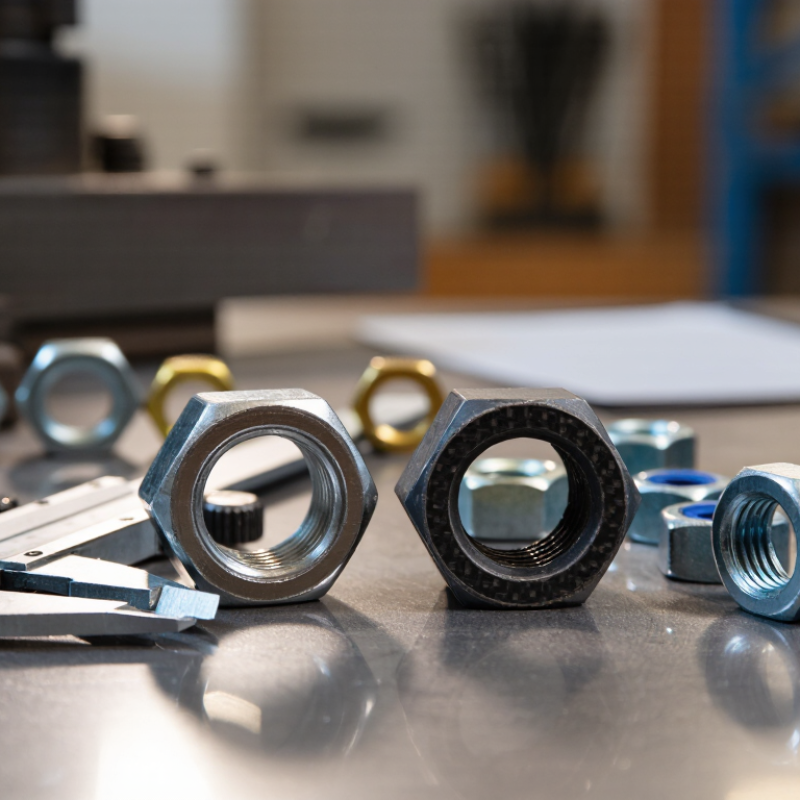
How to Choose the Right Hexagon Nut in 2026?
What Is a Hexagon Nut and How Does It Work?
A hexagon nut is an internally threaded fastener with six outer faces. Its central thread grips a matching bolt or stud. When tightened, the nut creates clamping force between connected parts. The bolt stretches slightly, while the joint surfaces press together. That tension, not friction alone, keeps the assembly stable.
A suitable nut must match the bolt’s diameter, pitch, thread direction, material, and strength class. ISO 898-2:2022 lists an 800 MPa proof-load stress for property class 8 nuts. This figure helps engineers compare load capacity before installation. The 2024 World Steel in Figures report recorded 1,888.2 million tonnes of crude steel production in 2023. Steel remains common, but stainless steel may better resist moisture, salt, or chemical exposure.
Shape also matters. A standard hex nut suits a normal wrench. A thin nut saves space, but offers less thread engagement. A locknut can resist vibration, although it may not replace correct torque. Use a washer when the bearing surface is soft or easily damaged. In practice, over-tightening is a frequent mistake. It can stretch threads, distort parts, or reduce fatigue life. Under-tightening causes movement. The judgment is not always neat.
Before choosing, inspect the mating bolt and the installation environment. Check thread cleanliness, contact surfaces, torque instructions, and possible galvanic corrosion. A perfect specification can still fail when the wrench slips or the threads are contaminated. Small details matter.
Hexagon nuts are internally threaded fasteners tightened with a wrench. The chart compares common metric nut sizes using nominal thread diameter, wrench size across flats, and nut height. Dimensions are based on standard hexagon nuts specified in ISO 4032.
Choose a nut that matches the bolt’s thread diameter and pitch. The across-flats dimension determines the required wrench size, while nut height affects thread engagement and overall fastening space.
How to Choose the Right Hexagon Nut in 2026?
Matching a hexagon nut to a bolt requires more than checking its outside size. Measure the bolt’s nominal diameter and thread pitch with a thread gauge or caliper. A nut marked M8 needs an 8 mm metric bolt, but pitch still matters. An M8 × 1.25 nut will not correctly match an M8 × 1.0 bolt. Metric and imperial threads may look similar. They are not interchangeable.
Check the nut’s thread direction, material, strength class, and clearance before installation. The bolt and nut should share compatible standards and load ratings. A fine-thread nut can suit thin materials or precise adjustment, while coarse threads usually resist damage during general assembly. Turn the nut by hand for several rotations. If it binds early, stop. Forcing it can damage both components. One mistake I still see is choosing by diameter alone. That shortcut creates unreliable joints.
Tips: Clean both threads first. Compare the markings carefully. Use a matching washer when the surface is soft or oversized. Tighten with a calibrated torque wrench when the joint specification requires it. Test the fit before applying full torque. Also, inspect used nuts for stretched threads, corrosion, or rounded corners. Reusing one may seem harmless, but I would not trust it in a critical connection.
Material selection should begin with the working environment, not the lowest price. Plain carbon steel suits dry indoor assemblies and offers strong thread engagement. Zinc-coated steel adds surface protection, but damaged coating can expose the base metal. Stainless steel performs better around moisture, salt, and cleaning chemicals. A2 stainless fits many general outdoor applications, while A4 offers better resistance in marine conditions.
Match the nut grade to the bolt grade whenever possible. For metric fasteners, ISO 898-2 property classes help identify nut strength. A high-strength bolt paired with a weak nut may strip under load. That failure can occur before visible damage appears. Stainless assemblies require ISO 3506 guidance, because stainless grades use different markings and strength ranges. Brass and nylon nuts work for electrical, decorative, or low-load uses, but they are poor choices for heavy structural joints.
Check more than the material label. Inspect thread fit, bearing surface, temperature exposure, and contact with dissimilar metals. In workshop testing, a stainless nut may seize on a stainless bolt without suitable assembly preparation. I still recheck this point. It is easy to blame the nut when friction caused the problem. Select the correct thread pitch, measure the available clearance, and use calibrated torque equipment when the joint is safety-critical. A sample installation can reveal misalignment, galling, or insufficient thread engagement before production begins.
When selecting a hexagon nut, match its coating to the environment, not merely its appearance. Dry indoor assemblies usually need basic zinc plating or a light protective oil. These options reduce oxidation while keeping threads clean and affordable. They are poor choices for constant moisture, though.
Outdoor equipment faces rain, condensation, and road salt. Hot-dip galvanized nuts provide a thicker zinc barrier and suit many structural applications. Their coating can change thread dimensions, so the nut and bolt should be specified as a matched set.
For high-strength fasteners, controlled zinc-flake systems may reduce corrosion without introducing the same processing concerns linked to some electroplating methods. Check the supplier’s test data.
Chemical plants require closer review. Acids, solvents, and alkaline cleaners can attack common coatings quickly. Stainless steel may perform better, but it can gall during tightening, especially on dry threads. A compatible lubricant and controlled installation torque are essential.
In field inspections, coating failure often begins at damaged corners or cut threads. Handle nuts carefully.
Heat also changes performance. Organic sealants and lubricants may degrade long before the metal does.
Salt-spray ratings help comparison, but they do not perfectly predict service life. I would treat them as evidence, not a guarantee. One overlooked detail is electrical contact: thick coatings can increase resistance between joined parts. Verify grounding requirements before approving the nut.
Choosing the right hexagon nut in 2026 requires evidence, not a familiar size. Start with the joint’s load, temperature, corrosion exposure, and service life.
ISO 898-2:2022 specifies proof-stress levels, including 800 MPa for class 8 and 1,040 MPa for class 10, with size conditions. Do not treat property class as a universal strength label.
Check material certificates, lot traceability, and test results aligned with ASTM F606/F606M methods.
Small detail. It matters.
Fit is more than matching diameter. Confirm thread pitch, tolerance, thread direction, and required engagement length.
ASME B18.2.2 provides dimensional requirements for inch-series hex nuts, while ISO 4032 covers common metric hexagon nuts.
Use a thread-pitch gauge and caliper before installation. The nut should run smoothly by hand.
A nut that binds early may have damaged threads, contamination, or a mismatch. My own checklist is not perfect; coatings can change fit unexpectedly.
Installation needs equal care. NASA-RP-1228, the NASA Fastener Design Manual, explains that only about 10% of applied torque typically becomes bolt tension. Friction consumes most of it.
Lubrication, washer condition, surface finish, and tool calibration therefore affect preload.
Use the specified torque method, not a generic chart copied from another assembly. Recheck critical joints after curing, thermal cycling, or vibration exposure.
Torque alone can create false confidence.
Match the nominal diameter, thread pitch, thread direction, and thread standard. An M8 × 1.25 nut needs an M8 × 1.25 bolt. Diameter alone is not enough. Check carefully.
No. They may look similar but have different measurements and pitches. Do not force a near match. It can damage both threads and weaken the joint.
Clean both threads and start the nut by hand. It should turn smoothly for several rotations. Stop if it binds early. Forcing it is a bad shortcut.
Coarse threads usually tolerate dirt and handling better during general assembly. Fine threads can suit thin materials or precise adjustment. The application decides. Neither is always better.
Check the nut’s property class, material, test records, and production traceability. For example, class 8 may indicate 800 MPa proof stress under specified conditions. Class 10 may indicate 1,040 MPa. These values are not universal guarantees.
Consider load, temperature, corrosion exposure, vibration, and expected service life. A joint near heat or moisture needs suitable material and protection. Looks can mislead.
Use a compatible washer when the surface is soft, thin, uneven, or oversized. A washer spreads the load across a wider area. Check its material and fit too.
Friction consumes much of the applied torque. Only about 10% typically becomes bolt tension. Lubrication, coatings, washers, and tool calibration change the result. Use the specified method.
Inspect it for corrosion, stretched threads, damaged corners, or contamination. Replacement is safer for critical connections. I would not trust a questionable nut. That caution is imperfect, but practical.
Choosing the right Hexagon Nut in 2026 requires more than selecting a common six-sided fastener. A hexagon nut works by engaging with a bolt’s external threads, creating clamping force that holds components securely together. To ensure proper fit, match the nut’s nominal size, thread diameter, pitch, and thread system with the bolt. Compatibility also depends on the bolt’s length, clearance, strength class, and intended load.
Material and grade should reflect the application’s temperature, pressure, moisture, vibration, and corrosion exposure. Steel may suit general structural use, while stainless or other specialized materials can offer better resistance in demanding environments. Coatings should be selected according to exposure conditions, such as humidity, chemicals, outdoor weather, or high heat. Before installation, verify dimensions, strength ratings, applicable standards, surface condition, and tightening requirements. Correct torque, clean threads, and suitable tools help prevent loosening, thread damage, or uneven clamping, improving safety and service life.

Dongshuo