Choosing a reliable China Screw And Washer manufacturer requires more than comparing unit prices. Buyers must examine material control, production experience, testing capacity, and delivery consistency. A polished website proves little.
The global fasteners market reflects strong industrial demand. Grand View Research valued it at approximately USD 99 billion in 2023 and expects continued growth through 2030. MarketsandMarkets also identifies automotive, construction, machinery, and aerospace as major demand sectors. These reports show opportunity, but they do not guarantee supplier quality.
Bill Eccles, founder of Bolt Science and a respected fastener engineering specialist, explains: “The purpose of a washer is to distribute the load.” That simple point matters. A poorly matched washer can deform under pressure, damage a coated surface, or reduce joint reliability. I have seen procurement teams focus heavily on screw prices, while overlooking hardness, coating thickness, thread accuracy, and packaging moisture.
Small details matter.
A serious Chinese manufacturer should provide material certificates, dimensional inspection records, torque or tensile test results, and traceable batch numbers. Ask whether testing occurs in-house or through an independent laboratory. Request samples before approving mass production. Check how workers separate stainless steel, carbon steel, and plated products on the factory floor.
Experience still matters. However, experience without documented controls is only a claim. ISO 9001 certification can support confidence, but it is not a substitute for factory audits or sample verification. Buyers should also review complaint handling and corrective-action records.
This selection process is not perfect. Reports describe markets, not individual factories. A supplier with competitive pricing may still fail under salt spray, vibration, or repeated assembly. The safest decision combines evidence, technical review, and cautious trial orders.
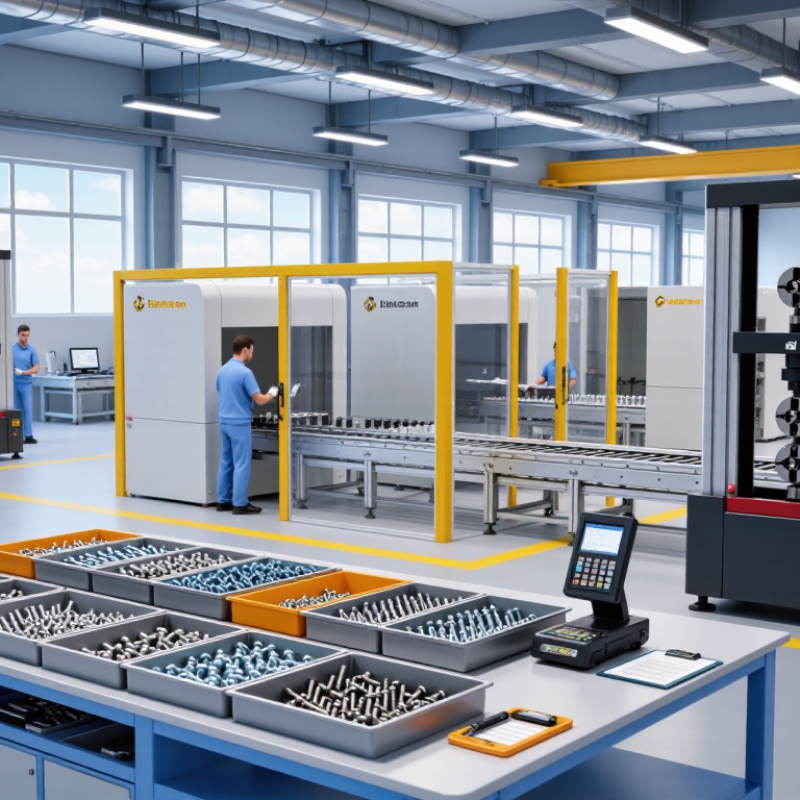
When choosing screw and washer manufacturers in China, define your requirements before requesting quotations. Start with the joint design, not the catalog. Record screw diameter, length, thread pitch, head style, and required strength class. Measure the mating holes carefully. Small details matter.
Specify the working environment. Outdoor equipment may need corrosion-resistant material or protective treatment. Indoor machinery may require different hardness and finish. State the expected load, vibration, temperature, and installation method. A washer can spread pressure, prevent surface damage, or improve locking. It cannot correct an unsuitable screw. That assumption can fail.
I have seen purchasing delays caused by incomplete drawings and unclear tolerances. Ask for material certificates, dimensional inspection records, and test reports against the applicable standard. Request samples with the exact finish and packaging planned for production. Then check thread fit by hand before using tools. This simple check often reveals problems early. Do not overlook packaging. Mixed sizes in one box create avoidable assembly errors. Suppliers should confirm traceability, batch numbers, and inspection frequency. However, paperwork alone is not proof of performance. Compare the documents with sample results and your actual application. A practical specification may need revision after testing. That is normal.
| Requirement Dimension | Typical Choices | Relevant Data or Standard | How to Define the Requirement | Recommended Screw Specification | Recommended Washer Specification |
|---|---|---|---|---|---|
| Application and Joint Type | Metal-to-metal Metal-to-plastic Wood-to-metal Through-bolt joint | Determine whether the screw forms its own thread or passes through a pre-tapped hole. Joint design affects thread engagement, clamping force and installation method. | State the materials being joined, joint thickness, access direction and whether the joint must be removable. | Use machine screws for tapped holes, self-tapping screws for thin sheet metal, and wood or construction screws for timber-based materials. | Use a flat washer where load distribution or surface protection is required; use a lock washer only when compatible with the joint design. |
| Nominal Diameter | M3–M6 M8–M12 M16 and above | Metric screw sizes are identified by nominal outside diameter in millimetres, such as M6 or M10. The selected diameter must support the design load without damaging the connected materials. | Provide the required diameter, allowable hole size and available installation space. | Specify the nominal diameter, for example M6, M8 or M10, together with the applicable product standard. | Select a washer with a hole diameter slightly larger than the screw diameter and an outside diameter suitable for the bearing surface. |
| Thread Pitch and Form | Metric coarse Metric fine UNC UNF | Metric coarse examples include M6 × 1.0 and M8 × 1.25. Fine threads have a smaller pitch and may provide improved adjustment or greater tensile stress area in some applications. | Confirm the mating thread system, pitch, tolerance class and whether the assembly uses metric or inch threads. | Specify thread designation, pitch, thread tolerance and whether the thread is full-length or partial-length. | Washers normally do not have threads; their internal hole must be compatible with the selected screw diameter. |
| Screw Length and Thread Engagement | Short assembly Stacked materials Blind hole Through hole | For a tapped-hole joint, the required engagement depends on the material strength and design load. Excessive length can cause bottoming in a blind hole or interference with adjacent parts. | Measure total clamped thickness, washer thickness, thread depth and any required protrusion. | Specify length from the underside of the head for most screw types, plus the required thread length where applicable. | Include washer thickness in the total grip-length calculation. Use a larger outside diameter when the joint material has low bearing strength. |
| Strength Class | 4.6 8.8 10.9 12.9 | ISO 898-1 property classes apply to many carbon and alloy steel bolts and screws. For example, class 8.8 has a nominal tensile strength of 800 MPa and a nominal yield ratio of 0.8. | Define tensile, shear, preload and fatigue requirements, then verify the design with the applicable engineering calculation. | State the required property class, head marking requirement and test documentation. | Choose a washer with suitable hardness and load capacity; a soft washer may deform under a high-strength screw. |
| Material | Carbon steel Alloy steel Stainless steel Brass | Common stainless categories include A2 and A4 under ISO 3506 for corrosion-resistant stainless fasteners. Material selection should consider strength, temperature and galvanic compatibility. | Identify the base material, operating temperature, corrosion exposure and electrical-conductivity requirements. | Specify material grade, chemical composition requirement and mechanical property requirement. | Match the washer material to the screw and joint environment to reduce galvanic corrosion and uneven deformation. |
| Corrosion Protection | Plain Zinc electroplated Zinc flake Stainless steel | Electroplated zinc is commonly used for indoor and mildly corrosive conditions. Outdoor, marine and chemical environments generally require a more corrosion-resistant material or coating system. | Specify humidity, salt exposure, chemicals, service life and whether the assembly is indoors or outdoors. | State coating type, coating thickness where applicable, appearance and corrosion-test requirement. | Use the same or a compatible corrosion-protection system as the screw; coating damage at the bearing surface should be considered. |
| Head and Drive Style | Hex head Pan head Countersunk Socket head | Head geometry determines tool access, clearance, clamping area and whether the fastener sits flush with the surface. | Define available tool access, required head height, flushness and resistance to stripping during installation. | Specify head style, drive type, drive size and any recess or tamper-resistance requirement. | Flat washers are normally used beneath heads or nuts where a bearing surface is needed; countersunk screws generally use compatible countersunk washers only when the design requires them. |
| Washer Type | Plain washer Spring washer Toothed washer Sealing washer | Plain washers distribute bearing load. Spring and toothed washers have specific functions but should not automatically replace engineered preload-control or locking methods. | State whether the goal is load distribution, surface protection, electrical bonding, sealing or resistance to rotation. | Specify the screw and washer as a compatible assembly, including installation torque where required. | Define washer type, inside diameter, outside diameter, thickness, hardness, material and surface finish. |
| Dimensional Standard | ISO DIN ASME Customer drawing | Examples include ISO 4017 for hexagon head screws with full thread, ISO 4762 for hexagon socket head cap screws, and ISO 7089 for plain washers with normal series. | Specify one governing standard and avoid mixing dimensions from different standards without engineering approval. | List the exact standard, revision, size range and dimensional tolerance. | List the exact washer standard, nominal size, series and thickness tolerance. |
| Installation and Torque | Manual tool Torque-controlled Automated assembly | Target torque depends on screw size, strength class, friction, lubrication, coating and joint design. A universal torque value should not be used for every finish or material. | Define installation tool, target preload, lubricant condition, tightening sequence and allowable torque range. | Request torque or preload guidance based on the actual screw, coating and lubrication condition. | Verify that the washer does not rotate excessively, embed into the surface or create an unstable friction condition. |
| Inspection and Documentation | Dimensional report Material certificate Coating report Lot traceability | Typical inspection points include diameter, length, pitch, head dimensions, washer dimensions, hardness, tensile properties, coating condition and quantity verification. | Define sampling level, acceptance criteria, marking, packaging and traceability from raw material to shipment. | Request a dimensional inspection report, mechanical test report where applicable and batch identification. | Request washer dimensional inspection, material verification and surface-finish inspection for each production lot. |
| Packaging and Delivery | Bulk cartons Small boxes Kitted sets Barcode labels | Packaging should prevent mixing of sizes, contamination, moisture damage and deformation during transport. | Specify quantity per package, labeling format, pallet requirements, moisture protection and delivery schedule. | Pack screws by size, material and finish; identify lot number and quantity on each package. | Keep washers separated or clearly identified to prevent incorrect matching with screw diameter and standard. |
Note: Final screw and washer selection should be verified against the applicable engineering design, product standard, installation method and service environment. Strength classes, dimensions and coating requirements must be confirmed from the latest applicable standard or approved technical drawing.
Carbon steel works indoors with verified protective coating. Stainless steel suits damp areas. Lightweight aluminum reduces weight but usually lowers strength. Corrosion wins quietly.
Match the fastener standard to its application and destination market. Check mechanical properties, washer dimensions, tolerances, and strength grades. Similar drawings can mislead.
Request material reports, hardness results, coating details, inspection records, and batch traceability. A certificate alone is not enough. Numbers matter.
Confirm thread diameter, pitch, length, head style, washer thickness, tolerance, and strength grade. Check whether measurements use millimeters or inches. Small errors matter.
Test thread fit, washer flatness, burrs, coating consistency, and hardness. Use torque testing for weak threads. Test samples under real installation conditions.
Ask for monthly output, machine numbers, utilization, and recent delivery records. Confirm control of materials, heat treatment, plating, and inspection. Photos prove little.
Send drawings with material grades, thread details, surface treatment, and tolerances. Request approved samples, inspection reports, and corrective-action records. I would recheck unclear drawings.
It should list materials, dimensions, tolerances, finish, quantity, tooling fees, packaging, payment terms, and shipping preparation. Low prices may hide extra costs.
Ask who manages complaints, corrective actions, replacement shipments, and inspection reports. Confirm response times and escalation contacts in writing. Fast replies are not enough.
Choosing the right China Screw And Washer manufacturer begins with clearly defining your project requirements, including dimensions, thread types, load capacity, surface treatment, packaging, and intended application. Buyers should compare materials such as stainless steel, carbon steel, and alloy steel, while confirming relevant standards, tolerances, corrosion resistance, and product specifications. Reviewing quality certifications, inspection procedures, testing capabilities, and traceability systems can help verify a manufacturer’s reliability and consistency.
It is also important to assess production capacity, equipment, customization services, lead times, and delivery arrangements. Before placing a large order, request samples to evaluate fit, finish, strength, and packaging quality. Transparent pricing should be considered together with total purchasing costs rather than price alone. Effective communication, responsive technical support, clear contract terms, and dependable after-sales service are equally important. By evaluating these factors systematically, buyers can select a capable manufacturer that offers stable quality, suitable customization, predictable delivery, and long-term cooperation.

 Dongshuo