China Top 10 Screw With Thread Suppliers reflects China’s strong position in global fastener manufacturing. The country supports automotive, construction, machinery, electronics, and renewable-energy supply chains. Grand View Research valued the global industrial fasteners market at approximately USD 84 billion in 2023. It also expects continued growth through 2030, driven by infrastructure and vehicle production.
Demand is only one part of the story. Buyers need stable dimensions, dependable materials, and clear production records. ISO 898-1 defines mechanical properties for carbon-steel and alloy-steel fasteners. ASTM F606/F606M provides recognized testing methods for threaded fasteners. These standards help purchasers compare tensile strength, hardness, proof load, and failure performance.
Small details matter.
A reliable supplier should explain steel grades, thread tolerances, coating systems, and inspection procedures. Factory audits, sample testing, and batch traceability can reveal differences hidden behind similar product photos. Reports from Mordor Intelligence and Fortune Business Insights show steady fastener-market expansion, although their market boundaries and forecasts differ. That difference deserves attention. Market statistics are useful, but they are not perfect purchasing evidence.
This guide evaluates ten Chinese suppliers through manufacturing capability, certification, export experience, customization support, quality control, and delivery reliability. It also considers practical issues, such as packaging damage, mixed batches, and communication delays. A large catalog does not automatically mean better performance. The strongest supplier is usually the one matching the application, tolerance, volume, and compliance requirements. Careful verification remains essential.
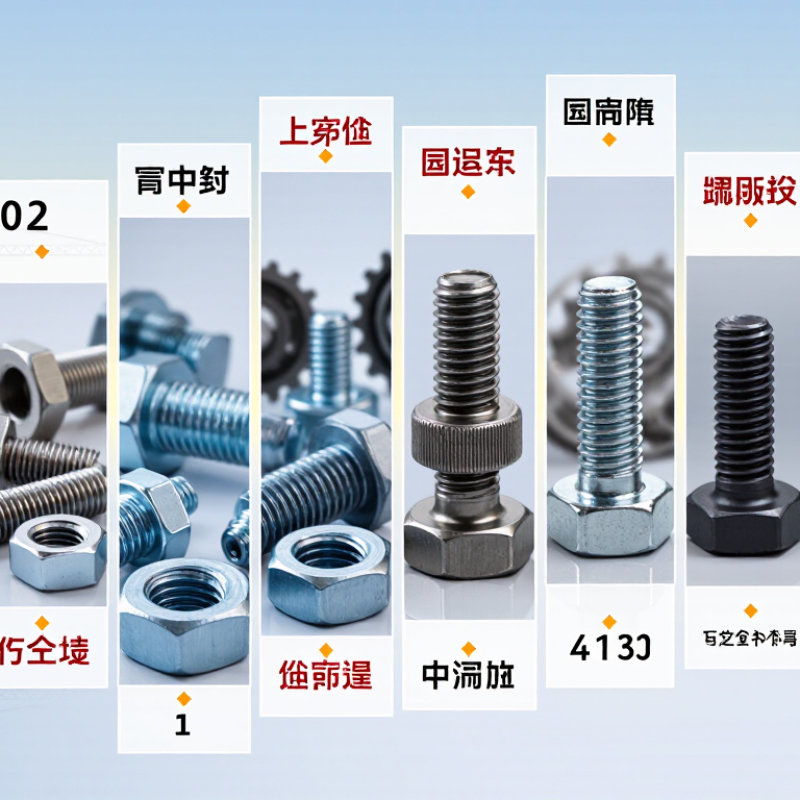
A screw with thread is a fastener with a helical ridge cut or formed around its shank. This ridge engages with a matching internal thread or compresses surrounding material. It creates a removable connection without welding or permanent bonding. Thread pitch, diameter, and profile determine how the screw enters and holds. Small details matter. A coarse thread usually suits soft materials, while a fine thread supports precise adjustment and stronger clamping in suitable metal assemblies.
Its structure normally includes a head, drive recess, shank, threaded section, and pointed or flat tip. The head transfers installation force, and the drive recess accepts a tool. The shank guides alignment before the threads develop resistance. The threaded section produces axial clamping force by converting rotation into movement. Surface treatment can improve corrosion resistance, but it cannot repair poor geometry. That point is often underestimated.
When comparing China’s top ten screw with thread suppliers, buyers should review material certificates, thread-gauge records, torque testing, and dimensional reports. Samples should be checked under actual assembly conditions. A screw may pass visual inspection yet strip during installation. Fit matters. Specify the application, load direction, temperature, coating, and required service life. Packaging also deserves attention, especially when mixed sizes can cause costly assembly errors. Supplier rankings are useful, but traceable testing and consistent production evidence deserve greater weight. One specification may still be incomplete; real performance can expose assumptions that drawings overlook.
| No. | Threaded Screw Category | Basic Definition | Main Structural Features | Typical Thread Standard | Common Size Range | Common Materials | Core Function | Typical Applications |
|---|---|---|---|---|---|---|---|---|
| 1 | Machine Screw | A fully threaded fastener designed for use with a tapped hole or a matching nut. | Uniform thread along the shank; pan, flat, oval, or hex socket head options. | ISO metric coarse or fine thread; Unified UNC or UNF thread. | Approximately M2–M12; common inch sizes from #2 to 1/2 inch. | Carbon steel, stainless steel, brass, and alloy steel. | Secures components where a prepared internal thread is available. | Electrical equipment, instruments, appliances, machinery, and sheet-metal assemblies. |
| 2 | Self-Tapping Screw | A screw that forms or cuts its own mating thread during installation. | Sharp or specialized thread crest; point may be sharp, blunt, or drilling style. | ISO 1478 and application-specific tapping-screw specifications. | Approximately 1.5–8 mm thread diameter. | Hardened carbon steel, stainless steel, and zinc-plated steel. | Creates a holding thread in thin metal, plastic, or other relatively soft materials. | Automotive parts, enclosures, HVAC components, appliances, and light fabrication. |
| 3 | Thread-Forming Screw | A screw that displaces material to create a mating thread without cutting chips. | Usually has a lobed, trilobular, or specialized forming thread profile. | ISO metric thread-forming designs; specifications vary by material and application. | Approximately M2–M10. | Case-hardened steel, stainless steel, and corrosion-resistant alloys. | Improves pull-out resistance and reduces material waste during assembly. | Thermoplastics, die-cast metals, electrical housings, and precision assemblies. |
| 4 | Self-Drilling Screw | A screw with a drill-point tip that penetrates material without a separate pilot hole. | Drill-shaped point, hardened tip, and tapping threads behind the cutting section. | Often specified by drilling-point style and dimensional standards such as ISO 15480. | Approximately 3.5–6.3 mm diameter; length selected according to material thickness. | Hardened carbon steel, stainless steel, and coated steel. | Drills, taps, and fastens in one operation. | Metal roofing, steel framing, ductwork, panels, and light structural fabrication. |
| 5 | Wood Screw | A threaded fastener optimized for joining wood or wood-based materials. | Sharp point, relatively deep coarse threads, and partial or full threading. | ISO 1478 for tapping-style designs; national wood-screw standards may also apply. | Approximately 2–10 mm diameter; length commonly 10–200 mm. | Carbon steel, stainless steel, brass, and coated steel. | Provides strong mechanical engagement in timber and engineered wood. | Furniture, cabinetry, interior construction, decking, and woodworking. |
| 6 | Drywall Screw | A fine-point or self-drilling screw used to attach gypsum panels to framing. | Bugle head, sharp point, and coarse or fine thread depending on the framing material. | Commonly classified under application-specific drywall-screw specifications. | Approximately 3.5–4.8 mm diameter; length commonly 25–75 mm. | Phosphated or zinc-plated carbon steel. | Fastens gypsum board while minimizing surface damage from the head. | Interior walls, ceilings, partitions, and renovation work. |
| 7 | Concrete Screw | A hardened screw designed to cut or form threads in a pre-drilled masonry hole. | High-strength body, hardened tip, and hardened serrated or special thread profile. | Commonly evaluated against concrete-fastener requirements such as EN 1992-4. | Approximately 5–12 mm diameter; length commonly 30–200 mm. | Hardened carbon steel with zinc, organic, or corrosion-resistant coatings. | Creates a removable fastening point in concrete, brick, or block. | Electrical fixtures, rails, brackets, conduit, and light construction supports. |
| 8 | Socket Head Cap Screw | A high-strength machine screw tightened with an internal hexagonal drive. | Cylindrical head, recessed hex socket, and fully or partially threaded shank. | ISO 4762; commonly also referenced as DIN 912. | Approximately M2–M30. | Alloy steel, stainless steel, and heat-treated steel. | Delivers high clamping force in compact or recessed assemblies. | Machine tools, molds, automation equipment, vehicles, and structural mechanisms. |
| 9 | Set Screw | A headless threaded screw used to secure one component against or within another. | No projecting head; cup, cone, flat, oval, or dog-point ends are available. | ISO 4026, ISO 4027, ISO 4028, and ISO 4029. | Approximately M2–M20. | Alloy steel, stainless steel, and brass. | Prevents rotational or axial movement without adding significant external size. | Shaft collars, gears, pulleys, knobs, couplings, and adjustment mechanisms. |
| 10 | Shoulder Screw | A precision screw with a smooth cylindrical shoulder that acts as a bearing or spacer. | Head, unthreaded shoulder, and smaller threaded section; controlled shoulder diameter. | Dimensional requirements commonly follow ASME B18.3 or equivalent specifications. | Approximately 3–20 mm shoulder diameter; length selected for the moving component. | Alloy steel, stainless steel, and hardened steel. | Provides accurate spacing, pivoting, alignment, or guided movement. | Hinges, rollers, linkages, guide assemblies, fixtures, and automation equipment. |
It is a fastener with a helical ridge around its shank. The ridge engages an internal thread or compresses surrounding material. It creates a removable connection. No welding is needed.
Common parts include the head, drive recess, shank, threaded section, and tip. The head receives installation force. The drive recess accepts a tool. The threaded section creates clamping force.
Thread pitch controls how far the screw advances during one rotation. Coarse threads often suit softer materials. Fine threads support precise adjustment in suitable metal assemblies. The choice still depends on load and material.
Review material certificates, thread-gauge records, torque tests, and dimensional reports. Ask for steel grade, production date, and batch traceability. Recent evidence matters more than attractive photographs. Photos can mislead.
No. A screw may look clean yet strip during installation. Test samples under real assembly conditions. Check thread fit, hardness, coating thickness, and head dimensions. One sample is not enough.
Surface treatment can improve corrosion resistance. However, it cannot correct poor thread geometry. A thick coating may slightly increase the screw diameter. That small change can prevent proper assembly.
Confirm diameter, length, thread class, material, coating, packaging, and delivery time. Also discuss load direction, temperature, and expected service life. Write all requirements into the quotation. Verbal promises are weak.
Mixed sizes in one carton can cause costly installation errors. Traceability connects raw material records with final inspection. Keep one sealed reference sample from each approved batch. I would still recheck it later.
This guide explains what a Screw With Thread is, including its basic structure, thread design, and core functions in fastening and assembly applications. It also introduces the main criteria for evaluating Chinese suppliers, such as manufacturing capability, dimensional accuracy, material consistency, production capacity, certifications, quality control procedures, and delivery reliability. A practical comparison of the top ten supplier types highlights their different strengths, including standard fasteners, customized components, high-strength products, precision machining, and large-volume production.
The article also reviews common materials, surface coatings, corrosion-resistance options, customization services, inspection methods, and packaging solutions. Buyers can use these factors to match a supplier with their technical requirements, operating environment, order quantity, budget, and expected service level. By assessing drawings, samples, testing records, communication efficiency, and after-sales support, purchasers can make a more informed decision and establish a stable, quality-focused sourcing relationship.

 Dongshuo