10 Best Screw In Washers for Global Buyers

Time:2026-10-18 Author:Madeline
0%

Choosing the right Screw In Washer can prevent leaks, thread damage, and costly maintenance across different markets. Global buyers face varied materials, temperatures, pressure levels, and installation practices. A washer that performs well in a dry warehouse may fail beside saltwater, steam, or outdoor equipment. Small details matter.

This guide examines ten strong options for international purchasing. Each selection is considered for material quality, thread compatibility, sealing performance, durability, and supplier reliability. Practical factors also matter, including package consistency, available sizes, certification documents, and delivery support. Stainless steel suits many exposed applications, while rubber, nylon, and composite designs may provide better sealing in specific environments. However, no single product fits every project. That is easy to overlook. A buyer should confirm dimensions with drawings, test samples under working conditions, and review the manufacturer’s quality records before placing a large order. Product descriptions can sound convincing, yet actual tolerances sometimes differ between batches. My evaluation approach reflects common field concerns: damaged threads, uneven seating surfaces, premature corrosion, and washers that loosen after repeated vibration. Regional standards may also vary, so technical documentation deserves careful checking. The final choices are not based on appearance alone. They balance performance, availability, cost, and dependable after-sales communication. Some rankings remain debatable. That is normal. A careful buyer should treat this list as a practical starting point, not a substitute for engineering verification.
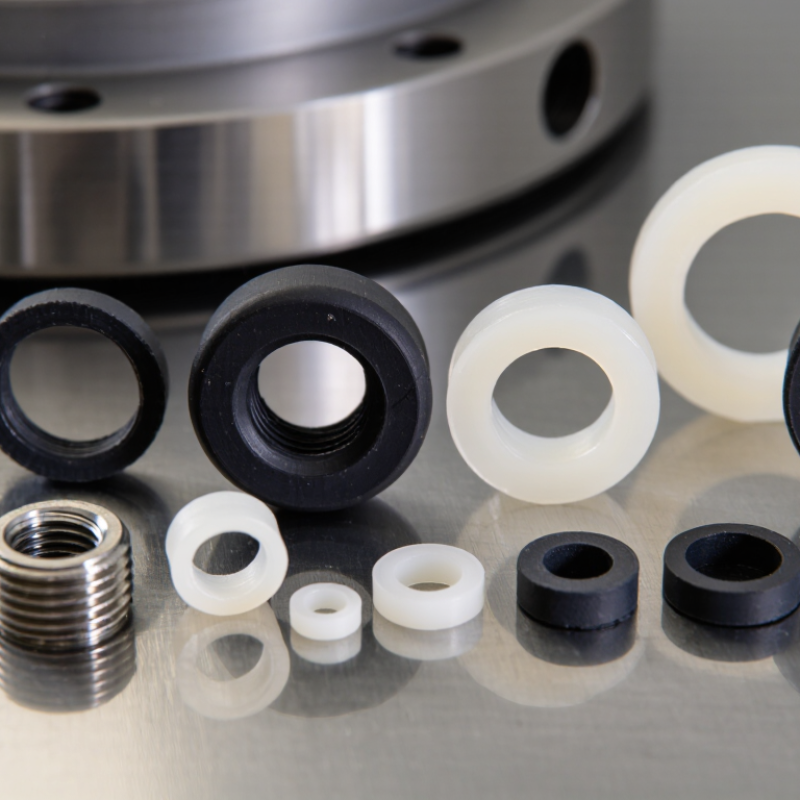
10 Best Screw In Washers for Global Buyers

What Are Screw-In Washers and How Do They Work?

Screw-in washers are fastening components designed to work with a screw, bolt, or threaded stud. Unlike a flat washer, some types have internal threads or external teeth. They can be screwed into wood, plastic, or prepared metal surfaces. The washer creates a broader contact area, helping spread pressure around the fastener hole.

In practical use, the washer sits between the fastener and the material, or becomes a threaded receiving point. When the screw is tightened, the washer helps reduce surface crushing and pull-through. A worker might install one beneath a cabinet panel, then drive a screw into its central opening. Threaded versions can also support repeated assembly because the material receives less direct wear.

Material choice matters. Stainless steel resists moisture, while zinc-coated steel may suit ordinary indoor work. Plastic versions can protect softer surfaces, but they may deform under heavy loads.

Check the washer’s inner diameter, outer diameter, thread size, and load rating before installation. A loose fit can cause movement. Excessive tightening can damage the surrounding material.

Field experience shows that alignment often matters more than expected. If the washer enters at an angle, the screw may bind or sit unevenly. That small mistake is easy to overlook. I would also avoid assuming every screw-in washer replaces an anchor; weak wood or cracked plastic may still need reinforcement. Inspect the surface, test the fit, and tighten gradually.

Key Features to Compare Before Choosing a Screw-In Washer

When comparing screw-in washers for global buyers, start with dimensions, material, and fastening conditions. Measure the inner diameter against the screw shaft, not only the package label. The outer diameter should distribute pressure without touching nearby components. Thickness also matters because it changes screw engagement and clamping height.

Material selection depends on the working environment. Stainless steel suits humid areas, while hardened steel supports higher clamping loads. Plastic washers can reduce vibration and electrical contact, but they may deform under heat. Check corrosion resistance, hardness, temperature range, and surface treatment. If the washer has integrated threads, verify thread size, pitch, and tolerance with calibrated gauges. Small differences can cause poor assembly.

Load performance deserves practical testing. Place the washer under the actual screw head and inspect surface marks after tightening. Use a torque-controlled tool when possible. Excessive torque may crush softer materials or damage threads. Ask suppliers for dimensional reports, material certificates, and batch traceability. Packaging should prevent mixing different sizes during international shipping. Country-specific standards may also affect documentation and testing expectations.

A pilot order is wise. It exposes problems early. However, one test sample can mislead. Test several batches, temperatures, and installation operators before approving a large purchase. I have found that smooth installation is not enough; loosening after vibration can reveal a hidden design weakness. Compare total cost, including freight, inspection, replacements, and assembly time. Product photos are useful, but measured evidence is more reliable.

10 Best Screw In Washers for Global Buyers - Key Features to Compare Before Choosing a Screw-In Washer
No. Washer Type Reference Screw Size Typical Dimensions Common Materials Main Function Best Applications Key Advantages Important Buying Checks
1 Plain Washer, Normal Series M6 or 1/4 in For M6: approximately 6.4 mm inside diameter, 12 mm outside diameter, 1.6 mm thickness Carbon steel, stainless steel, brass Distributes screw clamping force and protects the bearing surface General machinery, sheet metal, furniture hardware and maintenance work General-purposeLow costEasy to source Check hole clearance, outside diameter, thickness, hardness and corrosion resistance. ISO 7089 is a common dimensional reference.
2 Large Outside-Diameter Washer M6 or 1/4 in For M6: approximately 6.4 mm inside diameter, 18 mm outside diameter, 1.6 mm thickness Carbon steel, stainless steel, galvanized steel Spreads the load over a larger surface area Thin sheet, wood, plastic panels, composite boards and soft materials High load distributionPanel protection Compare outside diameter with the available installation space. ISO 7093-1 and DIN 9021 are commonly used dimensional references.
3 Extra-Large Fender Washer M6 to M10 or 1/4 to 3/8 in Outside diameter is commonly several times larger than the screw diameter; thickness is often about 1.5–3 mm Steel, stainless steel, aluminum Prevents pull-through and reduces surface pressure Roofing panels, trailers, outdoor enclosures and lightweight construction Very wide coverageGood for weak surfaces Confirm flatness, edge clearance, hole size and resistance to bending. Do not use a thin washer where high structural loads are expected.
4 Sealing Washer with Elastomer Insert M4 to M12 or No. 8 to 1/2 in Metal washer with a bonded rubber or elastomer sealing layer; dimensions vary by screw size Stainless steel or galvanized steel with EPDM, NBR or silicone Seals around the screw and limits water, dust and air ingress Outdoor panels, HVAC equipment, vehicle bodies, solar installations and enclosures Weather sealingVibration dampingOutdoor use Match elastomer compatibility with temperature, UV exposure, oils and chemicals. Avoid over-compression during installation.
5 Countersunk Finishing Washer M4 to M8 or No. 8 to 5/16 in Typically includes a conical seat, often 90° for metric hardware; outside diameter commonly ranges from about 10–18 mm Stainless steel, plated steel, nylon Seats a countersunk screw and creates a neat finished appearance Electrical panels, cabinets, furniture, signs and visible assemblies Low-profile finishImproved appearance Match the countersink angle to the screw head. Check head diameter, washer height and available material thickness.
6 Internal-Tooth Lock Washer M3 to M10 or No. 4 to 3/8 in Teeth project inward toward the screw head; size is selected to fit the screw shank Hardened carbon steel, stainless steel Creates mechanical resistance to rotation under vibration Electrical grounding points, instrument panels and compact assemblies Compact profileGood under small screw heads Teeth require a suitable mating surface. They can mark painted or finished surfaces and are not a substitute for correct tightening torque.
7 External-Tooth Lock Washer M3 to M16 or No. 4 to 5/8 in Teeth extend beyond the outside diameter and engage the bearing surface Hardened carbon steel, stainless steel Resists loosening by biting into the screw head and joint surface Machine frames, brackets, electrical grounding and vibration-prone assemblies Strong surface engagementVibration resistance Use with compatible screw-head geometry and sufficient surface hardness. Verify that the teeth will not interfere with adjacent parts.
8 Conical Spring Washer M4 to M20 or 1/4 to 3/4 in Disc-shaped washer with a conical profile; spring deflection depends on diameter, thickness and cone height Spring steel, stainless spring steel Provides limited spring force and helps maintain tension in a joint Thermal cycling, flanged joints, machinery and assemblies requiring preload compensation Spring actionPreload compensation Check load-deflection data, installed orientation, free height and working range. Do not flatten beyond the specified operating condition.
9 Shoulder Washer M3 to M12 or No. 4 to 1/2 in Central insulating or spacing shoulder; bore, shoulder diameter and thickness are application-specific Nylon, PEEK, PTFE, phenolic material or other engineering polymers Provides electrical isolation, alignment or controlled spacing Electronic equipment, busbars, circuit assemblies and rotating or sliding components Electrical insulationLow friction optionsPrecise spacing Check dielectric strength, temperature rating, compression resistance, chemical compatibility and dimensional tolerance.
10 Bonded Metal-Rubber Washer M5 to M12 or No. 10 to 1/2 in Metal washer with a permanently bonded sealing element; outer diameter and thickness vary by application Stainless steel or plated steel with EPDM, NBR or silicone Combines mechanical clamping with a reliable static seal Hydraulic equipment, pipe fittings, pumps, tanks and weather-exposed assemblies Reliable sealingPressure resistanceReduced part count Confirm pressure rating, media compatibility, temperature range, seal hardness and correct tightening torque.
Selection note: Before ordering, compare nominal screw size, inside diameter, outside diameter, thickness, material grade, surface finish, temperature range, corrosion exposure, sealing requirements and applicable dimensional standards. Actual dimensions may vary by standard, tolerance class and supplier specification.

Materials, Sizes, and Designs for Different Applications

10 Best Screw In Washers for Global Buyers

Materials, Sizes, and Designs for Different Applications

Choosing screw-in washers requires more than matching a hole diameter. Material, thickness, load distribution, and surface conditions all affect performance. Stainless steel suits outdoor fixtures, food-processing areas, and humid rooms. Zinc-plated steel offers practical corrosion resistance for general indoor assembly. Nylon washers help reduce vibration and electrical contact. For high-temperature equipment, engineers may consider heat-resistant polymers or hardened steel. Material choice depends on the full assembly, not the washer alone.

Size accuracy matters. Measure the screw shank, outer diameter, and available clearance before ordering. A washer that fits loosely may shift under vibration. One that is too thick can prevent proper thread engagement. Flat designs spread pressure across painted panels, while countersunk styles support flush mounting. Locking designs can resist rotation, but they may mark delicate surfaces. Serrated edges are useful in selected metal assemblies, though they are not ideal for every finish. I have seen small design assumptions cause larger assembly problems.

Tips: Request dimensional drawings, material certificates, and sample pieces from suppliers. Check inner diameter tolerance and coating thickness, not just the listed size. Test washers with the actual screw, panel, and torque setting. Salt-spray data can help outdoor buyers, but it does not replace application testing. Avoid assuming stainless steel always performs best. Galvanic contact with another metal may create unexpected corrosion. Packaging also deserves attention; mixed sizes create costly sorting errors. A simple incoming inspection can catch them.

10 Best Screw-In Washers for Global Buyers

10 Best Screw-In Washers for Global Buyers

For global buyers, the 10 best screw-in washers are not always the thickest options. They should match the screw, substrate, load, and environment. Useful choices include flat, fender, sealing, bonded, spring, wave, serrated, shoulder, countersunk, and hardened washers. Each design solves a different problem. A fender washer spreads pressure across thin sheet metal. A bonded washer helps reduce leakage around a threaded connection.

Material deserves careful attention. World Steel Association’s World Steel in Figures 2024 reported 1.89 billion tonnes of crude steel production in 2023. This scale supports broad steel availability, but it does not guarantee consistent washer quality. Buyers should request material certificates, hardness results, coating details, and dimensional inspection records. ISO 7089 supports common plain washer dimensions, while ASTM F436/F436M covers hardened washers for demanding structural applications. A perfect ranking is impossible. Actual performance changes with torque, vibration, salt exposure, and installation errors.

Tips: Confirm the washer’s inner diameter before ordering. Check coating compatibility with the screw. For outdoor use, compare salt-spray results instead of trusting “corrosion resistant” wording. Ask for samples from different production lots. Measure them yourself. Small deviations can affect clamp load. Also, avoid choosing only by low price; a cheap washer may create costly rework. Grand View Research’s 2024 fasteners market analysis identifies construction, automotive, and industrial equipment as major demand areas, where traceability and repeatable supply matter greatly.

International Buying Factors: Standards, Quality, and Supplier Support

For global buyers, screw-in washers are not simple add-ons. Their performance depends on fit, load distribution, material, and installation conditions. Before requesting prices, define the screw size, outside diameter, thickness, and application temperature. Then match these details with a recognized dimensional standard, such as ISO or an applicable national specification. Do not accept “standard size” as a complete answer. It can hide meaningful tolerance differences. Ask for drawings, material certificates, and inspection records.

Quality checks should cover more than appearance. Inspect plating coverage, burrs, flatness, thread clearance, and washer hardness. For outdoor or humid use, request corrosion-test data and coating thickness results. Sampling plans should be agreed before production begins. A small sample can pass while a full batch varies. That happened in one sourcing review. The mistake was trusting photographs instead of measurements. Independent inspection may be worthwhile for large orders. It adds cost, but rework costs more.

Supplier support matters after the purchase order. Reliable partners explain standard differences, confirm packaging, and answer technical questions quickly. They should provide batch traceability and a clear process for nonconforming parts. Check whether they can support small trial orders, replacement parts, and changing delivery schedules. Communication is evidence, too. Slow or vague replies often signal weak control. Still, even a responsive supplier can make errors. Keep written specifications, approve samples, and review performance after each shipment.

FAQS

How should buyers choose washer material?

Choose based on humidity, temperature, vibration, and contact with other metals. Stainless steel suits damp areas. Zinc-coated steel fits many indoor assemblies. Nylon can reduce vibration and electrical contact. Material choice is not always obvious.

What measurements should be checked before ordering?

Measure the screw shank, washer inner diameter, outer diameter, and thickness. Check the available clearance around the hole. A loose washer may shift during vibration. An overly thick washer can reduce thread engagement. Small errors matter.

Which washer design suits thin sheet metal?

A fender washer spreads pressure across a wider surface. It helps protect thin panels from local damage. Use a flat design for painted surfaces when broad support is needed. Check the panel thickness first. More coverage is not always better.

When is a countersunk washer useful?

A countersunk washer supports flush mounting. It can help keep the screw head aligned with the surface. Confirm the screw head shape and available recess depth. A poor match may leave raised edges or weak contact. Fit must be tested.

How can buyers evaluate corrosion resistance?

Request coating thickness results and corrosion-test data. Compare test conditions with the real environment. Salt exposure, humidity, and temperature can change performance. Do not trust “corrosion resistant” wording alone. Stainless steel can also corrode through metal contact.

What documents should suppliers provide?

Request dimensional drawings, material certificates, hardness results, and inspection records. Ask for production-lot traceability. Confirm the inner diameter tolerance and coating details. Photographs are useful, but measurements are stronger evidence. I once trusted images too much.

Should buyers test samples before bulk production?

Yes, test samples with the actual screw, panel, and torque setting. Check flatness, burrs, fit, and surface marks. Ask for samples from different production lots when possible. A small sample may pass while a larger batch varies. Sampling is imperfect.

What packaging details deserve attention?

Confirm that sizes are separated and clearly labeled. Mixed washers can create expensive sorting work. Check quantity, lot numbers, and protective packaging. Inspect incoming cartons before assembly begins. A simple check can prevent delays.

Conclusion

This guide explains what a Screw In Washer is, how its threaded or fastening design helps secure components, and why it can improve stability, alignment, and load distribution in different assemblies. It outlines the key features buyers should compare, including thread compatibility, outer diameter, thickness, load capacity, corrosion resistance, installation method, and long-term durability.

The article also reviews suitable materials, sizes, and designs for construction, machinery, maintenance, and other practical applications before presenting ten dependable options for global buyers. It concludes with important international purchasing considerations, such as dimensional standards, material quality, inspection procedures, packaging, documentation, production consistency, and supplier support. By evaluating performance requirements alongside sourcing reliability, buyers can select a Screw In Washer that fits their application, reduces installation problems, and delivers stable value across different operating environments.

Madeline

Madeline

Madeline is a dedicated marketing professional with a wealth of expertise in our company's core offerings. With a keen understanding of the industry, she brings a unique perspective to her role, consistently delivering high-quality content that highlights the superior aspects of our products. As......