Choosing the right Bolt And Washer combination in 2026 is less about finding a universal “best” option and more about matching parts to the joint. A hex bolt may suit a general assembly, while a socket-head bolt can fit a tighter space. Flat washers spread load across a surface; fender washers cover a wider area. Spring washers are sometimes used to resist loosening, but they are not a cure for poor joint design. Small details matter.
Think about the real conditions. Will the connection face vibration, moisture, heat, or repeated servicing? A stainless-steel fastener may resist corrosion, yet mixing dissimilar metals can create problems in some environments. A soft panel may need a wider washer to prevent pull-through. In a workshop, even a washer that looks close enough can sit unevenly or leave too little bearing area. That is easy to miss.
This guide compares common bolt and washer types by application, material, strength, and installation needs. It also explains what to check before buying, including thread size, head style, coating compatibility, and the manufacturer’s tightening guidance. Use those details as a starting point, not a substitute for engineering review where loads or safety are critical. No chart covers every joint. Sometimes the best choice depends on one overlooked surface or operating condition, and that deserves a second look.
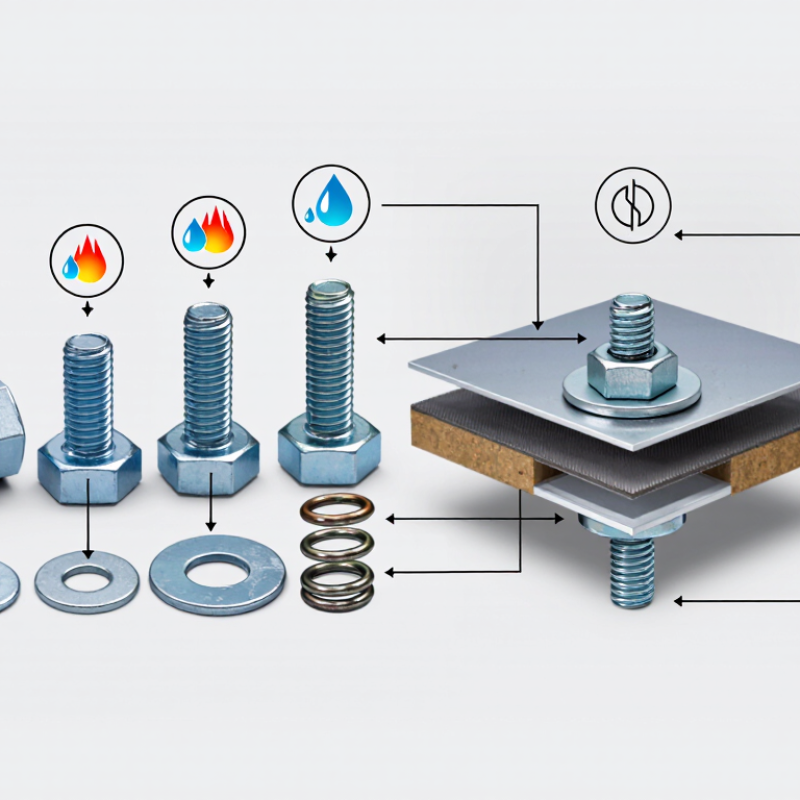
SAE J429 Grade 8 bolts are used in demanding joints, with a 150 ksi minimum tensile strength for covered sizes. Tensile strength measures resistance to pulling apart, not the load a joint can safely carry in every situation. That distinction matters. Clamp load also depends on bolt diameter, thread condition, tightening method, and the materials being joined. Check the applicable standard and size before specifying hardware.
A Grade 8 head typically has six radial lines, but markings alone are not a substitute for traceable specifications. Pair the bolt with a washer suited to the joint; a hardened washer can help distribute bearing pressure and resist deformation under the bolt head. A soft washer may dish or compress, changing the joint’s preload. The washer does not raise the bolt’s strength. Not automatically.
It is tempting to treat 150 ksi as a complete answer. It isn’t. For example, a bolt securing a bracket to a painted steel plate may loosen if the coating compresses, even when the bolt has ample strength. Confirm the joint materials, hole fit, vibration, and tightening procedure. I’d still pause over a “stronger is better” choice: excessive strength can shift failure to the connected parts, and that detail is easy to miss.
What Are the Best Bolt and Washer Types in 2026?
ISO 898-1 class 10.9 describes a metric fastener’s mechanical property class, not its size. The “10” corresponds to 1,000 MPa nominal tensile strength; “9” indicates a nominal yield-to-tensile ratio of 0.9, or 900 MPa nominal yield strength. ISO 898-1’s property tables distinguish nominal values from specified minimum test values, which vary by diameter. Treat the class as useful data, not a complete design check. A 10.9 marking does not tell you the joint’s safe load by itself.
Tips: Check the head marking and the product certificate. Match the bolt’s diameter, thread, material, and coating to the joint. A washer can spread bearing pressure or protect a surface, but it does not increase the bolt’s strength. Choose a hardened washer when the joint design calls for one.
NASA’s Fastener Design Manual, NASA RP-1228, discusses the practical limits of estimating preload from tightening torque. That matters because friction can change the clamp force, even when the same torque is applied. For a critical joint, follow a documented assembly method and verify the specified fastener properties. It is easy to focus on “10.9” and overlook the mating parts, washer hardness, or installation conditions. Those details still matter.
Reading Metric Classes: ISO 898-1 Class 10.9 means 1,000 MPa nominal tensile strength.
The first number in a metric property class, multiplied by 100, indicates its nominal tensile strength in MPa: class 10.9 is 1,000 MPa. These are nominal class values; specified mechanical requirements can depend on bolt size and the applicable standard.
What Are the Best Bolt and Washer Types in 2026?
Choose the washer for the joint’s load, not just the bolt’s diameter. ISO 7089 flat washers suit many general metric assemblies. Their broad, flat surface spreads contact pressure and helps protect softer parts from bolt-head damage. They are not automatically hardened; check the specified material and property requirements. ASTM F436 washers are hardened steel washers intended for structural bolting applications. Their strength helps resist deformation under high clamping loads. They are not interchangeable just because a washer fits over the bolt.
Look at the full connection: bolt grade, nut, base material, hole size, coating, and service conditions. For example, a washer under a structural bolt on a steel plate must meet the assembly specification, not merely look sturdy. Corrosion protection matters too. A coating mismatch can create problems that are easy to overlook.
Tips: Confirm the governing drawing or specification, then check washer dimensions and hardness. Keep the correct washer with its bolt set. If the application is unclear, pause and verify; guessing from appearance is a poor shortcut. A practical detail worth reconsidering: thicker is not always safer. Overly large or unsuitable washers can interfere with clearances, so check the joint before installation.
What Are the Best Bolt and Washer Types in 2026?
Match Bolt Materials to Exposure Using ASTM F593 Stainless-Steel Grades
Choosing a stainless-steel bolt starts with the exposure, not the finish. ASTM F593 covers stainless-steel bolts, studs, and cap screws, with alloy and condition requirements tied to mechanical performance. Type 304 is often suitable for sheltered, ordinary environments. For salt spray, de-icing salts, or coastal air, Type 316’s molybdenum offers better resistance to chloride attack. Better, not immune. Water trapped beneath a washer can still create a crevice where corrosion begins. Match the washer material to the bolt, too, to reduce mismatched-metal concerns and uneven durability.
The NACE IMPACT study estimated global corrosion costs at US$2.5 trillion annually, or 3.4% of global GDP. That figure covers many industries, not fasteners alone, but it shows why exposure assessment matters. At a job site, note whether a joint faces road spray, persistent condensation, or cleaning chemicals. Then verify the F593 alloy and condition against the required strength and the supplier’s material documentation. A higher-alloy bolt is not automatically the right choice. And stainless threads can gall during tightening; controlled installation helps, though it is easy to overlook. If exposure is uncertain, document the assumption and review it before specifying the hardware.
| Exposure or application | Bolt material to consider | Washer selection | Selection notes |
|---|---|---|---|
| Dry indoor service; mild rural or low-pollution atmospheres | ASTM F593 austenitic stainless steel such as Type 304, when listed for the specified grade and condition | Plain flat washer in a compatible stainless alloy; choose the washer dimensions for the hole and bearing surface | A common general-purpose choice. Type 304 can stain or pit in chloride-bearing environments, including coastal air and deicing-salt exposure. |
| Coastal atmosphere, frequent wetting, or many industrial atmospheres | ASTM F593 austenitic stainless steel such as Type 316, when listed for the specified grade and condition | Prefer a washer with compatible corrosion resistance, typically Type 316 where the bolt is Type 316 | Molybdenum gives Type 316 better resistance to chloride pitting than Type 304, but it is not immune to seawater or severe crevice corrosion. |
| Freshwater, washdown, or damp service with low chloride content | Type 304 may suit mild conditions; consider Type 316 if exposure is persistent or water chemistry is uncertain | Use a compatible stainless flat washer; avoid trapping moisture and debris beneath the washer where practical | Water chemistry, deposits, temperature, and crevices affect corrosion performance. Confirm suitability for the actual service conditions. |
| High chloride exposure, immersion, or continuous seawater service | Do not assume common Type 304 or 316 is adequate; obtain a corrosion review and verify whether an alternative alloy and specification are required | Select the washer material as part of the same corrosion-system review; consider crevice geometry and the full fastener assembly | ASTM F593 material selection alone does not establish suitability for severe marine exposure. Test data and service-specific engineering may be needed. |
| Applications prioritizing strength where lower corrosion resistance is acceptable | A martensitic stainless option, such as Type 410, only when the required F593 grade and condition meet the design requirements | Specify a washer with suitable strength and corrosion compatibility; do not assume a general-purpose washer matches the bolt properties | Martensitic stainless steels can provide different strength and hardness characteristics from austenitic grades, but generally offer less corrosion resistance than Type 304 or 316. |
| Oversized holes, soft bearing surfaces, or a need to spread clamp load | Choose the bolt alloy for exposure first, then verify bolt strength and joint design | Consider a larger-outside-diameter flat washer, provided its dimensions and material suit the application | Washer diameter and thickness affect load distribution. Check bearing stress, clearance, and the specified washer standard. |
ASTM F593 specifies stainless-steel bolts, hex cap screws, and studs; it does not by itself specify the washer for every assembly. Specify washer material and dimensions separately, and verify the exact F593 alloy designation and condition before ordering.
A good fit starts with the drawing, not the wrench. ISO 4014 hex-head bolts have a partially threaded shank; ISO 4017 bolts are threaded to the head. Check the nominal diameter, pitch, length, and grip thickness before ordering. For example, an M10 hex-head bolt commonly has a 16 mm width across flats and a 6.4 mm head height. Confirm the applicable standard table and tolerances for your specific size. Pair the bolt with a washer whose inner diameter clears the shank and whose outer diameter supports the joint surface.
Torque needs context. For class 8.8 metric bolts with coarse threads, approximate dry reference values are 25 Nm for M8, 50 Nm for M10, and 87 Nm for M12. These are estimates, not fixed ISO requirements. Lubrication, coatings, thread condition, washer type, and joint materials can change the clamp load substantially. A lubricated M10 bolt, for instance, may reach the same tension at lower torque. I would not treat a chart as a substitute for the assembly specification; that shortcut is easy to regret.
Tips: Tighten in stages and use a calibrated torque wrench. Keep threads clean and dry if using dry values. Check that the washer lies flat, then inspect for settling after the first load cycle. Small details matter.
Covered sizes have a minimum tensile strength of 150 ksi. That measures resistance to pulling apart, not the safe load of a complete joint. Important distinction.
Grade 8 bolts typically have six radial lines on the head. Markings help, but traceable specifications and product documents provide stronger confirmation. I would check both.
No. A suitable washer can spread bearing pressure and protect the joint surface. A hardened washer may resist deformation. The bolt’s strength stays the same.
It represents 1,000 MPa nominal tensile strength and 900 MPa nominal yield strength. Specified minimum values vary by bolt diameter. Check the size-specific data.
ISO 4014 bolts have a partially threaded shank. ISO 4017 bolts are threaded to the head. Check thread length against the joint’s grip thickness.
Confirm diameter, thread pitch, length, and grip thickness. An M10 hex-head bolt commonly measures 16 mm across flats, with a 6.4 mm head height. Verify the applicable tolerances.
No. Approximate dry values for class 8.8 coarse-thread bolts include 25 Nm for M8, 50 Nm for M10, and 87 Nm for M12. Lubrication and coatings can change clamp load. A chart can mislead.
Paint or other soft material can compress under the joint, reducing preload. Vibration, hole fit, and tightening method also matter. Inspect after the first load cycle. I might still miss something.
Choosing the right Bolt And Washer combination starts with understanding strength ratings. SAE J429 Grade 8 bolts offer a minimum tensile strength of 150 ksi, while ISO 898-1 Class 10.9 bolts are rated at a nominal strength of 1,000 MPa. These ratings help you match fasteners to the loads and conditions of an application rather than relying on appearance alone.
Washer selection also matters: ISO 7089 flat washers suit general support needs, whereas hardened ASTM F436 washers are intended for more demanding joints. For exposure to corrosive environments, compare stainless-steel options under ASTM F593 and choose a grade suited to the conditions. Finally, check ISO 4014 or ISO 4017 dimensions for proper fit, and use reliable torque data to tighten the assembly consistently without overloading the fasteners.

Dongshuo