The 2026 Hex Nut market reflects broader changes across construction, automotive, machinery, and renewable-energy supply chains. Fortune Business Insights estimates that the global fasteners market reached approximately USD 94.86 billion in 2023. Its report also projects continued expansion through 2032. Grand View Research identifies industrial equipment, transportation, and building applications as major demand areas. These findings create a useful starting point for global buyers.
However, market size alone cannot identify the best manufacturer. Buyers must examine thread accuracy, material traceability, coating consistency, and production capacity. A reliable supplier should provide dimensional inspection records, material certificates, and batch-level quality documentation. ISO 9001 certification can support confidence, but it should not replace independent verification. Small details matter. A poorly plated nut may fail visibly after shipment. An inconsistent thread can stop an entire assembly line.
This guide evaluates the 2026 top Hex Nut manufacturers through a practical procurement lens. It considers manufacturing experience, export performance, customization ability, testing systems, and response speed. Reports from MarketsandMarkets and ResearchAndMarkets show continued demand for engineered fastening products, especially in industrial and infrastructure projects. Yet published rankings often use different research methods. No ranking is flawless. Buyers should compare supplier evidence against actual project requirements, including load conditions, corrosion exposure, packaging, and delivery destinations. A factory with impressive equipment may still lack dependable after-sales support. The strongest choice combines verified engineering capability with consistent communication and transparent commercial terms.
What Are Hex Nuts and Why Do Global Buyers Need Reliable Manufacturers?
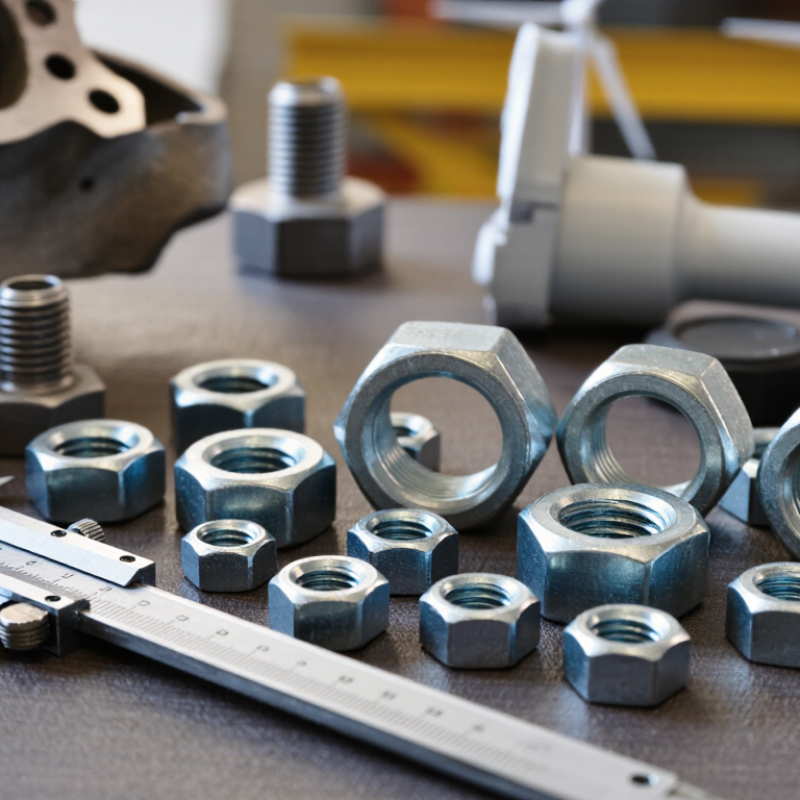
Hex nuts are six-sided threaded components that clamp bolts against connected materials. Their geometry allows socket or wrench access, even in narrow assembly spaces. In real procurement, buyers inspect thread fit, hardness, plating, and dimensional consistency—not appearance alone. A nut that spins smoothly during testing may still fail under vibration.
Demand is significant. MarketsandMarkets estimates the global industrial fasteners market could grow from about USD 95 billion in 2023 to over USD 120 billion by 2028. Hex nuts represent a practical part of this supply chain across construction, machinery, transport, and energy equipment. The report also identifies industrial expansion and infrastructure investment as major demand drivers.
Reliable manufacturers provide traceable steel certificates, controlled heat treatment, and batch-level inspection records. They should verify thread gauges, proof loads, surface thickness, and corrosion resistance against applicable ISO or ASTM requirements. The International Organization for Standardization reports that ISO 898-2 defines mechanical properties for nuts used with specified bolt grades. That detail matters when a fastener is installed above a factory floor or inside a vibrating machine.
Low price can hide costly rework. Yet certifications alone do not guarantee dependable production; audits, samples, and shipment records still need review. I have seen procurement teams overvalue polished documentation and undervalue process stability. That is an avoidable weakness. A capable manufacturer communicates tolerances clearly, flags material substitutions, and keeps quality evidence connected to each shipment.
| Hex Nut Category | Common International Standard | Typical Materials | Typical Strength or Property Class | Common Size Range | Typical Surface Finish | Common Applications | Key Manufacturer Qualification Checks |
|---|---|---|---|---|---|---|---|
| Standard Hex Nut | ISO 4032; ASME B18.2.2; commonly referenced with DIN 934 dimensions | Carbon steel, alloy steel, stainless steel, brass | ISO 898-2 classes 5, 8, 10 and 12; stainless classes 50, 70 and 80 under ISO 3506-2 | Metric M3–M30 is widely stocked; larger sizes are normally made to order | Plain, zinc electroplated, zinc flake, hot-dip galvanized, black oxide | General machinery, structural assemblies, automotive components and maintenance | Dimensional inspection, thread-gauge testing, proof-load testing, hardness testing and coating verification |
| Heavy Hex Nut | ASTM A563; ASTM A194 for pressure equipment; ASME B18.2.2 for dimensions | Carbon steel, alloy steel and heat-resistant alloy steel | ASTM A563 grades vary by material and size; ASTM A194 grades include 2H and 7 for specified service conditions | Commonly 1/4 inch–2 inch and larger for engineered projects | Plain, zinc plated, hot-dip galvanized and specialized corrosion-resistant coatings | Steel structures, bridges, pipelines, pressure vessels and heavy equipment | Material heat traceability, chemical analysis, tensile or proof-load results, hardness and lot-level documentation |
| Nylon-Insert Lock Nut | ISO 7040; DIN 985; ASME B18.16.6 | Carbon steel, stainless steel and brass with a polyamide insert | Commonly ISO property classes 8 and 10 for steel versions; stainless grades depend on the selected material | Typically M3–M20 or #2–3/4 inch, depending on the production line | Zinc plated, zinc flake, passivated stainless steel or plain | Vibration-prone machinery, vehicles, appliances and light industrial assemblies | Prevailing-torque testing, insert material verification, temperature suitability and reuse-cycle testing |
| All-Metal Prevailing-Torque Nut | ISO 7042; ISO 7719; DIN 980; ASME B18.16.6 | Carbon steel, alloy steel and stainless steel | Commonly property classes 8, 10 and 12 for steel, subject to the applicable standard and size | Generally M4–M24; larger sizes are available through specialized production | Plain, zinc plated, zinc flake, phosphate or heat-resistant finishes | High-temperature equipment, engines, exhaust systems and industrial machinery | Prevailing-torque consistency, temperature resistance, thread integrity and coating friction control |
| Flange Hex Nut | ISO 4161; DIN 6923; ASME B18.2.2 where applicable | Carbon steel, alloy steel and stainless steel | Commonly ISO property classes 8 and 10; class selection depends on the bolt and joint design | Typically M4–M20 in standard production programs | Zinc plated, zinc flake, hot-dip galvanized or stainless passivated | Automotive, sheet-metal assemblies, machinery frames and electrical equipment | Flange diameter and thickness, bearing-surface flatness, thread concentricity and torque-tension performance |
| Thin or Jam Hex Nut | ISO 4035; DIN 439; ASME B18.2.2 | Carbon steel, stainless steel, brass and aluminum alloys | Strength depends on material and reduced nut height; not normally used as a direct substitute for full-height nuts | Commonly M3–M24 and equivalent inch sizes | Plain, zinc plated, black oxide or passivated stainless steel | Locking arrangements, adjustment mechanisms, compact assemblies and clearance-limited designs | Nut height, minimum engagement length, thread quality, deformation risk and installation torque |
| Coupling or Long Hex Nut | ISO 4033; DIN 6334 | Carbon steel, alloy steel, stainless steel and brass | Selected according to the connected threaded components and required joint load | Typically M5–M30; custom lengths are common | Plain, zinc plated, black oxide or stainless passivated | Thread-rod joining, suspension systems, furniture hardware and installation work | Overall length, internal thread depth, concentricity, material strength and go/no-go gauge results |
| Stainless Steel Hex Nut | ISO 3506-2; ISO 4032; ASME B18.2.2 | Austenitic stainless steel such as A2 or A4; other stainless grades for specialized service | ISO 3506 property classes 50, 70 and 80 are widely specified for austenitic stainless nuts | Commonly M3–M30; larger diameters may require specialized tooling | Plain, passivated, electropolished or coated for reduced galling | Marine equipment, food-processing machinery, chemical facilities and outdoor applications | Grade verification, corrosion requirements, passivation records, galling control and surface-finish inspection |
Note: Applicable standards, material grades, dimensions and testing requirements should always be confirmed against the latest customer specification and the current edition of the referenced standard.
Request material certificates, inspection records, and samples from recent production lots. Check dimensions, hardness, thread accuracy, surface finish, and corrosion resistance. Small details matter. Compare documents with physical evidence. One sample can mislead you.
Review machine numbers, shift patterns, tooling conditions, and monthly output records. Confirm that inspection continues during urgent orders. Ask about rough threads, uneven plating, and mixed batches. Capacity claims need evidence.
Verify current quality, environmental, and workplace certifications. Confirm that the scope covers fastener production. Check recognized product standards for dimensions, materials, threads, and strength. A certificate alone proves little.
Ask for traceability from steel receipt through final packing. Each sample should carry a lot number linked to test results. Review heat-treatment records and coating details. Missing links deserve questions.
Ask who stops the batch and how defects are recorded. Review corrective-action reports and retesting procedures. Confirm how nonconforming nuts are separated. The answer often reveals factory discipline.
Request a complete landed-cost breakdown. Include tooling, plating, inspection, packaging, inland delivery, and shipping. Compare identical steel grades, thread standards, finishes, quantities, and shipping terms. Low prices can hide costs.
Ask the supplier to review drawings, tolerances, thread classes, heat treatment, and packaging. Approve samples before mass production. Then inspect a second sample from regular production. Repeatability matters more than presentation.
Confirm lead time, port options, carton dimensions, pallet limits, and shipment tracking. Clarify export documents and buyer-paid costs. Request response targets, replacement rules, root-cause reports, and corrective actions. Clear evidence matters more.
Choosing the right Hex Nut manufacturer is essential for global buyers seeking secure, durable, and cost-effective fastening solutions. This guide explains how to assess suppliers based on product quality, production capacity, material consistency, dimensional accuracy, and delivery reliability. It also reviews the leading manufacturing regions in 2026, helping buyers understand how regional strengths, technical capabilities, and supply-chain infrastructure may influence purchasing decisions.
Buyers should verify relevant manufacturing standards, quality-control procedures, material certifications, and compliance documentation before placing an order. The guide also compares key commercial factors, including pricing transparency, minimum order quantities, customization options, packaging, logistics support, lead times, and after-sales service. By evaluating suppliers through these practical criteria, businesses can reduce procurement risks, maintain consistent product performance, and build dependable long-term partnerships for domestic and international projects.

 Dongshuo