Choosing a reliable supplier for a Wedge Anchor takes more than comparing prices or browsing polished product photos. This guide introduces Chinese manufacturers and suppliers serving construction, infrastructure, and industrial buyers. It focuses on practical checks: material grades, dimensions, finishes, load data, production capacity, and quality documentation. Details matter. A useful supplier should explain how its anchors are made and which concrete conditions its published specifications cover. Buyers can also ask about sample availability, inspection procedures, packaging, and lead times. These points help turn a catalog listing into a product that can be assessed for a specific project.
China’s fastener market includes businesses with different specialties, production scales, and export experience. The word “top” should therefore be treated as a starting point, not a universal ranking. Compare suppliers against your own requirements, and confirm that test reports match the exact anchor model and finish being offered. Check carefully. A polished brochure can still leave practical questions unanswered, and even experienced buyers may need to verify details more than once. Clear technical communication, consistent documentation, and responsive after-sales support are useful signs, but they do not replace independent verification. This overview helps readers identify what to ask and what to compare before shortlisting Wedge Anchor manufacturers and suppliers in China.
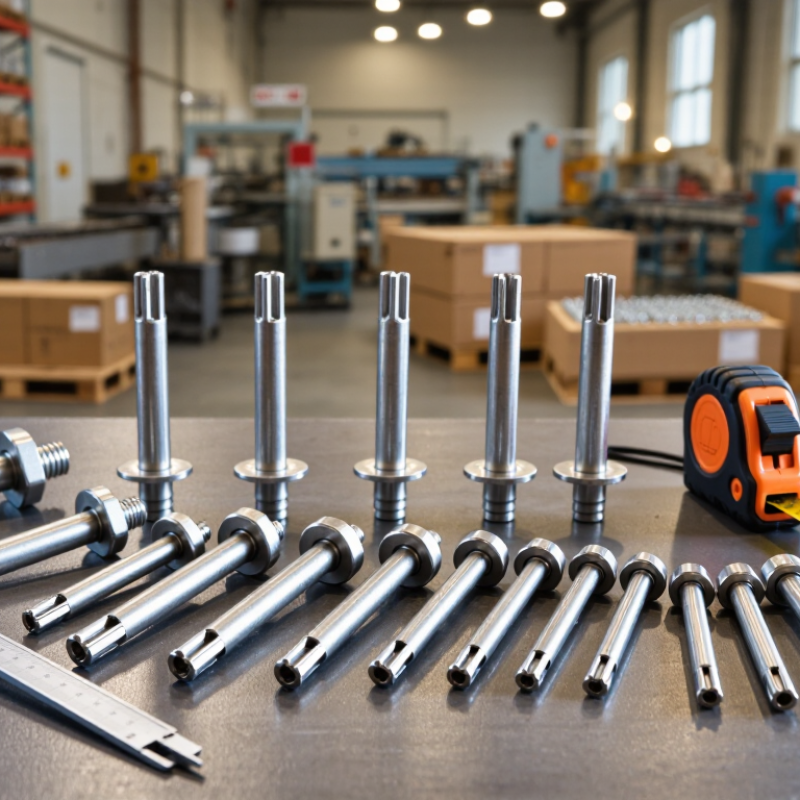
A wedge anchor is a steel fastener designed to secure fixtures in solid concrete. It has a threaded body, a tapered end, and an expansion clip. When the nut is tightened, the taper draws the clip outward against the sides of a drilled hole. This pressure helps resist pulling and movement. Wedge anchors commonly hold base plates, handrails, and equipment brackets. The mechanism is straightforward. Concrete is less predictable: a dusty hole, weak surface, or misplaced drill can reduce reliable holding.
Small details matter. Match the anchor diameter and embedment depth to the fixture and concrete conditions. Drill to the specified depth, then remove dust as directed; debris can interfere with proper seating. Keep the required distance from slab edges and nearby anchors, since crowded or edge-mounted holes may weaken the concrete. Tighten to the specified torque, not just until the nut feels firm. A snug fit can be reassuring, but feel alone is not a dependable check. When loads, concrete condition, or exposure are uncertain, verify the anchor’s suitability and installation requirements before work begins.
Wedge anchors are designed for solid concrete, where a clip expands against the drilled hole as the nut is tightened. Suppliers in China may offer standard and heavy-duty versions, with options for different diameters, lengths, and finishes. Match anchor length to fixture thickness and required embedment; a short anchor can reduce holding capacity. Check the product drawing, not just the catalogue photo.
Material choice affects durability. Zinc-plated carbon steel is common for dry indoor use, while hot-dip galvanizing offers a thicker coating for some outdoor conditions. Stainless steel, often grades 304 or 316, can suit damp or corrosive environments, though grade selection depends on exposure. Small detail. Ask for material certificates and coating information, since “stainless” alone does not identify the grade.
Performance depends on more than the anchor itself. Concrete strength, hole diameter, embedment depth, edge distance, and installation torque all matter. Look for test or evaluation documentation tied to applicable requirements, such as ICC-ES AC193 or ACI 355.2 qualification, and use design rules appropriate to the project. These references are not interchangeable. Before placing a bulk order, request traceable test results and confirm installation instructions with the supplier; paperwork can look complete while omitting the conditions behind the stated loads.
China’s wedge anchor industry turns steel stock into fasteners designed to grip solid concrete. Production commonly begins with steel wire or bar, cut into blanks. Cold heading forms the anchor body and head under pressure. Threads are then rolled, not cut, to create a consistent profile. The expansion clip is formed separately and fitted around the shank.
Heat treatment can improve strength and hardness, but temperature control matters. Too much variation may affect performance, so manufacturers monitor furnace conditions and test samples. Surface treatments, such as zinc coatings, help resist corrosion in suitable environments. They do not make every anchor appropriate for every exposure. Small details matter.
Quality checks may measure diameter, thread dimensions, hardness, coating thickness, and pull-out behavior in concrete. Test results depend on concrete strength, embedment depth, and installation method. A polished finish alone proves little. Buyers should review technical data and match the anchor to the specified load and base material. Batch consistency can also be difficult to maintain, especially when tooling wears; that is a practical weakness worth asking suppliers about. A clear inspection record gives more useful evidence than appearance alone.
| Manufacturing or Product Dimension | Typical Industry Practice | Relevant Details | Quality Checks |
|---|---|---|---|
| Anchor construction | A typical mechanical wedge anchor has a threaded steel stud, an expansion clip, a nut, and a washer. | When tightened, the clip expands against the drilled hole in solid concrete. The anchor is designed for use in suitable base materials and within its specified installation limits. | Check that the components fit together correctly and that the clip moves and expands as intended. |
| Common nominal diameters | Metric product ranges commonly include sizes such as M6, M8, M10, M12, M16, and M20; availability depends on the product design. | Diameter selection is based on the required load, concrete condition, fixture, edge distance, spacing, and installation requirements. | Measure the stud diameter and verify thread dimensions against the drawing or applicable specification. |
| Anchor length and embedment | Length is selected to suit the fixture thickness and the anchor’s required embedment. Product lengths vary by diameter and design. | Effective embedment is not the same as overall anchor length. Follow the product data for minimum hole depth, embedment, and fixture thickness. | Check overall length and confirm that installation instructions identify the required drilling depth and embedment. |
| Stud production | Steel wire or rod is cut to length, formed or headed as required, and threaded. Thread rolling is commonly used to produce external threads. | Cold forming and thread rolling can support consistent dimensions and production efficiency; the exact route depends on the material and product design. | Inspect dimensions, thread fit, surface condition, and visual defects; use gauges where specified. |
| Expansion clip production | Clips are commonly stamped or formed from metal strip, then shaped to match the anchor stud and expansion mechanism. | Clip geometry and material influence how the anchor expands in the drilled hole. Designs differ between product ranges. | Check clip dimensions, forming quality, burrs, and assembly compatibility. |
| Materials | Common options include carbon steel for general-purpose products and stainless steel, such as grades in the 304 or 316 families, for environments requiring greater corrosion resistance. | Material selection should reflect the exposure conditions and the product’s documented performance. Stainless steel grade designations do not, by themselves, establish anchor load capacity. | Verify material identification and documentation against the purchase specification. |
| Heat treatment | Some carbon-steel anchors receive heat treatment to achieve specified mechanical properties; requirements depend on the product and material specification. | Heat-treatment needs are not identical for all anchor designs or materials. Stainless-steel products typically follow material-specific processing requirements. | Where required, review process records and mechanical-test results against the applicable specification. |
| Surface protection | Carbon-steel anchors may be supplied with a zinc coating or another specified protective finish. Stainless-steel products may receive cleaning or passivation appropriate to the material and process. | Coating type and thickness should be stated in the product specification. A finish should not be treated as a substitute for selecting a suitable material for the environment. | Inspect coating coverage and appearance; verify coating measurements or treatment records when specified. |
| Assembly and packaging | Studs, clips, nuts, and washers are assembled or kitted, counted, and packed with identification and installation information as required. | Packaging commonly identifies size, material or finish, quantity, and product reference information. | Check component count, matching parts, package labels, and protection against damage or corrosion during storage. |
| Installation and performance verification | Testing may include dimensional inspection, tensile or load testing, and installation checks, depending on the product specification and intended market. | Performance depends on factors including concrete strength and condition, hole diameter and depth, cleaning, installation torque, embedment, spacing, and edge distance. | Use the manufacturer’s documented installation procedure and applicable test or approval requirements; do not infer a load rating from anchor size alone. |
Note: The details above describe common wedge-anchor manufacturing and product practices, not specifications for every supplier or model. Dimensions, materials, finishes, and performance requirements vary; consult the product documentation and applicable standards for project selection and installation.
Choosing a wedge-anchor supplier requires more than comparing unit prices. Buyers should examine steel traceability, forming consistency, thread dimensions, heat treatment, and coating controls. These details affect installation and load performance. Process control matters. A useful factory audit checks material certificates against production batches and reviews dimensional inspection records. Ask how suppliers manage changes in steel grade or coating thickness. A polished sample is not enough.
Scale matters, but it does not prove quality. The World Steel Association’s World Steel in Figures 2025 reports 1,882.6 million tonnes of crude steel production worldwide in 2024. This signals a vast material supply base, not uniform anchor performance. For market context, the Global Construction 2030 study by Global Construction Perspectives and Oxford Economics projected construction output would rise 85% by 2030, reaching US$15.5 trillion. That forecast is a dated benchmark, not a current estimate. Strong suppliers should support claims with test reports, batch records, and clear installation guidance. Pull-out results also depend on concrete strength, embedment depth, and edge distance. The awkward part is field variation. Even a well-made anchor can disappoint when drilled holes are dusty or oversized.
Sourcing wedge anchors from China starts with a clear specification, not a price list. State the anchor diameter, total length, material, finish, and concrete type. Include the required embedment depth and expected load conditions. Small details matter. A 10 mm anchor may not suit a hole drilled with a different bit, and installation torque should match the supplier’s instructions.
Evaluate suppliers by asking how they control dimensions, heat treatment, and coating thickness. Request product drawings, inspection records, and test reports that identify the tested size and concrete conditions. Compare those details with your project requirements rather than relying on a general “high strength” claim. Ask for a sample lot, then measure the shank and check thread quality and finish. In practice, clear records are more useful than polished sales language. Still, a sample cannot prove every production batch is identical.
Before placing an order, confirm carton labeling, quantities per box, lead time, and how production lots are traced. Agree on acceptable inspection criteria in writing. If a supplier answers technical questions vaguely, pause and ask again. That can slow the process. It may also prevent costly mismatches after the anchors arrive. For critical installations, have a qualified engineer confirm anchor selection, spacing, and installation requirements for the actual concrete conditions.
It is a steel fastener for solid concrete. It has a threaded body, tapered end, and expansion clip.
Tightening the nut pulls the taper against the clip. The clip presses outward against the drilled hole.
They commonly secure base plates, handrails, and equipment brackets. The concrete condition still matters.
Match the anchor diameter and embedment depth to the fixture. Drill to the specified depth and remove dust as directed. Small details matter.
Holes too close to slab edges or other anchors may weaken concrete. Crowding can reduce reliable holding.
Use the specified torque. Feeling that the nut is firm is not a dependable check.
Check steel traceability, thread dimensions, forming consistency, heat treatment, and coating controls. Review batch records and dimensional inspections. A polished sample can reassure too quickly.
No. Global crude steel production reached 1,882.6 million tonnes in 2024, but that does not prove consistent anchor performance. Scale alone proves little.
Pull-out results depend on concrete strength, embedment depth, and edge distance. Dusty or oversized holes can also cause trouble. Field conditions vary.
This guide explains how a Wedge Anchor secures fixtures to concrete by expanding inside a drilled hole, creating a firm mechanical hold. It introduces common anchor types, materials, finishes, and performance considerations, helping readers understand how product design and installation conditions affect load capacity, corrosion resistance, and long-term reliability.
The article also outlines how Chinese manufacturers produce wedge anchors, from material selection and forming to heat treatment, finishing, inspection, and packaging. It compares suppliers by capabilities such as production scale, quality control, customization, and export experience, then offers practical steps for evaluating specifications, requesting samples, checking documentation, and communicating project requirements. These insights can help buyers make informed sourcing decisions and select products suited to their concrete applications.

Dongshuo