Top 10 Washer Bolt Suppliers for Global Buyers

Time:2026-11-06 Author:Oliver
0%

A Washer Bolt may look like a small component, but its performance can affect assembly quality, maintenance time, and product reliability. For global buyers, choosing a supplier means looking beyond a low unit price. Material consistency, dimensional control, coating options, production capacity, and clear technical communication all deserve attention. A specification sheet matters. So does the sample in your hand.

Fastener engineer and author John H. Bickford studied how bolted joints behave under real conditions. A careful paraphrase of his work is: “Joint reliability depends on the fastening system, not on one component alone.” That principle helps frame this guide. A Washer Bolt supplier should be assessed for product range and for its ability to support the intended joint, application, and inspection requirements. Buyers should verify claims with drawings, test reports, and sample checks rather than relying on polished catalog images.

The suppliers featured in “Top 10 Washer Bolt Suppliers for Global Buyers” offer a starting point for comparison. Their strengths may differ in customization, order volumes, lead times, and export support. No ranking can replace a buyer’s own technical review. Even a reputable supplier may not fit every project. A missed detail, such as washer dimensions or coating compatibility, can complicate an otherwise sound purchase. This overview aims to make those checks easier and more concrete.
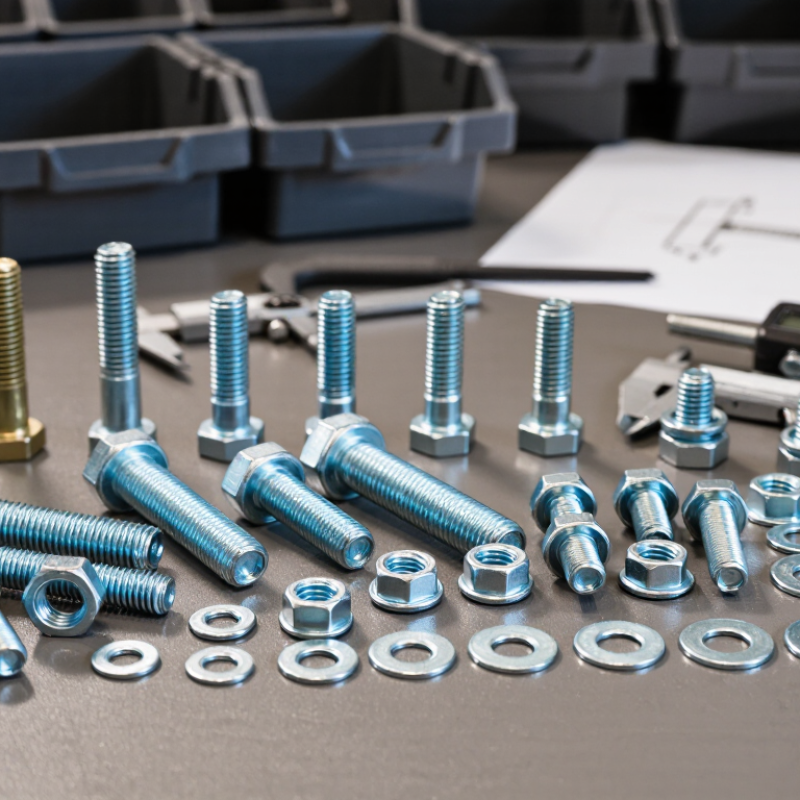
Top 10 Washer Bolt Suppliers for Global Buyers

Define Washer-Bolts: ISO 898-1 Class 8.8 Specifies 800 MPa Tensile Strength

ISO 898-1 class 8.8 identifies a steel bolt with a nominal tensile-strength level of 800 MPa. The “8” represents that strength level; the second “8” indicates a nominal yield-to-tensile ratio of 0.8, or about 640 MPa. These figures describe the bolt, not the washer. A washer-bolt assembly therefore needs separate checks for bolt grade, washer dimensions, and fit.

Check the details. ISO 898-1 sets mechanical-property requirements for carbon and alloy steel bolts, screws, and studs. Actual acceptance values can depend on diameter and product requirements, so a class marking alone is not a complete inspection record. Ask suppliers for traceable test documentation, and confirm markings and dimensions against the purchase specification. A washer that sits crooked or binds against a joint can undermine an otherwise suitable fastening choice.

Material context matters, but it does not prove component quality. World Steel Association’s World Steel in Figures 2024 reports about 1.89 billion tonnes of crude steel production worldwide in 2023. That scale supports a broad supply base, yet strength still depends on controlled manufacturing and verification. One point is easy to miss: 800 MPa is not a promise that every assembled joint will perform identically. Real loads, tightening practice, and surface condition matter. I would check those too.

Check Fit: An ISO 7089 M10 Washer Measures 10.5 × 20 × 2 mm

For global buyers comparing washer bolt suppliers, the size line deserves a close check. An ISO 7089 M10 washer is commonly specified as 10.5 × 20 × 2 mm: 10.5 mm inside diameter, 20 mm outside diameter, and 2 mm thickness. M10 refers to the nominal bolt size, not the washer’s hole measurement.

Small difference. Still important.

A 10.5 mm bore gives an M10 shank room to pass through, while the 20 mm outside diameter spreads bearing pressure around the joint. Before ordering, compare the supplier’s drawing and datasheet with the required ISO 7089 edition, material, and finish. Ask how dimensions and tolerances are inspected. A caliper can screen samples, but it does not replace a documented inspection method.

Check for burrs, uneven edges, and coating buildup, especially if the washer sits in a tight recess. In receiving checks, a part may look correct yet fit poorly in the assembled stack. The awkward part: labels alone do not prove consistency. Confirm sample dimensions before approving bulk production, and keep the measurement record with the purchase specification.

Compare 10 Suppliers by Product Range, Standards Compliance, and Traceability

A useful washer bolt supplier comparison starts with product range, not catalog size alone. Check diameters, lengths, washer styles, materials, finishes, and whether custom dimensions are supported. Then compare documented requirements, such as ISO 898-1 mechanical properties for carbon and alloy steel fasteners. Ask for inspection records, material certificates, and clear links between each shipment and its production lot. A certificate without matching lot information offers limited traceability. Small details matter.

Material supply also deserves attention. The World Steel Association’s October 2024 Short Range Outlook projected global steel demand at 1.772 billion tonnes in 2025, up 1.7% from 2024. That broad market signal does not predict any supplier’s delivery performance, but it gives buyers a reason to examine sourcing and stock policies. For each of the ten candidates, request sample documents and verify that heat numbers, coating batches, and inspection results remain connected. No comparison is fully clean: public catalogs rarely show every production limit. A short sample order can expose gaps before a larger commitment. Check the actual washer fit, coating consistency, and marking legibility under normal receiving conditions.

Assess Global Sourcing: Benchmark MOQ, Lead Time, Certifications, and Export Reach

Global buyers should compare washer bolt suppliers on landed reliability, not unit price alone. Ask each supplier to quote the same grade, dimensions, finish, packaging, and order quantity. Record MOQ, sample time, production lead time, and shipping estimate separately. MOQ often changes with steel grade, coating, and tooling; request pricing at both trial and repeat-order volumes. Small details matter. A carton label that omits the heat or lot number can complicate incoming inspection.

The World Bank’s 2023 Logistics Performance Index assessed 139 economies across six areas, including timeliness and tracking. It is a useful country-level screen, not proof that an individual supplier ships on schedule. Ask for recent, redacted export documents and delivery records for your destination market. Check whether quoted lead times include inspection, packing, and port handoff. UNCTAD’s Review of Maritime Transport 2024 reported that maritime trade grew 2.4% in 2023, while noting disruption risks to shipping routes. Build a buffer into replenishment plans.

Tips: Request the supplier’s ISO 9001 certificate and verify its scope and validity with the issuing body. Certification supports process control; it does not certify every bolt. For critical orders, specify material test reports, coating thickness checks, and lot traceability. Compare export reach by destination, not by a vague “worldwide” claim. I would still treat the first shipment as a test; supplier brochures can look reassuring, and reality may be less tidy.

Shortlist Suppliers Against ISO 898-1 and ISO 7089 Requirements

When evaluating washer bolt suppliers, separate the bolt requirement from the washer requirement. ISO 898-1 specifies mechanical properties for carbon and alloy steel bolts, screws, and studs; it does not qualify the washer. ISO 7089 covers plain washers in the normal series, including dimensions and product requirements. That distinction matters.

Ask suppliers to identify the bolt’s property class and provide traceable inspection records for the production lot. Check that samples match the specified diameter, length, head style, and thread. For washers, compare the nominal size and dimensions with the ISO 7089 requirements on your drawing. Details matter. A washer that looks right on a desk may not seat properly against a coated bolt or the mating surface.

Request clear documentation, not just a claim of “ISO compliance.” Review material records, mechanical test results, dimensional checks, and any stated coating process. Coating thickness can affect fit, so test the assembled parts under realistic conditions. Check the fit. Also confirm how rejected lots are handled and whether replacement batches retain the same specification. A tidy certificate may still leave gaps in traceability. I would not treat paperwork as proof by itself; compare it with measured samples and the actual purchase specification.

Top 10 Washer Bolt Suppliers for Global Buyers

ISO 898-1 minimum tensile strength reference by property class (nominal thread diameters ≤16 mm)

Use these values as a mechanical-property screening reference when evaluating bolt suppliers. They are not supplier test results; confirm the specified property class and supporting documentation for each product. ISO 7089 washer dimensions are a separate check.

FAQS

What does class 8.8 mean for a bolt?

It indicates a nominal tensile strength of 800 MPa and a 0.8 yield-to-tensile ratio. That corresponds to about 640 MPa yield strength. Check the specification and test records.

Does the 8.8 class apply to the washer too?

No. It describes the bolt’s mechanical properties, not the washer. Check bolt grade, washer dimensions, and fit separately.

What are common dimensions for an ISO 7089 M10 washer?

A common specification is 10.5 mm inside diameter, 20 mm outside diameter, and 2 mm thickness. Measure samples before bulk approval.

Why is an M10 washer hole 10.5 mm wide?

M10 refers to the bolt’s nominal size. The 10.5 mm hole gives its shank room to pass through. Small difference. Important fit.

What should buyers inspect on a washer?

Check its dimensions, edges, and coating. Look for burrs, uneven edges, or coating buildup, especially in tight recesses. A caliper helps screen samples, but documented inspection matters too.

What documents help verify a bolt shipment?

Request material certificates, inspection records, and lot details. Confirm that each shipment’s test results connect to its production lot. A certificate alone may not show that link.

How should buyers compare several suppliers?

Compare product sizes, materials, finishes, custom options, and traceability. Ask for sample documents and a small sample order. Catalogs may leave production limits unclear.

Will an 800 MPa bolt perform the same in every joint?

Not necessarily. Loads, tightening practice, surface condition, and washer fit affect the assembled joint. I might be overchecking, but those details deserve attention.

Conclusion

A Washer Bolt combines a bolt with a washer-style bearing surface, so buyers should check both mechanical performance and dimensional fit. For strength, ISO 898-1 property class 8.8 specifies a nominal tensile strength of 800 MPa. For a common fit reference, an ISO 7089 M10 washer measures 10.5 × 20 × 2 mm. Confirming the required standard, size, material, and application before ordering helps reduce mismatch risks.

When comparing ten suppliers, evaluate product range, standards compliance, and the traceability of materials and production records. Global buyers should also benchmark minimum order quantities, lead times, available certifications, and export reach to understand practical sourcing options. A useful shortlist prioritizes suppliers that can document conformity with ISO 898-1 and ISO 7089 requirements, provide consistent specifications, and communicate clearly about inspection and delivery. These checks support a more informed purchasing decision across different project needs.

Oliver

Oliver

Oliver is a seasoned marketing professional with a wealth of expertise in driving brand awareness and engagement. With a deep understanding of our company's product offerings, he consistently delivers high-quality content that enriches our professional blog. His insights not only shed light on......